Why People Search for Bulk Methylene Blue Capsules
Methylene blue has moved well beyond the chemistry lab. Once known primarily as a histological stain, this small molecule now attracts attention from biohackers, longevity enthusiasts. and everyday health-conscious buyers who want a reliable supply without reordering every few weeks. That demand naturally raises a question: can you buy methylene blue capsules in bulk?
Last updated: April 2026
The short answer is yes — but the details matter more than the quantity on the label. Bulk buying can save money and reduce shipping hassles, yet it also introduces risks around purity, potency. and shelf life that are easy to overlook when a vendor offers an attractively large bottle at a low price per capsule.
This guide walks through everything you need to evaluate before stocking up, including how to verify quality, what dosage formats make sense for regular use. and which red flags should make you close the browser tab immediately.
What “Bulk” Actually Means in the Supplement Market
In supplement retail, “bulk” can mean anything from a 90-count bottle to a kilogram bag of raw powder. For methylene blue capsules in detail, bulk usually refers to bottles containing 60 to 120 pre-dosed capsules, or multi-pack bundles that ship several bottles together at a discount.
True wholesale quantities — hundreds or thousands of capsules — are generally reserved for licensed practitioners or compounding pharmacies. Most online stores targeting consumers top out at 120-capsule bottles. which at a typical dose of 5 mg per capsule represents a two- to four-month supply depending on your daily regimen.
Most users agree.
The science backs this up.
This matters for your health.
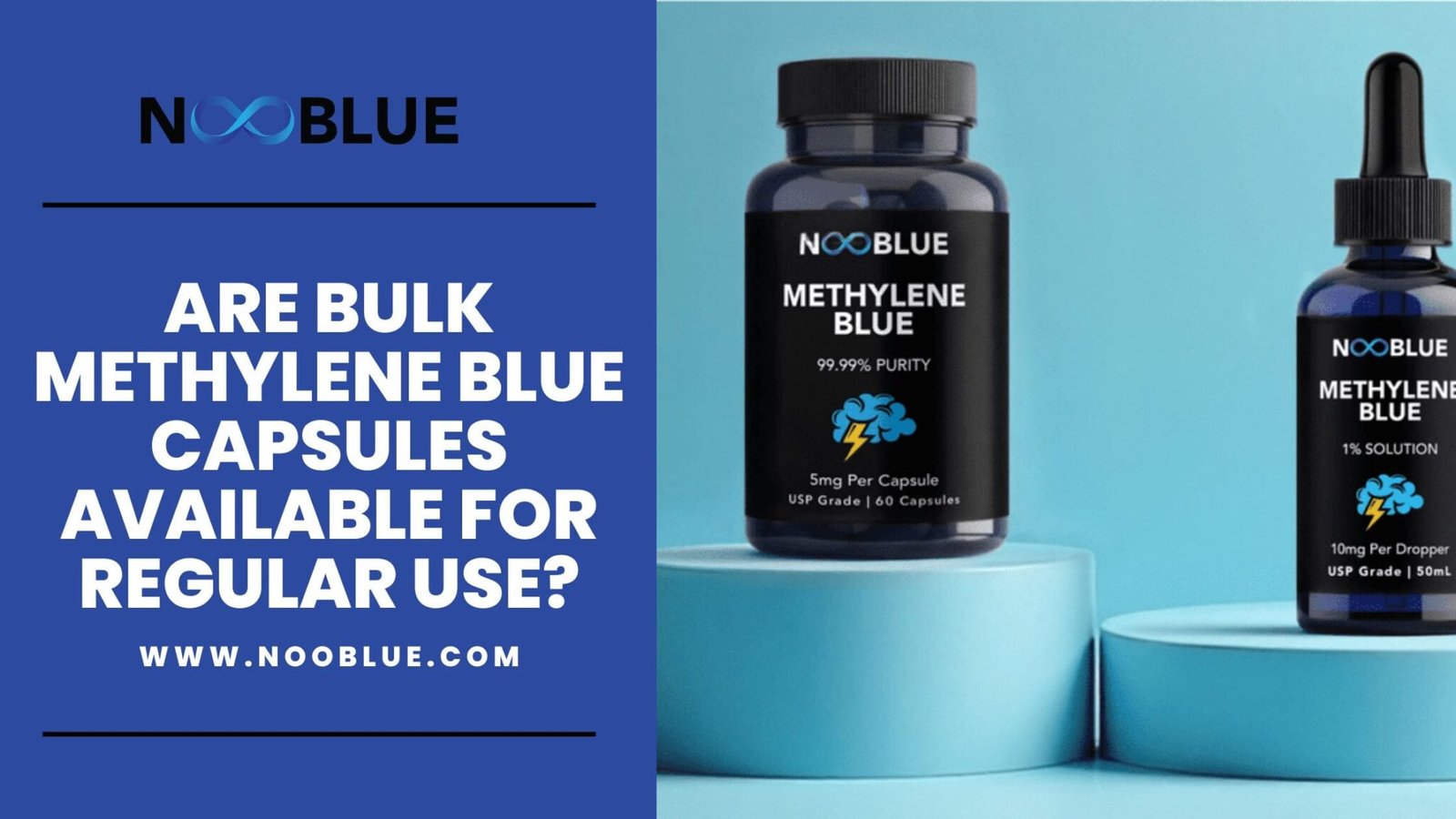
A 60-capsule bottle like the NooBlue Ultimate Methylene Blue Capsules (60 × 5 mg) strikes a practical balance. It provides enough capsules for consistent daily use without sitting in your cabinet so long that you start wondering about expiration dates.
Looking for clean, USP-grade methylene blue? NooBlue’s Methylene Blue Capsules ship with a verified COA and precise 5mg dosing for $34.99. Shop the full range →
Purity Standards You Should Insist On
Buying in larger quantities amplifies whatever is inside each capsule — good or bad. A single capsule with trace heavy-metal impurities is concerning; sixty of them consumed over two months becomes a genuine health factor.
The purity benchmark to look for is USP-grade methylene blue, sometimes listed as ≥98% or ≥99% purity on the Certificate of Analysis (CoA). A trustworthy vendor publishes their CoA on the product page or sends it on request. If a company cannot produce third-party lab results, that is the clearest disqualification you will find. Learn more about reading these documents in our guide to methylene blue Certificates of Analysis.
Contaminants to watch for include heavy metals (lead, arsenic, mercury, cadmium), residual solvents from synthesis, and related dye impurities such as azure B. A proper CoA from an independent lab will test for all of these.
Timing plays a role too.
Research published in the Journal of Pharmaceutical and Biomedical Analysis has highlighted that commercial methylene blue products can vary dramatically in actual dye content versus what appears on the label (PubMed: 26454339). That variability is exactly why third-party testing is non-negotiable, especially when you plan to use the product daily over weeks or months.
Here is the key point. Not all forms of this blue dye are the same. Some are pure and safe. Others may have trace amounts of heavy metals or other things you do not want in your body.
Capsules vs Liquid vs Powder: Which Format Suits Regular Use?
Methylene blue ships in three main formats, and each has trade-offs for someone planning ongoing, daily use.
Quality matters here.
Pre-dosed capsules are the most convenient option for regular use. Each capsule contains a measured amount — commonly 5 mg — so you never have to estimate drops or weigh powder on a milligram scale. They also avoid the bright blue staining that liquid methylene blue is famous for. Your teeth, tongue, and countertops stay clean.
Results vary by person.
Liquid solutions (typically 1% strength) offer flexibility. You can adjust the dose drop by drop, which appeals to people who want to start very low and titrate upward. The downside is that accuracy depends on dropper consistency, and spills are unforgiving. If you are interested in the liquid option, our powder vs liquid comparison covers the practical differences in detail.
This is worth noting.
Raw powder is the cheapest per milligram but requires a precision scale, capsule-filling equipment, and more tolerance for mess. Most regular users find the convenience of pre-made capsules well worth the modest price premium.
For daily use without fuss, capsules win on practicality. They travel well, dose accurately, and remove the risk of accidental over-measurement that comes with liquid or powder.
How to Evaluate a Bulk Methylene Blue Vendor
Not every store selling large-count bottles deserves your trust. Here is a practical checklist:
Keep this in mind.
Published Certificate of Analysis. The CoA should come from a third-party lab, not the manufacturer’s own facility. It should list purity percentage, heavy-metal levels, and microbial testing results.
Clear ingredient list. The capsule should contain methylene blue and a minimal set of excipients (the capsule shell, possibly rice flour or cellulose as filler). Long ingredient lists with artificial colors, preservatives, or proprietary blends are a yellow flag.
This is worth noting.
The science backs this up.
Think of it this way. Your cells need fuel to work right. When that fuel flow gets blocked or slowed, you feel tired, foggy, or run down. The right dose can help keep that fuel flow strong and steady.
Dosage openness. The label should state exactly how many milligrams of methylene blue are in each capsule. Vague descriptions like “proprietary blend” obscure the actual dose and make it impossible to manage your intake responsibly.
Storage and packaging. Methylene blue is sensitive to light. Quality products ship in opaque or amber containers, not clear plastic. The packaging should include a lot number that matches the CoA.
The science backs this up.
Responsive customer support. A company that answers questions about sourcing, testing, and manufacturing signals confidence in its product. Silence or deflection suggests the opposite.
The data is clear.
Browse the full NooBlue shop for products that meet each of these criteria, including published CoAs and clear labeling.
Shelf Life and Storage Factors for Larger Quantities
Methylene blue is a remarkably stable molecule. In dry, capsule form stored away from direct light and excessive heat, it can maintain potency for 18 to 24 months or longer. However, “can” and “will” are different words.
If you buy a 120-capsule bottle and leave it on a windowsill in a warm kitchen, you are accelerating degradation unnecessarily. Ideal storage is a cool, dark cabinet — a bathroom medicine cabinet works, provided your bathroom does not get excessively humid from long showers.
This is worth noting.
Liquid methylene blue has a shorter practical shelf life once opened because exposure to air and light begins to degrade the solution gradually. This is another point in favour of capsules for bulk purchasing: the remaining capsules stay sealed inside the bottle while you use them one at a time.
Purity is key.
Keep this in mind.
A study in the European Journal of Pharmaceutics and Biopharmaceutics explored methylene blue’s photodegradation pathways and confirmed that light exposure is the primary driver of potency loss in solution form (PubMed: 19185415). Capsule form naturally limits this exposure.
Dosage Guidance for Daily Use
Most oral methylene blue supplements for general wellness are dosed between 0.5 mg and 2 mg per kilogram of body weight per day. For a 70 kg adult, that translates to roughly 5 mg to 15 mg daily — or one to three standard 5 mg capsules.
The bottom line is this: do your homework. Read the label. Check the test results. Ask the brand if you have any doubts. A good product should have nothing to hide.
Starting low makes sense, especially if you have never used methylene blue before. A single 5 mg capsule per day for the first week lets you observe how your body responds before increasing. Our detailed milligram dosing guide covers how to calibrate based on body weight and goals.
Timing also matters. Many users take methylene blue in the morning because of its potential effects on mitochondrial energy production. Taking it too late in the day may interfere with sleep for some people, though individual responses vary.
Common Concerns About Regular Methylene Blue Use
Two worries surface repeatedly among first-time buyers considering a larger supply:
Blue urine. Yes, methylene blue will tint your urine blue or green. This is harmless and expected — it simply means the compound is being excreted normally. The color change is more pronounced at higher doses and usually fades within 24 hours of your last dose.
Quality matters here.
Most users agree.
Timing plays a role too.
Interactions with other supplements or medications. Methylene blue is a monoamine oxidase inhibitor (MAOI) at higher doses. If you take serotonergic medications — including certain antidepressants (SSRIs, SNRIs), tramadol, or dextromethorphan — you should consult a healthcare professional before adding methylene blue to your routine. Our interaction guide provides a thorough list of substances to watch for.
Outside of specific drug interactions, methylene blue at low oral doses (5–15 mg/day) is generally well tolerated. Mild nausea can occur initially but tends to resolve within the first few days of use.
Frequently Asked Questions
Is it safe to take methylene blue capsules every day?
At low supplemental doses (typically 5–15 mg/day for an average adult), daily use is well tolerated by most people. Methylene blue has a long clinical history stretching back over a century. The key precautions are avoiding concurrent use with serotonergic medications and choosing a product that has been tested for purity by an independent laboratory.
How many capsules should I buy at once?
A 60-capsule bottle covers one to two months of daily use at standard doses. That is a practical quantity — long enough to build a consistent routine without worrying about expiration. Buying two bottles at a time is reasonable if you know the product works well for you and you want to avoid reordering frequently.
Can I open methylene blue capsules and mix them into food or drinks?
Technically yes, but be prepared for intense staining. The powder inside is pure methylene blue, and it will turn anything it touches a vivid blue. If you want dose flexibility without the mess, a calibrated liquid solution like the NooBlue 1% Solution is a cleaner option than breaking open capsules.
What should I do if a vendor will not share their Certificate of Analysis?
Move on. A CoA from a third-party lab is the minimum standard for any supplement you plan to take regularly. Vendors who refuse to share testing data either have not tested their product or are not confident in the results — neither scenario deserves your money or your trust.
Recommended for you
Ready to try NooBlue methylene blue?
USP grade · Verified COA · Free worldwide shipping over $100
Shop NooBlue →