Last updated: May 20, 2026 · Published: November 13, 2025 · By NooBlue Research Team
Methylene blue has grown rapidly in popularity among biohackers, high-performing professionals, and wellness enthusiasts, largely due to discussions from prominent researchers like Dr. Andrew Huberman. As a Stanford neuroscientist and host of The Huberman Lab Podcast, Huberman often breaks down the science behind supplements that support brain function and cellular energy. While he does not directly prescribe or endorse methylene blue for personal use, he shares research-based insights on its potential benefits, processes, and safety factors.What Methylene Blue Does Andrew Huberman Recommend?
Based on his discussions, Huberman’s views fall into seven clear, science-driven recommendations.
Last updated: May 20, 2026
Below is what Huberman has actually said on the podcast and in published Q&As about methylene blue — broken into the seven points biohackers should follow before considering it.
1. Use Only Pharmaceutical-Grade Methylene Blue
Huberman strongly emphasizes purity and safety.
He advises avoiding aquarium-grade methylene blue, industrial or chemical-grade MB, or any product not tested for heavy metals or contaminants
Only pharma-grade (USP-grade) methylene blue is suitable for human use. This ensures purity, consistent dosing, and reduced toxicity risk.
Purity standards matter greatly when it comes to any supplement you put in your body. Pharma-grade methylene blue undergoes rigorous testing to verify its identity, potency, and the absence of harmful contaminants like heavy metals and residual solvents. These standards exist to protect consumers from impurities that could cause adverse reactions. Always verify that your supplier provides a current certificate of analysis from an independent third-party laboratory, and check that the product meets USP specifications for pharma-grade quality.
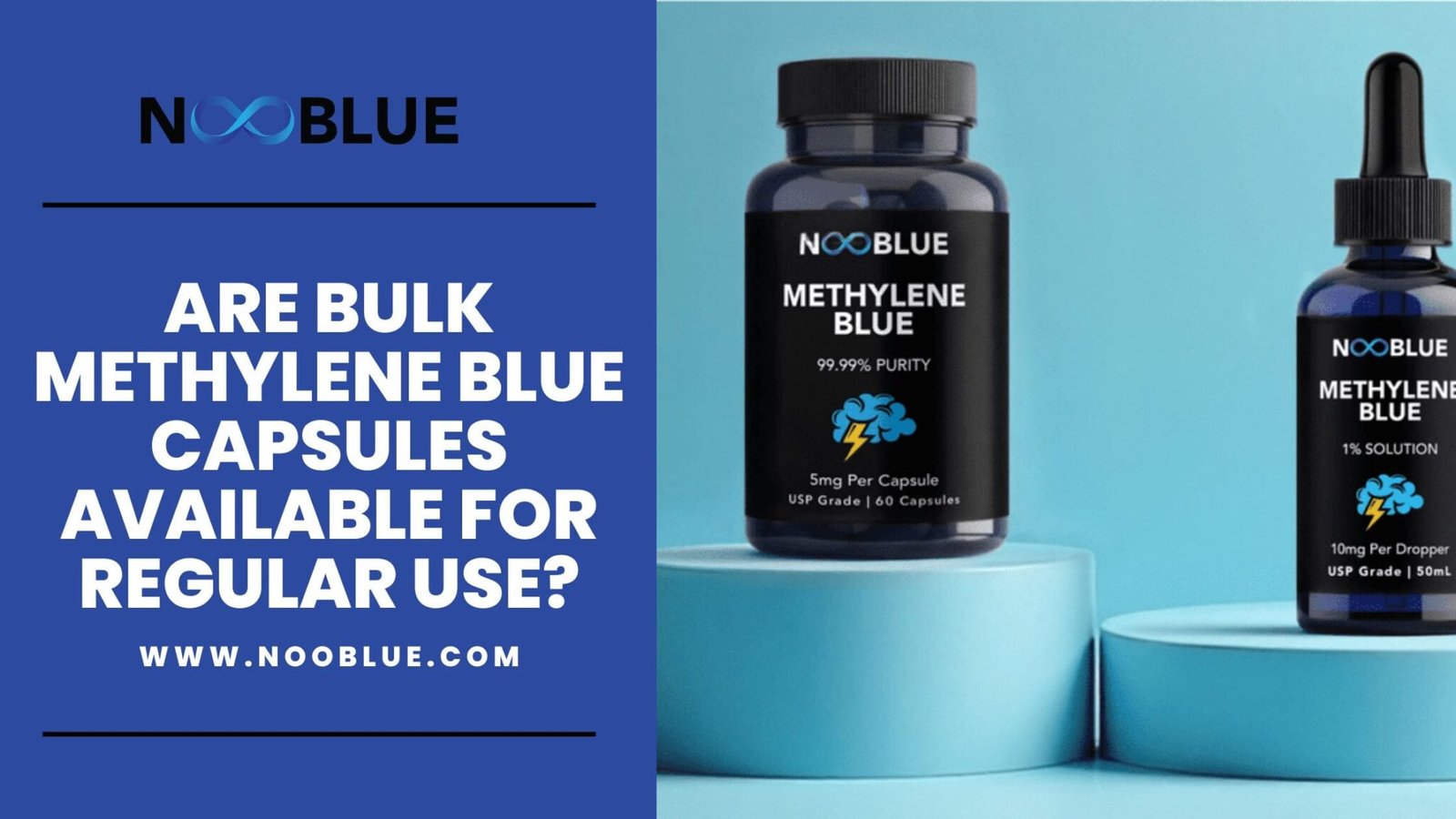
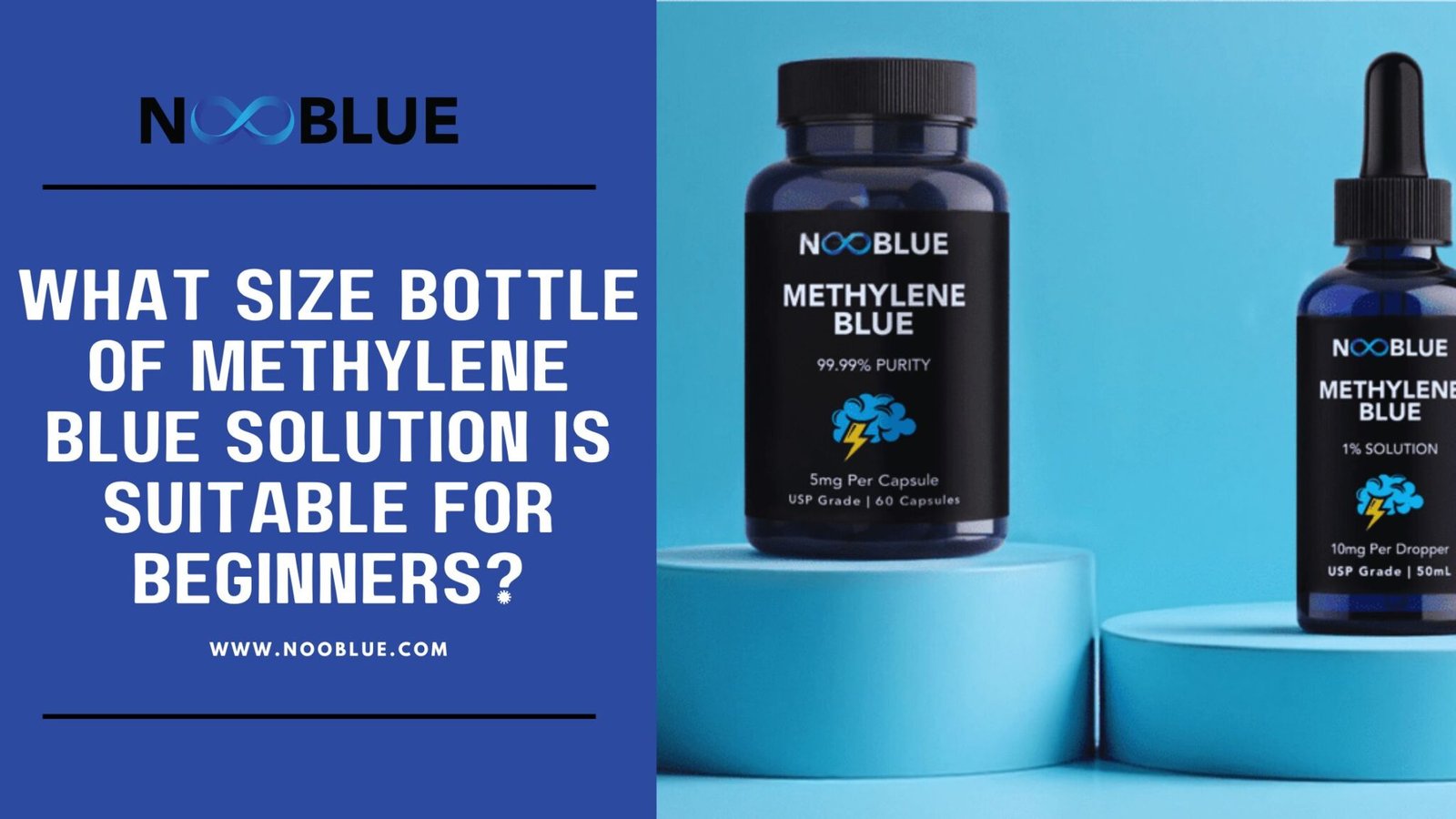
Looking for clean, USP-grade methylene blue? NooBlue’s Methylene Blue Capsules ship with a verified COA and precise 5mg dosing for $34.99. Shop the full range →
2. Lower Doses Are More Effective
Huberman notes that methylene blue functions as a low-dose compound, meaning its benefits appear only at very small amounts. At these lower levels, methylene blue supports mitochondrial efficiency and enhances cellular energy production.
However, when the dose increases beyond what the body can use well, the compound can become counterproductive or even harmful.
This is because its effects follow a dose-dependent curve where the optimal range is narrow, and exceeding it may lead to diminished results or unwanted side effects.
For this reason, Huberman emphasises staying within low, controlled doses to maintain both effectiveness and safety.
This is worth a closer look. The data tells a clear story. When you use a pure, well-tested form, the results are more likely to be good. That is not hype — it is just how it works.
Studies show that MB supports mitochondrial efficiency by acting as an electron carrier in the electron transport chain—but only when used sparingly.
3. Understand the Processes Before Using It
Huberman each day encourages people to learn how a compound works before taking it.
He highlights three main processes:
1. Supports Mitochondrial Energy
MB boosts ATP production, increasing the brain’s energy output.
A review in Biochemical Pharmacology describes how low-dose USP methylene blue acts as an alternative electron carrier in the mitochondrial electron transport chain, supporting cytochrome c oxidase activity and improving brain bioenergetics (Gonzalez-Lima et al., PMID 24316434).
2. Enhances Cognitive Function
Low-dose MB has been studied for improvements in:
A controlled trial published in the American Journal of Psychiatry reported that low-dose oral methylene blue enhanced post-training memory retention in adult participants compared with placebo (Telch et al., PMID 25018057). Studies suggest these effects map to the same mitochondrial mechanisms Huberman discusses on the podcast.
-
Working memory
-
Long-term memory encoding
-
Focus and attention
3. Reduces Oxidative Stress
As a redox agent, MB neutralizes harmful free radicals—supporting healthier brain cells.
This process is one of the reasons MB is popular among people seeking long-term cognitive resilience.
4. Avoid Methylene Blue if You Take SSRIs or Serotonin-Boosting Drugs
One of Huberman’s most important warnings involves drug interactions.
Because MB has mild MAOI properties, it can dangerously amplify serotonin levels when combined with:
-
SSRIs
-
SNRIs
-
MAOIs
-
Tricyclic antidepressants
-
Certain migraine medications
This combination may trigger serotonin syndrome, a may life-threatening condition.
Huberman strongly advises consulting a doctor before using MB if you take any prescription medication.
5. Don’t Use MB as a Shortcut: Fix Your Fundamentals First
Huberman repeatedly explains that no supplement, including methylene blue, can compensate for the lack of essential health habits such as quality sleep, proper nutrition, regular sunlight exposure, daily movement, stress management. and adequate hydration.
He emphasizes that methylene blue should be used only as a performance-enhancing tool once these fundamentals are in place, not as a substitute for them.
6. Start Small and Monitor Your Body’s Response
Because MB affects mitochondrial and neuronal function, individual responses vary. Huberman recommends starting with the lowest practical dose and increasing only if needed, while monitoring for:
-
Changes in focus
-
Mood
-
Energy levels
-
Any signs of overstimulation
This helps maintain effectiveness and minimize adverse reactions.
7. Use Methylene Blue When Cognitive Load Is High
Huberman mentions that MB may be most beneficial during times of increased mental demand, such as:
-
Deep work or writing
-
Research and strength-heavy tasks
-
Long working hours
-
Cognitive stress or fatigue
-
Jet lag or low-oxygen environments
MB enhances oxygen utilisation and cellular metabolism, making it ideal for situations where mental performance matters most.
Is Methylene Blue Safe According to Huberman?
Huberman views low-dose, pharma-grade methylene blue as generally safe when used responsibly, but he emphasizes that purity, careful dosing, and awareness of potential drug interactions are essential.
He also encourages medical oversight and a cautious, gradual approach when trying methylene blue for the first time. Since long-term human research is still limited, Huberman advises users to focus on safety, stay informed, and make decisions based on evidence rather than trends.
Key Takeaways
Methylene blue stands out among supplements for its unique process of action within the mitochondrial electron transport chain. Unlike many other compounds marketed for health support, methylene blue has a research history spanning more than 130 years. Its applications range from medical diagnostics to emerging roles in cognitive enhancement and cellular protection.
When selecting a methylene blue product, focus on pharma-grade (USP) formulas backed by third-party certificates of analysis. The difference between pharma-grade and lower-quality alternatives can be significant in terms of both safety and effectiveness. Reputable suppliers are transparent about their sourcing, testing, and manufacturing processes.
Dosing should always start at the low end of the recommended range, typically 0.5 mg per kg of body weight. Monitor your response carefully over the first two weeks before considering any adjustments. Keep in mind that individual responses vary based on age, health status, genetics, and other factors that influence how your body processes supplements.
Some Frequently Asked Questions
Does Andrew Huberman recommend taking Methylene Blue?
Huberman does not prescribe MB but provides science-backed insights on its processes, benefits, and safety factors.
Is methylene blue good for cognitive performance?
Studies cited by Huberman indicate improvements in memory, focus, clarity, and mitochondrial energy production at low doses.
What purity does Huberman prefer?
Only pharma-grade (USP) methylene blue is suitable for human use.
Does methylene blue boost brain energy?
Yes. It enhances cell energy output, increasing ATP production—the brain’s main energy currency.
What the Research Actually Says About Huberman’s Mitochondrial Framework
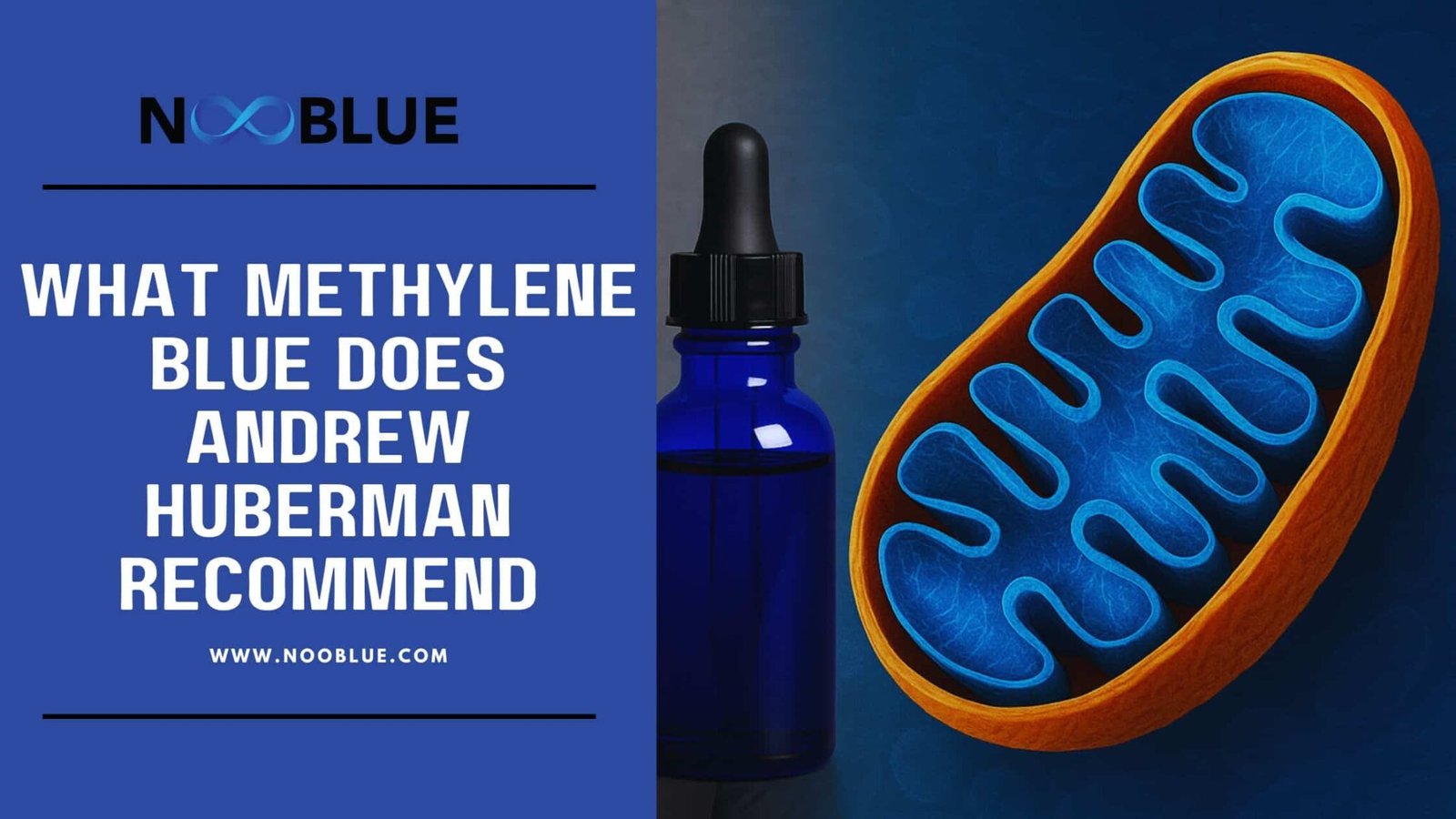
Huberman’s case for methylene blue rests on a specific bioenergetic claim: at low doses (sub-toxic, well below the methemoglobinemia threshold), MB cycles between its oxidised and reduced forms inside the mitochondrion, acting as an alternative electron carrier when Complex I or Complex III is sluggish. The downstream effect is more efficient oxygen consumption at cytochrome c oxidase and a measurable bump in ATP turnover in brain tissue.
This mechanism is not speculative. A 2024 paper in Molecular Neurobiology reported that low-dose methylene blue pretreatment preserved mitochondrial integrity and reduced memory loss in a rodent neurotoxicity model, with effects that scaled directly with mitochondrial fragmentation markers (Wu et al., PMID 38233687). Earlier work in Behavioural Brain Research found that targeting cytochrome c oxidase — exactly the enzyme Huberman points to in podcast discussions — was sufficient to rescue cognitive performance in cognitively impaired animals (Méndez et al., PMID 33549685).
The practical takeaway Huberman lands on: the dose-response curve is hormetic. Below roughly 0.5–4 mg/kg in humans, the literature trends toward neuroprotection and cognitive support. Above that range, the same compound shifts into pro-oxidant territory and starts undoing the mitochondrial gains. This is why he is unusually emphatic about low dosing, and why every credible MB protocol he has discussed lands in single-digit-milligram or low-double-digit-milligram daily ranges, not the gram-level doses used in clinical methemoglobinemia treatment.
How to Vet a Brand Using Huberman’s Quality Criteria
Huberman’s framework is portable. Even if you never listen to another episode, the four signals below are enough to separate a legitimate methylene blue supplement from a repackaged aquarium-grade product:
- USP-grade declaration on the certificate of analysis. Not “pharmaceutical-grade” written on the bottle — the COA itself should list USP standards and the testing lab’s name.
- Independent third-party heavy-metal panel. Lead, cadmium, arsenic, mercury — a real COA reports each metal in parts per million, with a pass/fail against USP <232> limits.
- Batch-specific COA, not a generic supplier document. The batch number on the bottle should match the batch number on the COA. Generic certificates are a red flag.
- Manufacturing facility with GMP certification. A registered GMP facility is the minimum bar for any oral product; ask the brand to name the facility and show its current registration.
If a brand cannot produce all four within a single email exchange, the product almost certainly does not meet the purity bar Huberman talks about — and you should treat the “pharma-grade” claim on the label as marketing copy, not a verified spec.
Where Huberman’s Position Differs From Other Biohackers
Most public-facing methylene blue advocates frame MB primarily as a nootropic — a cognitive accelerant for deep work, study sessions, or jet-lag recovery. Huberman’s framing is narrower and more conservative. He treats MB as a mitochondrial support compound that may produce noticeable cognitive effects as a downstream consequence, but he routinely cautions against using it as a first-line nootropic, against stacking it with serotonergic medications, and against expecting any meaningful benefit without first locking in sleep, sunlight, training, and nutrition.
This is consistent with the broader posture of his podcast: supplements are the last 5–10 percent of performance, not the first 50 percent. For methylene blue specifically, that translates into a “use it sparingly, on demanding days, after the fundamentals are in place” protocol — not a daily-forever regimen.
Choose Pure, High-Quality Methylene Blue With NooBlue
If you’re exploring the cognitive and mitochondrial benefits of methylene blue, quality should be your first priority—just as Andrew Huberman emphasizes.
NooBlue offers:
-
Ultra-pure formula free from contaminants
-
Precisely measured strengths for consistent, safe dosing
-
A clean, effective solution designed for focus, clarity & brain energy
Experience a reliable, science-backed nootropic trusted by high performers. Pair it with NooBlue’s 1% pharma-grade solution for flexible, fast-absorbing dosing.
Choose NooBlue today and access cleaner energy, sharper focus, and better mental clarity—with confidence in every drop.
Continue reading
What Methylene Blue Does Gary Brecka Use? →What Brand of Methylene Blue Does Joe Rogan Use? →Browse our full range of methylene blue products at the NooBlue shop.
Recommended for you
Ready to try NooBlue methylene blue?
USP grade · Verified COA · Free worldwide shipping over $100
Shop NooBlue →About NooBlue
NooBlue is dedicated to providing pharmaceutical-grade Methylene Blue supplements backed by scientific research. Our products are USP-grade, third-party tested, and manufactured in GMP-certified facilities. This article is for informational purposes only and is not intended as medical advice. Always consult your healthcare provider before starting any supplement.