If you keep asking “why do I get so tired after I eat?”, you are describing one of the most common energy complaints there is. Feeling slow, heavy or sleepy after a meal usually comes from what and how much you ate, your body clock and how you spend the hour after eating. This guide maps each trigger to when it hits, shows what the research found, and explains where NooBlue methylene blue fits. For tiredness that lasts all day, start with our guide to why you feel tired all the time. Written by the NooBlue editorial team. Published October 24, 2026. Last updated October 24, 2026.
Quick answer: You get tired after eating because digestion, hormones and your body clock all push toward rest. Sugary and refined-carb meals tend to drag energy down within the first hour, large meals raise sleepiness about 90 minutes later, and an early-afternoon dip in alertness happens even if you skip lunch.
Smaller, balanced meals and a short walk afterward help most people. If you also want daily support for cellular energy, NooBlue Methylene Blue Gummies are our pick. NooBlue makes these gummies. Each one carries 10 mg of methylene blue plus vitamin C, and a pack of 60 costs $49.99.
Table of contents
- 1. Why do I get so tired after I eat? The short version
- 2. What happens in your body after a meal
- 3. Why you get so tired after you eat: six triggers and when each hits
- 4. Your body clock and the post-lunch dip
- 5. What to do when you get so tired after you eat
- 6. Where NooBlue methylene blue fits
- 7. Frequently asked questions
- 8. The bottom line
Why do I get so tired after I eat? The short version
Doctors call it postprandial sleepiness, and most people know it as a food coma. It is normal in mild form. After a meal, blood flow and energy go toward digestion, gut hormones are released, and the signals that keep you alert change as blood sugar rises and falls.
Three things decide how strong the slump feels. The first is the meal itself: its size, how much sugar and refined starch it holds, and how much fat. The second is timing, because your alertness naturally dips in the early afternoon. The third is what you do next, since sitting still after a big lunch makes the dip deeper than an easy walk would.
Most people have more than one trigger stacked at once. A large pasta lunch eaten at a desk at 1 p.m., after a short night, hits all three. That is why the fix is rarely one change. It is usually a smaller plate, a better balance of food and ten minutes of moving around.
What happens in your body after a meal
Blood sugar is the part most people have heard of. A meal heavy in sugar or white flour raises glucose fast, and insulin then brings it back down. In a meta-analysis of 31 studies with 1,259 participants, carbohydrate intake was linked with more fatigue and less alertness than a placebo within the first hour, and with no mood lift at any point (Mantantzis et al., 2019, Neuroscience and Biobehavioral Reviews).
Your brain also senses glucose directly. Orexin neurons help keep you awake, and in mouse brain cells, rising glucose switched these neurons down, at levels similar to the swings between normal meals (Burdakov et al., 2006, Neuron). That is animal research, but it offers one plausible reason a sweet, starchy meal can feel sedating.
Fat works through a different route. When healthy volunteers ate a breakfast rich in fat and low in carbs, they felt more sleepy and less awake two to three hours later. Their fatigue scores at three hours were also higher than after a meal low in fat and rich in carbs. The authors linked this to cholecystokinin, a gut hormone released when fat reaches the small intestine (Wells et al., 1997, Physiology and Behavior).
Why you get so tired after you eat: six triggers and when each hits
The same meal can make you sleepy at different times for different reasons. The table below lines up each trigger with its usual timing, the evidence behind it and the first thing to try. Use it to match the pattern you notice to the likely cause.
| Trigger | When it tends to hit | What the research shows | First fix to try |
|---|---|---|---|
| Sugary meal or drink | Within the first hour | 31 studies: more fatigue and less alertness than placebo in the first hour | Pair carbs with protein and fiber, and drink water |
| A large meal of any kind | About 90 minutes after | 16 adults fell asleep faster 1.5 hours after a meal, whatever its fat or carb balance | Smaller lunch, bigger evening meal |
| A fatty meal | Two to three hours after | 18 adults reported more fatigue at three hours than after a lean meal | Lighter fat load at midday |
| Your body clock | Early to mid afternoon, even with no lunch | The afternoon dip appears without food and grows after a starchy lunch | Daylight, a short break, a consistent bedtime |
| Sitting still after eating | The hour after the meal | Light walking breaks lowered glucose and insulin after meals more than sitting | Walk for a few minutes after eating |
| A short night | All day, felt most after lunch | Sleep loss makes every natural dip easier to feel | Protect a regular sleep window |
The meal-size row comes from a controlled trial in which 16 adults ate two meals four hours apart. They fell asleep faster 1.5 hours after eating than before, and the effect held whether the meal was high-fat or high-carb (Wells et al., 1998, Journal of Applied Physiology). The researchers concluded the meal itself added sleepiness beyond time of day.
Your body clock and the post-lunch dip
Some of the slump has nothing to do with food. A review of the post-lunch dip found that alertness and performance fall in the early afternoon for many people, even when they have eaten nothing and do not know the time. The same review noted that a high-carbohydrate lunch makes the dip worse (Monk, 2005, Clinics in Sports Medicine).
This is why lunch often gets the blame for a dip that would have come anyway. If you feel the same heaviness at 2 or 3 p.m. on days you skip lunch, your body clock is a big part of it. Short sleep makes the dip deeper, and so does a late, heavy breakfast followed by a big lunch.
Light and movement help here. Stepping outside, taking a short walk or doing your most demanding work in the morning all make the afternoon dip easier to ride out. A second large coffee tends to borrow energy from your night’s sleep instead. Our guide to why caffeine stops working explains that trade-off.
See the 5 mg capsules · $37.99What to do when you get so tired after you eat
Start with the meal. Build lunch around protein, vegetables and some fiber, and keep refined starch and sweets to a side portion. Eat a moderate amount, slowly, and keep the bigger meal of the day for the evening if your schedule allows. Sweet drinks with a meal add sugar fast, so water is the easiest swap.
Then move. A meta-analysis of seven randomized crossover trials found that breaking up sitting with short bouts of light walking lowered post-meal glucose and insulin compared with sitting, and worked better than standing breaks (Buffey et al., 2022, Sports Medicine). A few minutes of walking after lunch is the simplest version of that.
Look at the rest of your day too. Regular sleep, enough water and daylight in the morning all make afternoons easier. If brain fog comes with the slump, our guide on how to clear brain fog covers sleep, hydration and the mitochondria link in more depth.
Some patterns need a doctor rather than a new lunch. Get checked if you are exhausted after most meals, if you feel shaky, sweaty or faint a few hours after eating, if you are very thirsty or losing weight without trying, or if the tiredness has lasted more than a few weeks. A simple blood sugar test and a review of your medicines are common first steps.
Where NooBlue methylene blue fits
Every cell runs on energy made by its mitochondria, and your brain uses a large share of it. We explain the basics in our guide to what cellular energy is. Methylene blue is studied for how it interacts with the mitochondrial electron transport chain, and that is why NooBlue offers it as daily support for mitochondrial energy and focus.
Be clear on the evidence level. In human cells grown in a lab, low concentrations of methylene blue raised mitochondrial complex IV activity by 30% (Atamna et al., 2008, FASEB Journal). That is cell research only. In a small randomized, placebo-controlled trial, 26 healthy adults given one low oral dose had 7% more correct responses on a memory task an hour later (Rodriguez et al., 2016, Radiology).
No study has tested methylene blue on sleepiness after meals. It will not undo a heavy lunch, so fix the meal, the walk and your sleep first. NooBlue sees it as one part of a daily routine that supports steady cellular energy. Our guide on how to improve mitochondrial function covers the habits that matter most.
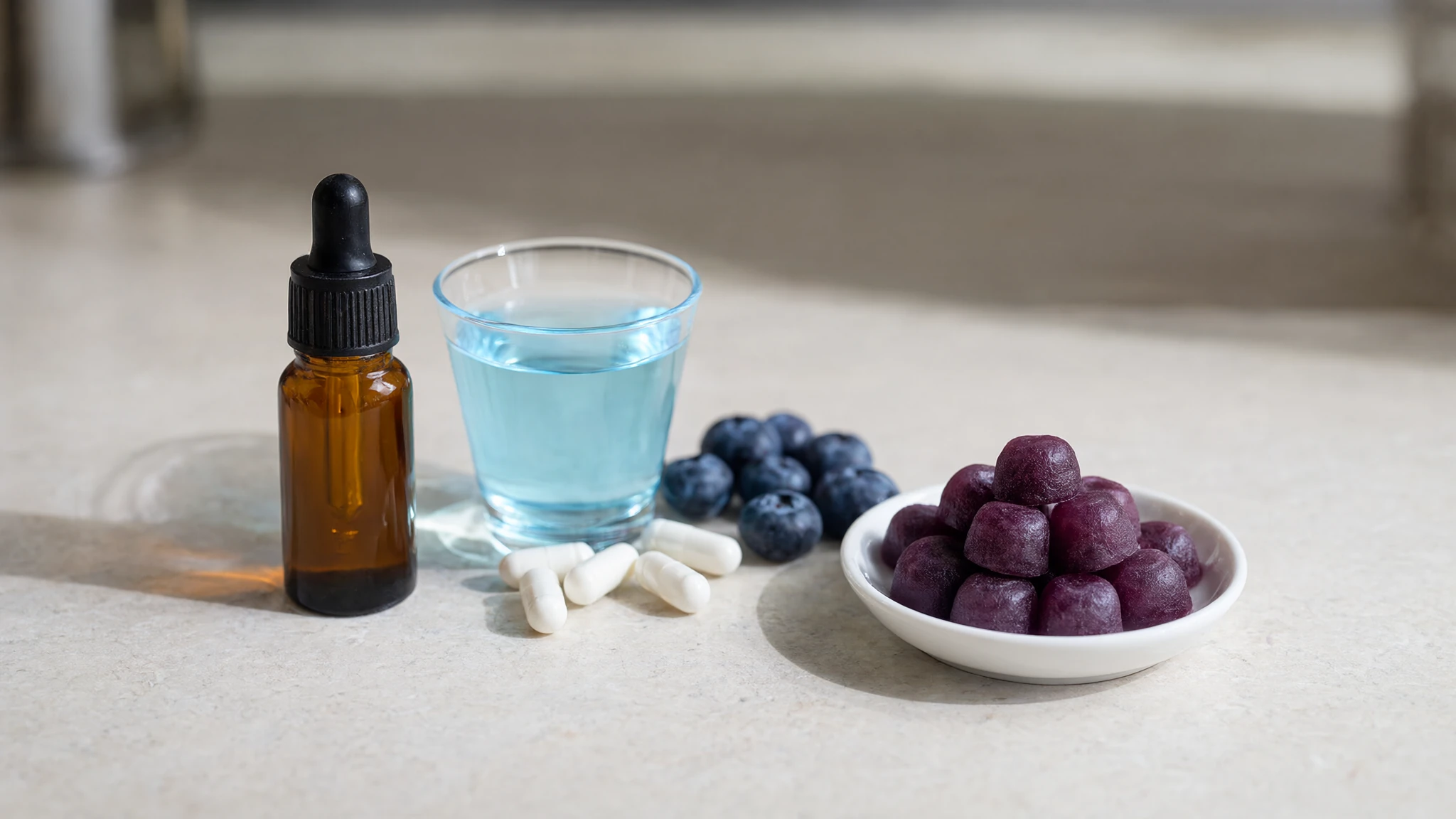
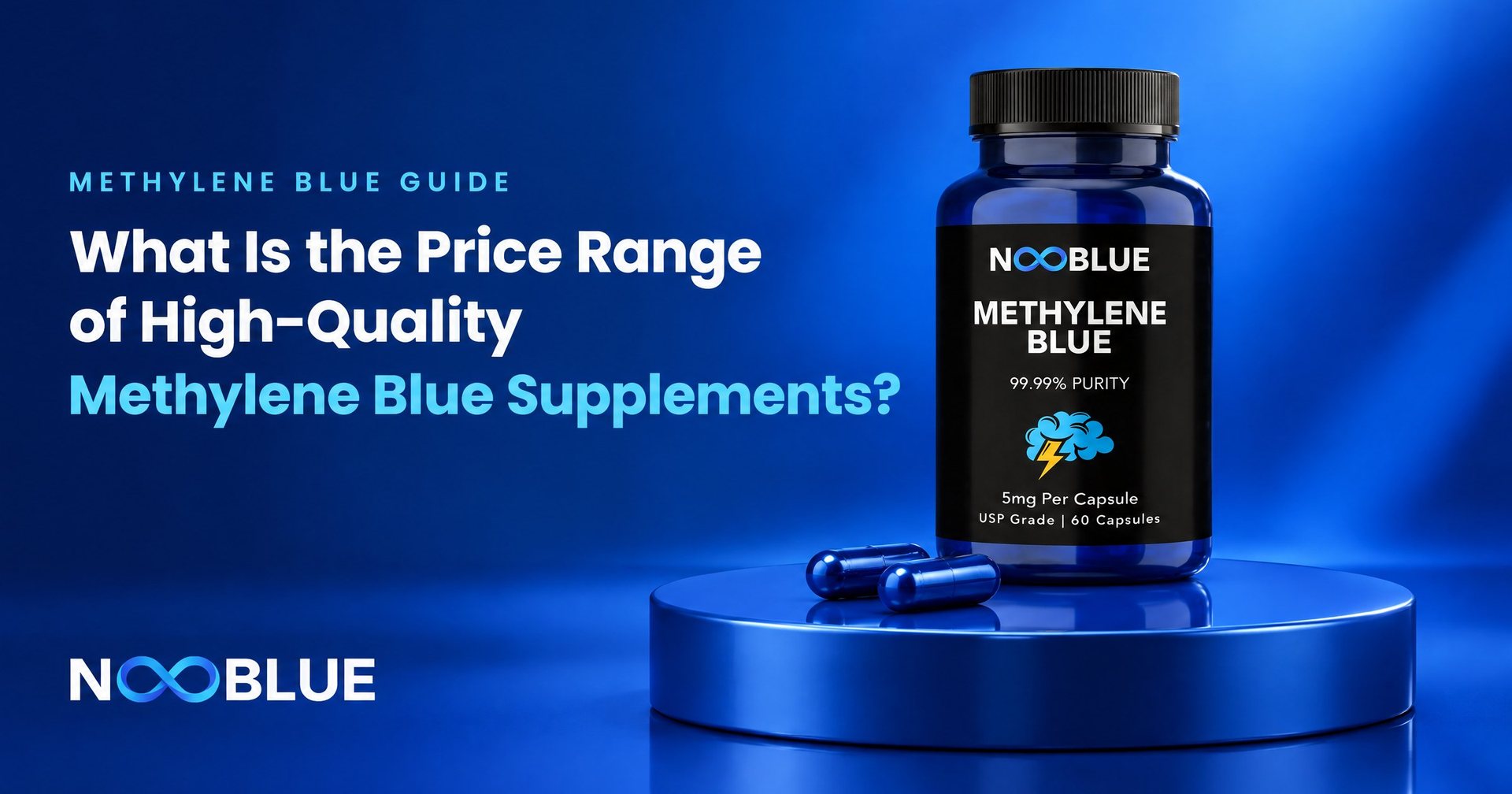
NooBlue makes three formats, and the NooBlue Methylene Blue Gummies are our pick at 10 mg each with vitamin C, $49.99 for 60, and they avoid the blue mouth that drops can cause. The 5 mg capsules cost $37.99 for 60 and suit anyone who wants a smaller serving. The 1% drops cost $29.99 for 50 mL, at 10 mg per mL. For serving sizes, see our guide on how many mg of methylene blue per day.
Frequently asked questions
What causes energy crashes after eating?
Most crashes come from a meal heavy in sugar or refined starch, a very large portion, or a high-fat meal, stacked on the natural early-afternoon dip. Sitting still afterward and a short night make it stronger. Balanced meals and a short walk are the first fixes to try.
Why does sugar make me tired?
Sugar raises blood glucose quickly, and the insulin response that follows can leave you feeling flat. A meta-analysis of 31 studies found that carbohydrates were linked with more fatigue and less alertness within the first hour, not a lift. Pairing sweets with protein or fiber softens the effect.
How long does a food coma last?
For most people it fades within one to three hours. Trials measured extra sleepiness about 1.5 hours after a meal and more fatigue around three hours after a high-fat meal. If you feel wiped out for most of the afternoon after every meal, mention it to your doctor.
Is it bad to sleep right after eating?
A short rest after lunch is not harmful for most people. Lying down flat right after a large meal can bring on heartburn, so wait two to three hours before bed or sit upright. A brief nap of 20 minutes or less is less likely to leave you groggy.
Does feeling tired after eating mean my blood sugar is off?
Not on its own, because mild tiredness after meals is common. It is worth asking for a blood sugar test if you are exhausted after most meals, feel shaky or sweaty a few hours later, or also have strong thirst or weight loss. Your doctor can check the cause.
Why am I tired after eating a small amount?
Even a small snack can bring on sleepiness if it is mostly sugar, if it lands in the early-afternoon dip, or if you slept poorly. If small meals regularly leave you exhausted, see a doctor, since iron levels, thyroid function and medicines can all play a part.
The bottom line
If you wonder why you get so tired after you eat, the answer is usually the meal, the clock and the hour afterward working together. Sugary or refined-carb food tends to slow you down within the hour, big meals raise sleepiness about 90 minutes later, and the early-afternoon dip arrives even without lunch. A smaller, balanced plate and a short walk fix most of it.
For daily support of mitochondrial energy and focus, NooBlue Methylene Blue Gummies are our pick. Read our guide to who should not take methylene blue before you start.
Using methylene blue safely
Methylene blue is generally well tolerated at low servings, but some people should not take it. Do not combine it with SSRIs, SNRIs, MAOIs or other serotonergic medicines, because of serotonin syndrome risk (Ramsay et al., 2007). Avoid it if you have G6PD deficiency.
It is not for pregnancy or breastfeeding, and not for anyone under 18. Any oral format can turn urine blue or green, which is expected and temporary. Talk to your doctor before starting, especially if you take any prescription medicine.
This article is for information only and is not medical advice. Supplements are not intended to diagnose or treat any condition. Check the label, follow the suggested serving and speak with a qualified professional about your situation.
Sources
- Mantantzis et al. 2019, meta-analysis of carbohydrate effects on mood (Neuroscience and Biobehavioral Reviews)
- Burdakov et al. 2006, glucose and orexin neurons in mice (Neuron)
- Wells et al. 1997, fat, carbohydrate and postprandial sleepiness (Physiology and Behavior)
- Wells et al. 1998, meals and daytime sleepiness (Journal of Applied Physiology)
- Monk 2005, the post-lunch dip in performance (Clinics in Sports Medicine)
- Buffey et al. 2022, standing and light walking breaks and post-meal glucose (Sports Medicine)
- Atamna et al. 2008, methylene blue and mitochondrial pathways in human cells (FASEB Journal)
- Rodriguez et al. 2016, low-dose methylene blue and memory (Radiology)
- Ramsay et al. 2007, methylene blue and serotonin toxicity (Br J Pharmacol)