The price range of high-quality methylene blue supplements is narrower than it looks once you compare the same amount of methylene blue. On the brand stores we checked in September 2026, a bottle of USP-grade capsules, drops or gummies cost between $25.97 and $49.99. Per 10 mg of methylene blue, that worked out to between $0.25 and $2.40. The bottle price alone tells you little, because strengths run from 5 mg to 14 mg per serving and drops come in 0.5% and 1% solutions.
Below is a price table of 16 listings across three formats, the maths behind the per-mg figures, what a higher price does and does not buy, and the cost per day at label servings.
Table of contents
- 1. The short answer
- 2. Methylene blue price comparison (as of Sep 2026)
- 3. Why the bottle price misleads
- 4. What a higher price does and does not buy
- 5. Cost per day at label servings
- 6. Safety before you buy
- 7. Frequently asked questions
- 7.1. How much does a good methylene blue supplement cost?
- 7.2. Is expensive methylene blue better?
- 7.3. Why do methylene blue gummies cost more than drops?
- 7.4. Is it cheaper to buy several bottles at once?
- 7.5. Can I buy methylene blue at a pharmacy?
- 7.6. Is aquarium or lab-grade methylene blue a cheaper alternative?
- 8. Sources
The short answer
- Per bottle: $25.97 to $49.99 for the capsules, drops and gummies in our table.
- Per 10 mg of methylene blue: $0.25 to $2.40. Large 1% drop bottles are the cheapest way to buy it, and 5 mg gummies the most expensive.
- Per capsule: the capsules in our table cost $0.37 to $0.67 each, whether they hold 5, 10 or 12 mg.
- Price is a weak quality signal. Check the grade, what the lab report actually covers, the safety warnings and the shipping terms before the price.
Methylene blue price comparison (as of Sep 2026)
Prices are one-bottle prices from each brand’s own store in September 2026, before shipping and multi-bottle discounts. Cost per 10 mg is the price divided by the total methylene blue in the pack, taken from each label. NooBlue makes the first three products. Every figure for the other products comes from their own product pages.
| Product | Format and strength | Price | Methylene blue per pack | Cost per 10 mg |
|---|---|---|---|---|
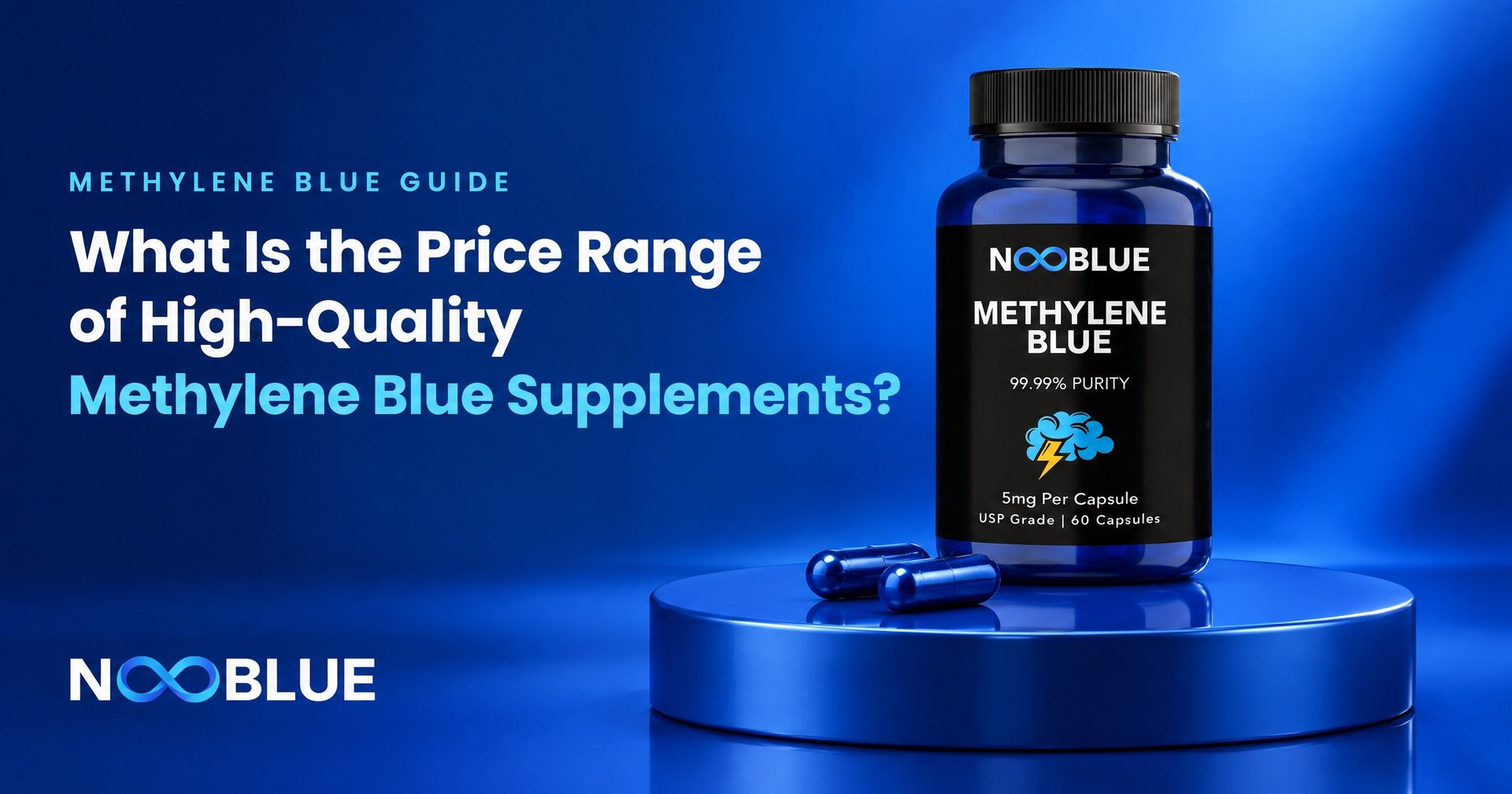
| NooBlue Methylene Blue Capsules | 60 capsules × 5 mg | $37.99 (regular $49.99) | 300 mg | $1.27 |
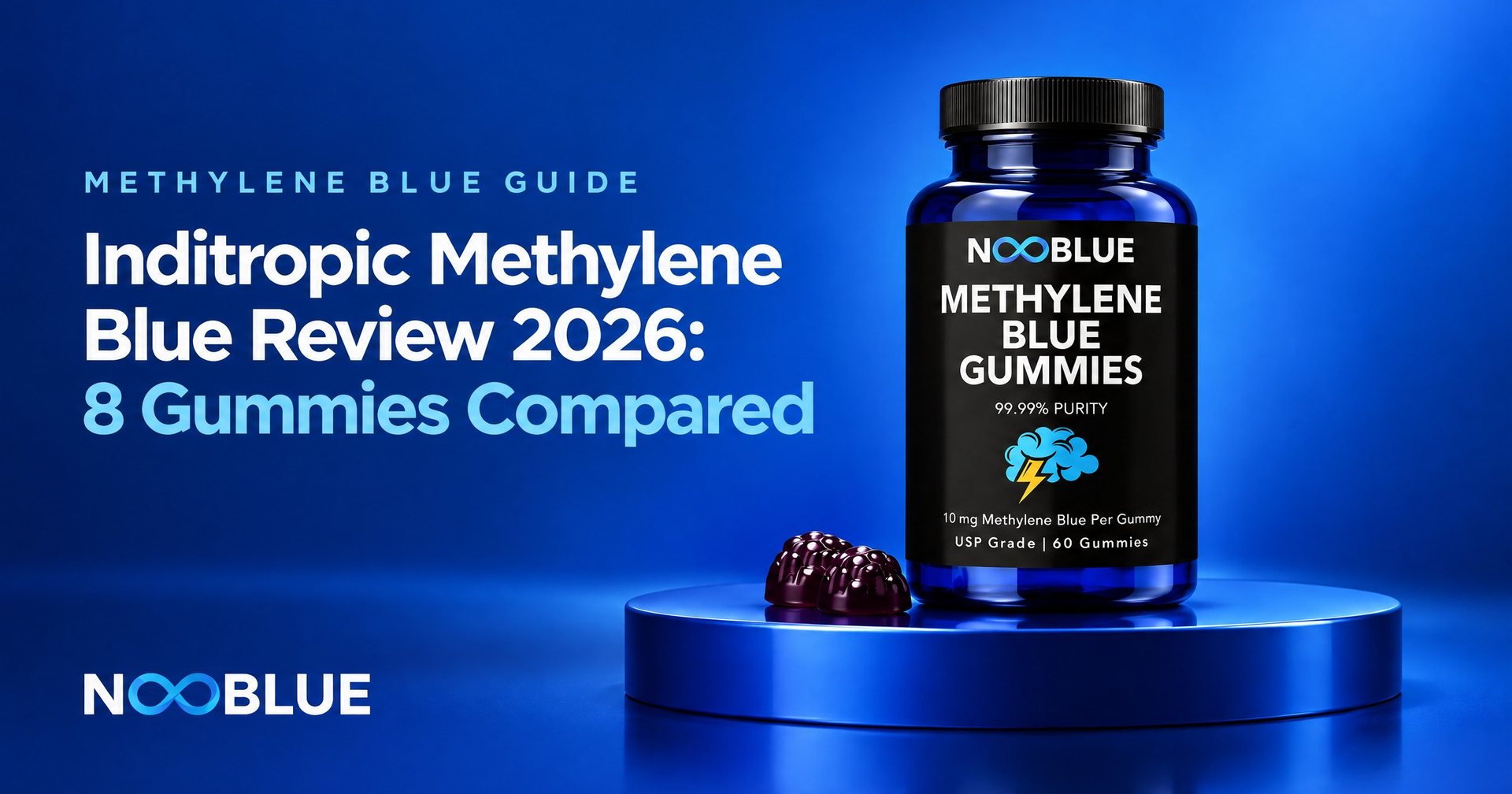
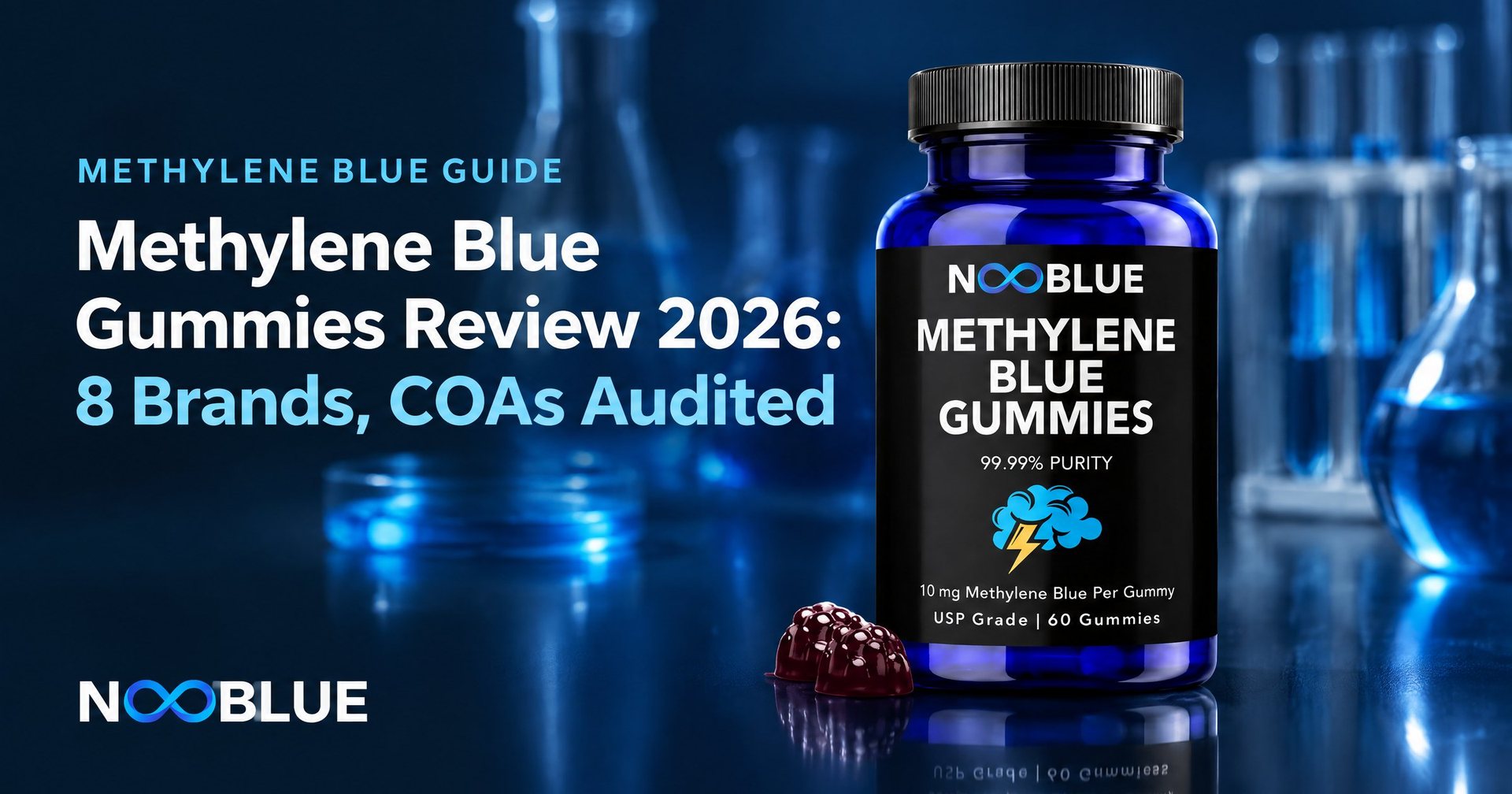
| NooBlue Methylene Blue Gummies | 60 gummies × 10 mg, with vitamin C | $49.99 | 600 mg | $0.83 |
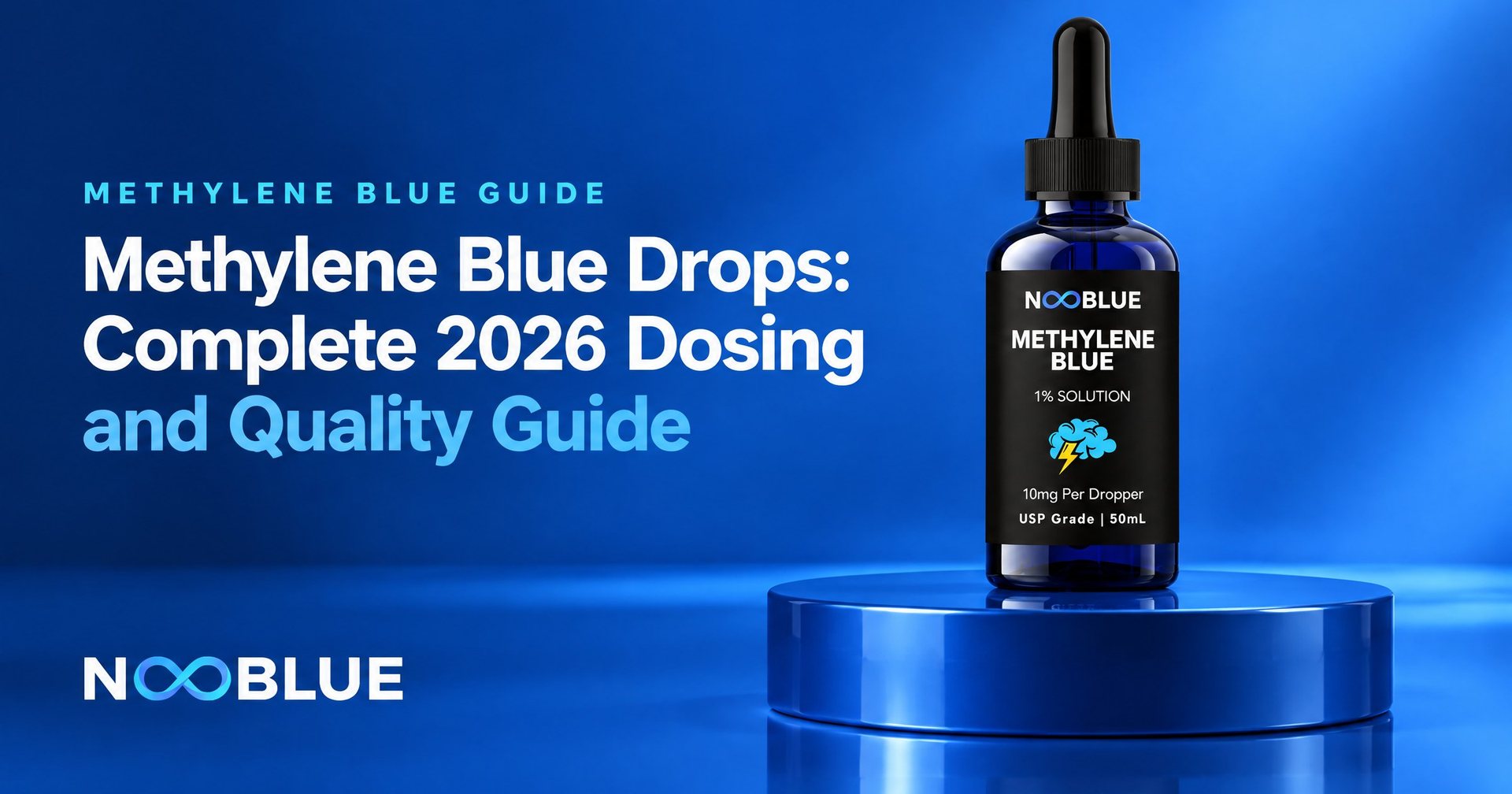
| NooBlue Methylene Blue Drops | 1% solution, 50 mL | $29.99 (regular $39.99) | 500 mg | $0.60 |
| Nutricel Blue Boost | 60 capsules × 12 mg | $34.90 | 720 mg | $0.48 |
| Chemist Labs Methylene Blue Capsules | 60 capsules × 10 mg | $34.99 | 600 mg | $0.58 |
| Chemist Labs Methylene Blue Capsules | 120 capsules × 10 mg | $44.99 | 1,200 mg | $0.37 |
| Earth Harmony Ultimate Methylene Blue | 60 capsules × 12 mg | $39.95 | 720 mg | $0.55 |
| Biopharm Methylene Blue 1% USP | 1% solution, 50 mL glass | $25.97 | 500 mg | $0.52 |
| Nutricel Blue Liquid | 1% solution, 118 mL | $30.00 | About 1,180 mg | $0.25 |
| Chemist Labs 1% Liquid | 1% solution, 4 oz (120 mL) | $44.99 | 1,200 mg | $0.37 |
| Earth Harmony Ultimate Methylene Blue (liquid) | 1% solution, 59 mL | $39.95 | 590 mg | $0.68 |
| Blissta Methylene Blue 1% | 1% solution, 30 mL | $46.99 | 300 mg | $1.57 |
| Meraki Blu | 150 mg in 30 mL (0.5%) | $35.00 | 150 mg | $2.33 |
| Blissta Ultra Blue Gummies | 60 gummies, 14 mg per 2 gummies | $39.99 | 420 mg | $0.95 |
| TrueHealthic Methylene Blue Gummies | 30 gummies × 5 mg | $29.99 | 150 mg | $2.00 |
| Blue Organics Methylene Blue Gummies | 30 gummies × 5 mg | $36.00 | 150 mg | $2.40 |
Two notes on the table. Biopharm’s store was running a limited-time offer of two 50 mL glass bottles for $25.97, which halves its cost per 10 mg while it lasts. And some methylene blue is sold outside normal retail: Troscriptions Just Blue troches (4 troches × 16 mg per pack) are now available only through healthcare practitioners, like all Troscriptions products, so we do not give a store price or cost per 10 mg for them.
Why the bottle price misleads
Strength varies more than price
A 1% solution holds 10 mg of methylene blue per mL, so a 50 mL bottle holds 500 mg and a 118 mL bottle about 1,180 mg. Meraki Blu is half that strength: 150 mg in 30 mL. Capsules range from 5 mg to 12 mg each in our table, and gummies from 5 mg to 10 mg. Two bottles at the same price can hold four times as much methylene blue as each other.
Per capsule, prices cluster
Per mg, higher-strength capsules look cheaper. Per capsule, the difference mostly disappears: $0.63 for a 5 mg NooBlue capsule, $0.58 for a 12 mg Nutricel or a 10 mg Chemist Labs capsule (60-count), $0.67 for a 12 mg Earth Harmony capsule and $0.37 for a Chemist Labs capsule from the 120-count bottle. Which figure matters depends on the serving you plan to take. If your label serving is one 5 mg capsule, paying less per mg for a 12 mg capsule does not save you anything. Our guide to how many mg of methylene blue per day covers serving sizes.
Gummies cost more per mg
Gummies carry flavor, pectin and often vitamin C, and a chewable format costs more to make than a solution. Per gummy, the products in our table cost $0.67 (Blissta, 7 mg), $0.83 (NooBlue, 10 mg), $1.00 (TrueHealthic, 5 mg) and $1.20 (Blue Organics, 5 mg). What you get for the extra is convenience: no measuring, and in NooBlue’s case no blue mouth or tongue, which drops can cause.
What a higher price does and does not buy
Grade
Supplements should use USP-grade methylene blue. Cheaper methylene blue exists, but it is made for other jobs. Sigma-Aldrich’s lab stain M9140, for example, is sold with a dye content of 82% or more and carries a “harmful if swallowed” hazard code. Kordon’s aquarium methylene blue states that it is not intended for human consumption. Neither is a cheap substitute for a supplement at any price. Our guide to lab-grade vs pharmaceutical-grade methylene blue explains the difference.
Testing documents
A certificate of analysis is only as useful as what it covers. When you look at one, check the lab’s name, the lot number, the date, what was tested (identity, potency, heavy metals, microbes) and whether it covers the finished product or only the raw ingredient. NooBlue publishes an ingredient-level report from Contract Testing Laboratories of America covering identity and heavy metals for one lot of the methylene blue ingredient. It does not certify every finished product or give a purity percentage. Our guide to reading a methylene blue certificate of analysis goes through each field.
Labeling and warnings
Read the label as well as the price. A supplement page should state the strength, a serving size and clear warnings about serotonergic medicines. Meraki Blu’s description, for example, calls it “For research purposes only” while also telling readers not to mix it with antidepressants and to consult a doctor before use, which leaves the buyer to decide what the product is for.
Shipping and bundles
Shipping can change the real price more than a few dollars on the bottle. NooBlue offers free worldwide shipping on orders of $100 or more, with dispatch in 1 to 2 business days and tracking. Nutricel ships free within the 50 US states but, according to its shipping policy, only to US addresses. Multi-bottle discounts also shift the maths: NooBlue takes 10% off two bottles, 15% off three and 20% off five, and Meraki Blu sells two bottles for $65 and three for $89.
For a side-by-side look at one competitor, see our Nutricel vs NooBlue comparison, and for format-by-format roundups, our comparisons of methylene blue capsules, methylene blue gummies and methylene blue supplements across formats.
Cost per day at label servings
At the serving on each NooBlue label, the daily cost is:
- Capsules: one 5 mg capsule daily with food, $0.63 a day. A bottle lasts 60 days.
- Gummies: one 10 mg gummy daily, $0.83 a day. A pack lasts 60 days.
- Drops: 0.5 mg per drop, so a 5 mg serving is 10 drops. The 50 mL bottle holds about 100 servings of 5 mg, $0.30 each.
Do not exceed the suggested serving. NooBlue also sells all three formats together for $100 with free worldwide shipping, which the product pages list against a $117.97 combined single-bottle price. You can compare every option in the NooBlue shop.
Safety before you buy
- Do not take methylene blue if you take an SSRI, SNRI, MAOI or any other serotonergic medicine, because of the risk of serotonin syndrome.
- Do not take it if you have G6PD deficiency.
- It is not for use during pregnancy or while breastfeeding.
- It is not for anyone under 18.
Methylene blue can color urine blue or green. Talk to your doctor before use if you take any prescription medicine or have a kidney or liver condition. For background on the compound itself, see what methylene blue is and how it has been used. Want to know more about who makes our products? Read about NooBlue.
Frequently asked questions
How much does a good methylene blue supplement cost?
In our September 2026 check of brand stores, USP-grade capsules, drops and gummies cost $25.97 to $49.99 a bottle, or $0.25 to $2.40 per 10 mg of methylene blue. Drops are usually the cheapest per mg and 5 mg gummies the most expensive.
Is expensive methylene blue better?
Not by itself. Some of the highest per-mg prices in our table belong to gummies and a half-strength solution, which reflects the format and strength rather than better methylene blue. Check the grade, what the lab report covers, the strength on the label and the safety warnings.
Why do methylene blue gummies cost more than drops?
Gummies include flavor, pectin and often vitamin C, and are more work to make than a solution. You pay for convenience: no measuring, and with NooBlue gummies, no blue mouth or tongue.
Is it cheaper to buy several bottles at once?
Usually. NooBlue takes 10% off two bottles, 15% off three and 20% off five, and other brands offer multi-bottle prices too. Buy only what you will use before the best-before date, and store bottles as the label directs.
Can I buy methylene blue at a pharmacy?
Methylene blue supplements are mostly sold online. Our guide to finding methylene blue in health food stores and pharmacies covers where it is and is not stocked.
Is aquarium or lab-grade methylene blue a cheaper alternative?
No. Aquarium products such as Kordon’s state that they are not intended for human consumption, and lab stains such as Sigma-Aldrich M9140 are sold by dye content (82% or more) with a “harmful if swallowed” hazard code. Use a supplement made from USP-grade methylene blue.
Sources
- Brand-store product pages and Shopify product data, checked September 2026: NooBlue, Nutricel, Chemist Labs, Earth Harmony, Biopharm, Blissta, Meraki Medicinal, TrueHealthic, Blue Organics and Troscriptions.
- Nutricel shipping policy, September 2026.
- Sigma-Aldrich product page for methylene blue M9140.
- Kordon methylene blue product page.