Published: October 25, 2026 · Last updated: October 25, 2026 · By NooBlue Editorial · 5 products compared · About our editorial standards
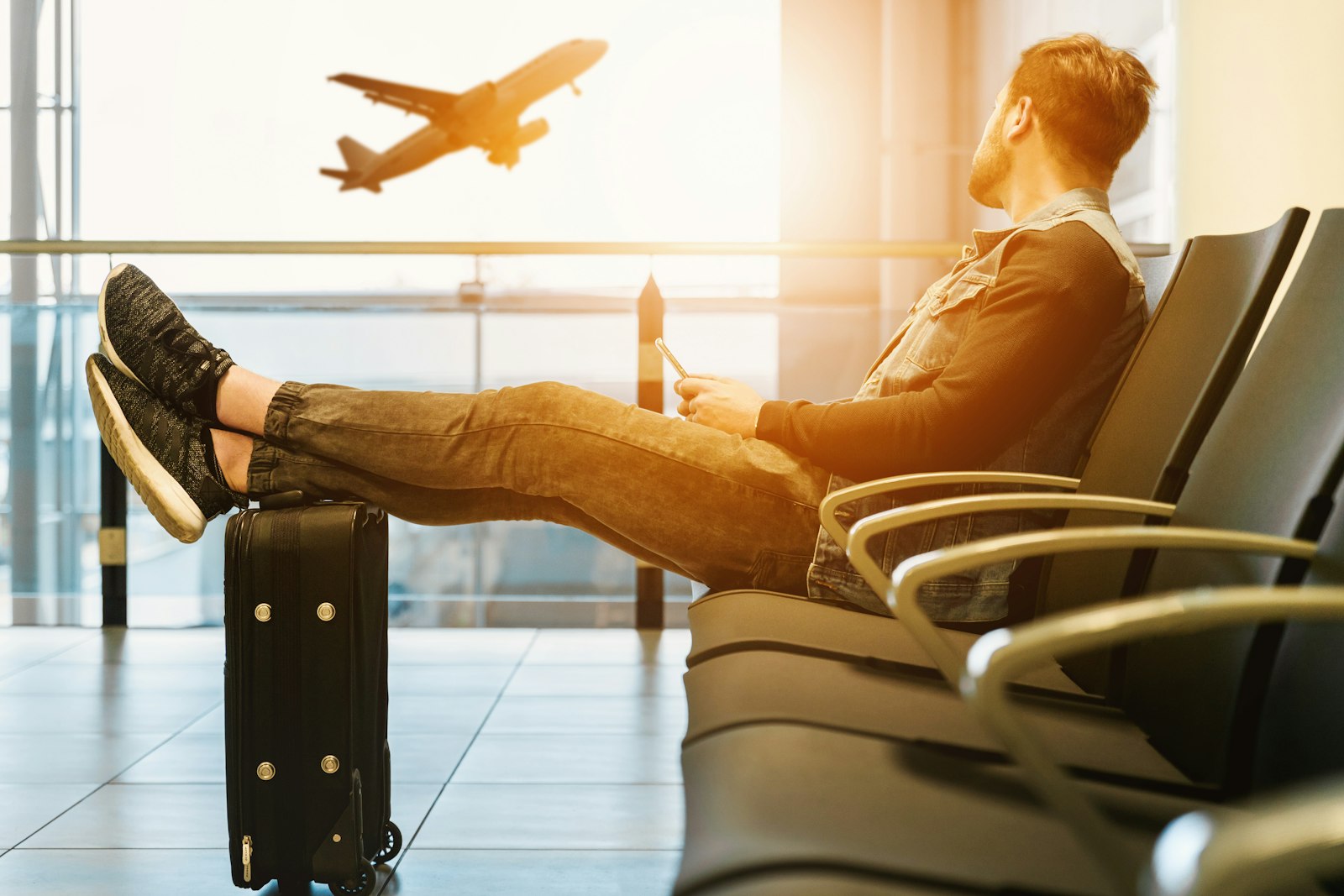
You land after a nine-hour flight, collect your bag and feel like someone drained the battery out of you. Or you finish a six-hour drive and spend the first evening of the trip on the hotel bed with the TV on. That heavy, slow, slightly foggy feeling has a name, and this guide to the best supplements for travel fatigue starts with what causes it before it gets to what is worth packing.
We compared five products that travelers reach for: a methylene blue gummy, an electrolyte drink mix, a caffeinated energy gum, a magnesium powder and a low-dose methylene blue capsule. Every price was read from the brand’s own product page on October 25, 2026 and converted to a cost per day of use. NooBlue makes the two methylene blue products here, so they are our picks, and we say plainly where another product does a specific job better or costs less.
Quick Answer
NooBlue Methylene Blue Gummies are our top pick among the best supplements for travel fatigue because one solid 10 mg gummy fits any carry-on, needs no water or measuring, and supports mitochondrial energy and focus on the days when sleep and routine fall apart. For the dehydration side of a long flight, add LMNT Electrolyte Drink Mix.
Based on the published human research for each main ingredient, how well each product travels, live price per day of use, and testing documentation across 5 products.
Table of contents
- 1. Best supplements for travel fatigue compared
- 2. What travel fatigue is, and why it is different from time-zone lag
- 3. Why long trips drain you: the common causes
- 4. Where mitochondria fit in
- 5. Travel-day planner: what to pack, and when to take it
- 6. #1. NooBlue Methylene Blue Gummies: Best overall for travel fatigue
- 7. #2. LMNT Electrolyte Drink Mix: Best for staying hydrated on long flights
- 8. #3. Run Gum Energy Gum: Best for a fast caffeine lift on the road
- 9. #4. Thorne Magnesium Bisglycinate: Best for an evening routine at your destination
- 10. #5. NooBlue Ultimate Methylene Blue Capsules: Best for a gentle 5 mg start
- 11. A simple travel-fatigue routine that costs nothing
- 12. How we evaluated these supplements for travel fatigue
- 13. NooBlue safety: read this before you take methylene blue
- 14. FAQ: supplements for travel fatigue
- 14.1. What is the best supplement for travel fatigue?
- 14.2. What is the best vitamin to take while traveling?
- 14.3. How long does travel fatigue last?
- 14.4. Should I take B12 if I’m always tired?
- 14.5. Can I take methylene blue gummies on a plane?
- 14.6. Can I use methylene blue with energy gum or coffee?
- 14.7. Do electrolytes help with travel tiredness?
- 15. Verdict: the best supplements for travel fatigue in 2026
Best supplements for travel fatigue compared
All five products side by side. Price per day uses the one-time price on the brand’s site divided by the number of days one container lasts at one serving a day, so every row uses the same unit.
| Rank | Product | Type | One serving | Price per day (USD) | Best For |
|---|---|---|---|---|---|
| 1 | NooBlue Methylene Blue Gummies | Gummy | 10 mg methylene blue + 25 mg vitamin C | $0.83 | Best overall for travel fatigue |
| 2 | LMNT Electrolyte Drink Mix | Powder stick | 1,000 mg sodium, 200 mg potassium, 60 mg magnesium | $1.50 | Best for staying hydrated on long flights |
| 3 | Run Gum Energy Gum | Gum | 2 pieces: 100 mg caffeine, 40 mg taurine, B vitamins | $1.87 | Best for a fast caffeine lift on the road |
| 4 | Thorne Magnesium Bisglycinate | Powder | 200 mg magnesium (1 scoop) | $0.87 | Best for an evening routine at your destination |
| 5 | NooBlue Ultimate Methylene Blue Capsules | Capsule | 5 mg methylene blue + 10 mg vitamin C | $0.63 | Best for a gentle 5 mg start, lowest verified price per day here |
Prices checked October 25, 2026: NooBlue gummies $49.99 for 60 days, LMNT $45.00 for a 30-stick box, Run Gum $22.49 for a 12-pack of two-piece pouches, Thorne Magnesium Bisglycinate $52.00 for 60 scoops and NooBlue capsules $37.99 for 60 days. Several of these brands sell bundles or subscriptions for less. We used the single-pack price so the rows stay comparable.
What travel fatigue is, and why it is different from time-zone lag
Travel fatigue is the tired, flat, sometimes headachy feeling that follows a long journey of any kind. A review in The Lancet separates it from the problems that come from crossing time zones. Travel fatigue comes from the trip itself: early starts, cramped seats, dry cabin air, queues and broken sleep. A long road trip inside one time zone can cause it.
Time-zone lag is a separate problem. The same review explains that it comes mainly from your body clock running on the old schedule while the new place runs on a different one. That is why you can feel wide awake at 3 a.m. in a hotel room and ready to sleep at lunch. Travel fatigue usually lifts after a good night or two in your own bed or a quiet hotel room. Lag from several time zones tends to hang on for longer, because your clock has to shift a little each day.
Most long trips give you some of both. That matters for supplements, because nothing in a bottle moves your body clock for you. What a supplement can do is support how you feel during the stretch when sleep, water and meals are all off.
Why long trips drain you: the common causes
Before you buy anything, it helps to know which drivers you can fix for free. These are the ones that show up again and again in travel research and in ordinary experience.
Thinner air in the cabin. Airliners are pressurized to the equivalent of a mountain town, not to sea level. In a hypobaric-chamber study of 502 adults published in The New England Journal of Medicine, cabin conditions equal to 7,000 to 8,000 feet lowered blood oxygen saturation by about 4 percentage points. Reports of discomfort rose with altitude and became noticeable after 3 to 9 hours of exposure. That fits the way a long-haul flight feels heavier in its second half.
Mild dehydration. Cabin air is dry, and many people drink less on travel days to avoid trips to the restroom. In a controlled trial in The British Journal of Nutrition, 26 young men who lost about 1.6% of their body mass in fluid made more errors on a vigilance task, responded more slowly on a working-memory test and rated themselves more fatigued. That is a small fluid loss, easy to reach on a long day of travel.
Short or broken sleep. A 5 a.m. alarm, a red-eye flight or a night in an unfamiliar room cuts sleep, and the effects pile up across a trip. If you notice you sleep worse on the first night away, you are not imagining it. Our guide to methylene blue and sleep covers timing so a supplement does not get in the way of the night.
Hours of sitting. Long stretches without moving leave many people stiff and sluggish. Standing, walking the aisle and stretching at rest stops all help.
Irregular meals. Airport snacks, skipped lunches and a big late dinner all swing your energy. Large, heavy meals can make the slump worse, which we explain in our article on why you get so tired after you eat.
Stress. Delays, connections and navigating a new city keep you on alert for hours, and the crash often comes when you finally sit down.
If you feel tired most of the time, not only after trips, start with our guide to why you might always feel tired. And see a doctor if tiredness lasts more than a few weeks after you get home, keeps getting worse or comes with other symptoms such as fever, breathlessness or swelling in one leg.
Where mitochondria fit in
Every cell in your body makes most of its usable energy inside mitochondria, small structures that pass electrons along a chain of enzymes and use oxygen at the end of it. Our explainer on what cellular energy is walks through the process in plain language. Two of the travel drains above, less oxygen in the air and short sleep, put pressure on that system at the same time. That is the reason we look at the cellular-energy side of travel tiredness at all.
Methylene blue is a compound that can accept and donate electrons, which lets it act as a helper in that electron chain. The human evidence is early. In a randomized, placebo-controlled trial published in Radiology, 26 healthy adults aged 22 to 62 took a single low dose of methylene blue and showed stronger brain activity on imaging during attention and short-term memory tasks, plus a 7% increase in correct answers when recalling information. That is a small human study, and it did not involve travel. Work in human cells, published in The FASEB Journal, found methylene blue increased the activity of a key mitochondrial enzyme and raised oxygen use. That is cell culture, not people.
So our honest summary: methylene blue supports mitochondrial energy and focus, the evidence in people is promising but small, and it works best as one step alongside water, daylight, movement and sleep. It is not a substitute for any of them.
Travel-day planner: what to pack, and when to take it
None of the top-ranking pages we checked for this topic covers the practical side, so here it is. This table sets out how each product travels and where it fits in a travel day. It is a starting point for planning, and none of these products replaces sleep or water.
| Product | How it packs | Needs water? | Where it fits in a travel day |
|---|---|---|---|
| NooBlue Methylene Blue Gummies | Solid chew, small bottle | No | Morning of travel, or your first morning at the destination, on local time |
| LMNT Electrolyte Drink Mix | Flat powder sticks | Yes, mix with a bottle of water | After security, during the flight, or on the drive |
| Run Gum Energy Gum | Two-piece pouches | No | A planned alert window, such as the last two hours of a drive, and not late in the destination’s evening |
| Thorne Magnesium Bisglycinate | Powder tub, bulky for hand luggage | Yes | Evening at the destination, as part of a wind-down routine on a longer stay |
| NooBlue Ultimate Methylene Blue Capsules | Solid capsule, small bottle | A sip to swallow | Morning on local time, with food |
Two packing notes. Solid products such as gummies, capsules and gum sit outside the liquid rules at airport security. If you prefer liquid methylene blue, the NooBlue Ultimate Methylene Blue Solution 1% comes in a 50 ml bottle, which is smaller than the common 100 ml limit per container for hand luggage, but check the rules for your departure airport. And plan your doses on the clock of the place you are going, not the place you left.
#1. NooBlue Methylene Blue Gummies: Best overall for travel fatigue
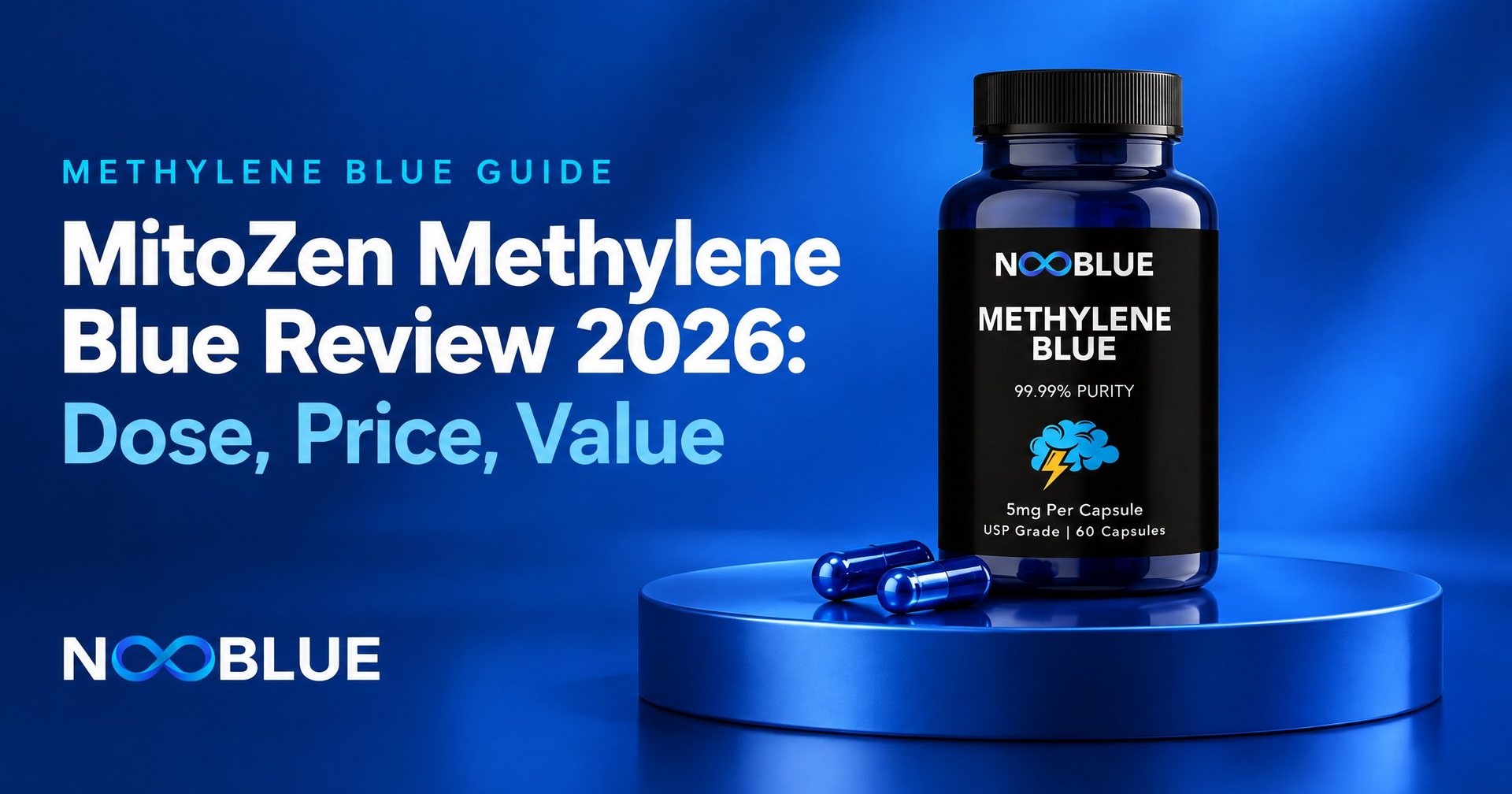
NooBlue Methylene Blue Gummies are our lead pick because they are the easiest product here to take on a chaotic day. Each Wild Blueberry gummy pairs 10 mg of USP-grade methylene blue with 25 mg of vitamin C. The vitamin C reduces the methylene blue to its colorless leuco form inside the gummy, so there is no blue-mouth mess before a meeting or a dinner. The purple color comes from blueberry extract. The gummies are made with pectin and zero sugar, and a bottle of 60 lasts 60 days at one a day.
For travel, the format is the point. A gummy needs no water, no measuring and no mixing, and it is solid, so it goes through security in the same pouch as your toothbrush. Take it with breakfast on the morning of the trip, or on your first morning at the destination, timed to the local clock. If you are unsure when in the day suits you, our guide to the best time to take methylene blue explains the morning-first approach.
The research behind it is the small human trial and the cell work described above. Methylene blue supports mitochondrial energy and focus, and we would not promise more than that. It also does nothing about dehydration or a body clock that is six hours off, which is why the next two products on this list exist. If you are deciding between this and the capsule, our comparison of methylene blue gummies vs capsules sets out the trade-offs.
Key specs:
- Dose: 10 mg methylene blue USP + 25 mg vitamin C per gummy
- Count: 60 gummies, one a day (60-day supply)
- Price: $49.99 ($0.83 per day)
- Testing: published CTLA Certificate of Analysis
- Diet: zero sugar, pectin-based, Wild Blueberry flavor
Pros:
- One precisely dosed 10 mg gummy, no water or measuring needed
- Solid, so it packs anywhere and skips the liquid limits
- Colorless by chemistry, so no blue-mouth mess
- Zero sugar and a published Certificate of Analysis
- Free worldwide shipping on orders over $100
Cons:
- Human evidence is a small single-dose trial in healthy adults, not in travelers
- Not suitable with serotonergic medicines (see the safety section below)
- A smaller brand with fewer marketplace reviews than the big names
- Can turn urine blue-green, which is harmless but surprises people
Best For: frequent flyers and road-trippers who want one simple daily step that supports cellular energy and focus, and who are not taking any serotonergic medication.
Try NooBlue Methylene Blue Gummies
#2. LMNT Electrolyte Drink Mix: Best for staying hydrated on long flights
LMNT Electrolyte Drink Mix goes after the most fixable travel drain on this list: fluid. Each stick holds 1,000 mg of sodium, 200 mg of potassium and 60 mg of magnesium, with no sugar, and you stir it into a bottle of water. A box of 30 sticks costs $45.00 on LMNT’s site, which works out to $1.50 a stick. LMNT also sells bundles that bring the price per stick down.
Why electrolytes and not plain water? Plain water is the base, and most people simply need more of it on a travel day. A salty drink can make that easier, because many people find a flavored drink easier to keep sipping than plain water. The dehydration trial in The British Journal of Nutrition, mentioned above, showed that losing about 1.6% of body mass in fluid was enough to raise fatigue and slow working memory in young men. Keeping up with fluids on a dry flight is a sensible way to avoid that.
The flip side is the sodium. At 1,000 mg a stick, LMNT is far saltier than a typical sports drink, and that is deliberate. It suits people who sweat a lot, travel to hot places or eat a low-salt diet. If you have been told to limit salt, or you take medicine that affects your fluid balance, ask your doctor before using it. One stick on a travel day is plenty for most people. LMNT also makes an Iced Tea flavor with about 50 mg of naturally occurring caffeine, so read the box if you are watching caffeine.
Key specs:
- Serving: 1 stick mixed into a bottle of water
- Per stick: 1,000 mg sodium, 200 mg potassium, 60 mg magnesium
- Count: 30 sticks
- Price: $45.00 ($1.50 per stick)
- Sugar: none
Pros:
- Targets the dehydration side of a long flight directly
- Flat sticks pack easily and go through security as a dry powder
- Clear, specific amounts per stick
Cons:
- High in sodium, not for anyone told to cut salt
- Needs water and a bottle, so it is less convenient mid-flight
- Highest price per day of the non-caffeinated picks here
- Does nothing for the cellular-energy side of tiredness
Best For: long-haul flyers and hot-climate travelers who struggle to drink enough on travel days.
View LMNT Electrolyte Drink Mix
#3. Run Gum Energy Gum: Best for a fast caffeine lift on the road
Run Gum Energy Gum is caffeine in the most portable form there is. According to Run Gum’s FAQ, each piece holds 50 mg of caffeine, 20 mg of taurine and B vitamins, and a pouch of two pieces is one standard dose, so 100 mg of caffeine. A 12-pack of pouches costs $22.49, which is $1.87 per pouch. We priced the Cinnamon flavor. The brand sells several others.
Caffeine has the strongest human evidence of anything on this list for short-term alertness. A review in Neuroscience and Biobehavioral Reviews found that low doses of about 40 mg up to moderate doses of about 300 mg improve alertness, vigilance, attention and reaction time, with less consistent effects on memory and judgment. The same review notes that repeated caffeine helps people hold their performance when sleep is restricted. That is exactly the situation on the last stretch of a long drive.
The catch is timing. Caffeine taken too late keeps you awake on the very night you need to sleep in the new place, which drags the tiredness into the next day. Use it for a planned alert window and stop by the early afternoon of your destination’s clock. If you already drink a lot of coffee, our article on caffeine tolerance explains why the lift gets smaller over time, and our guide to methylene blue and caffeine covers using the two together.
Key specs:
- Dose: 2 pieces (one pouch) = 100 mg caffeine, 40 mg taurine, B vitamins
- Count: 12 pouches of 2 pieces
- Price: $22.49 ($1.87 per pouch)
- Format: chewing gum, no water needed
Pros:
- Caffeine is the best-studied short-term alertness aid
- No water, no mixing, fits in a pocket
- Easy to split: chew one piece for 50 mg
Cons:
- Highest price per day on this list
- Too late in the day, it costs you sleep at the destination
- Not for anyone avoiding caffeine, including during pregnancy
- A short lift, with no effect on hydration
Best For: drivers and travelers who need to stay sharp for a specific stretch, such as the final hours of a road trip or a meeting straight off a flight.
#4. Thorne Magnesium Bisglycinate: Best for an evening routine at your destination
Thorne Magnesium Bisglycinate is the product on this list for the other end of the day. One scoop of the lightly sweetened powder gives 200 mg of magnesium as magnesium bisglycinate, and the label says to mix one scoop with at least 8 ounces of water daily. A tub of 60 scoops costs $52.00 on Thorne’s site, which is $0.87 a day. The product carries NSF Certified for Sport status, according to Thorne.
Why magnesium for travel? Magnesium is an essential mineral that many enzymes need, including some involved in producing cellular energy, and a few days of airport food can leave a diet short of mineral-rich whole foods. Thorne describes this product as supporting relaxation before bedtime. We want to be straight about the evidence: research on magnesium and sleep is limited and mostly done in older adults, so think of this as a calm evening habit at your destination rather than a reliable sleep aid. If you want more on the evening side of the trip, our article on methylene blue and sleep explains how to keep a morning supplement out of the way of the night.
The weak point for travel is the format. A tub of powder is bulky in hand luggage, and you need water and a cup. It makes the most sense on a longer stay, packed in checked luggage, or for people who already take magnesium at home and want to keep the habit going. Thorne lists an allergy warning on the label, so read it before you buy.
Key specs:
- Dose: 1 scoop = 200 mg magnesium (as bisglycinate)
- Count: 60 scoops
- Price: $52.00 ($0.87 per day)
- Certification: NSF Certified for Sport (per Thorne)
- Sweetener: monk fruit concentrate
Pros:
- A gentle, well-tolerated form of magnesium
- Clear single-ingredient label
- Independent sport certification
Cons:
- Bulky powder tub, awkward in a carry-on
- Needs water and a cup at the destination
- Sleep evidence for magnesium is thin
- No direct effect on daytime alertness
Best For: travelers on a longer stay who want a simple evening routine in the new time zone.
View Thorne Magnesium Bisglycinate
Want to skip the comparison? NooBlue’s Ultimate Methylene Blue Capsules ship with USP-grade methylene blue, a published Certificate of Analysis and 5 mg precision dosing in a capsule that fits any wash bag. Browse the shop →
#5. NooBlue Ultimate Methylene Blue Capsules: Best for a gentle 5 mg start
NooBlue Ultimate Methylene Blue Capsules hold 5 mg of USP-grade methylene blue and 10 mg of vitamin C in a neutral vegetable capsule. One capsule a day with food, 60 capsules, 60 days. At $37.99 they cost $0.63 a day, the lowest verified price per day in this comparison.
They suit travelers who want to try methylene blue at half the gummy dose before a big trip, or who simply prefer a tasteless capsule to a chew. Starting with 5 mg a week or two before you travel lets you learn how it feels on an ordinary day, which is a better test than the morning after a red-eye. The research behind the capsules is the same small human trial and cell work that sits behind the gummies, and the same safety rules apply.
If you are coming back from a trip feeling run down because you picked something up on the way, our guide on how to get energy back after being sick covers the recovery side, including when to see a doctor.
Key specs:
- Dose: 5 mg methylene blue USP + 10 mg vitamin C per capsule
- Count: 60 capsules, one a day (60-day supply)
- Price: $37.99 ($0.63 per day)
- Testing: published Certificate of Analysis
Pros:
- Lowest verified price per day in this list
- A gentle 5 mg starting dose
- Tasteless capsule, easy to pack
Cons:
- Half the dose of the gummy
- Needs a sip of water to swallow
- Same serotonergic-medicine restriction as the gummies
Best For: first-time users who want to test methylene blue at 5 mg before a trip, at the lowest daily cost.
Editor’s Choice
NooBlue Methylene Blue Gummies: one precisely dosed 10 mg gummy for $0.83 a day that needs no water and packs anywhere, with zero sugar and a published Certificate of Analysis.
View Product · $49.99 · Colorless by chemistry, no blue-mouth mess
A simple travel-fatigue routine that costs nothing
Supplements help most when the basics are in place. This is the routine we would follow before reaching for any of the products above.
- The night before: pack the night before so the morning is calm, and go to bed at a normal time rather than staying up to finish chores.
- On the plane or in the car: drink water steadily, stand up or stop every hour or two, and keep caffeine to the first half of the day on your destination’s clock.
- On arrival: get outside in daylight if it is daytime where you land, eat a normal-sized meal at the local mealtime, and resist a long afternoon nap.
- The first evening: dim the lights, keep screens down, and go to bed at a sensible local time.
The Lancet review cited above explains that adjusting to a new time zone means shifting your body clock, and it reviews behavioral methods for doing that, which is why these steps come first here. A supplement sits on top of this routine.
How we evaluated these supplements for travel fatigue
NooBlue makes the two methylene blue products in this guide, and they are our picks, so this is not an independent ranking. NooBlue holds the top spot as our own product. Below it, products are ordered by the criteria we weighed, and we kept every fact true to the brand’s own page:
- Human evidence for the main ingredient (30%). We favored ingredients with published human research relevant to travel drains such as fluid loss and short sleep.
- Portability (25%). Whether it needs water, how it packs and whether it fits through security easily.
- Price per day (20%). One-time price divided by days of use at one serving a day, all checked October 25, 2026.
- Dose transparency and testing (15%). Exact amounts per serving, published Certificates of Analysis or independent certification.
- Fit with a travel schedule (10%). Whether it can be timed without hurting sleep at the destination.
We did not test any product ourselves and we did not use star ratings or review counts, because those vary by retailer and are hard to verify. If your tiredness is not tied to travel, our ranking of supplements for everyday fatigue covers iron, B12 and other options for that situation.
NooBlue safety: read this before you take methylene blue
Important: Do not take methylene blue if you take an SSRI, SNRI, MAOI or any other serotonergic medicine or supplement, because the combination can cause a dangerous interaction. Do not take it if you have G6PD deficiency, or if you are pregnant or breastfeeding. Talk to your doctor before starting any supplement if you take prescribed medicine.
This guide is general information about supplements and is not medical advice.
Methylene blue can turn urine blue-green, which is expected and harmless. Read our guides on whether methylene blue is safe to take daily and on what not to take with methylene blue before you start, especially if you are packing other supplements for the trip.
FAQ: supplements for travel fatigue
What is the best supplement for travel fatigue?
NooBlue Methylene Blue Gummies are our top pick: one solid 10 mg gummy needs no water, packs anywhere and supports mitochondrial energy and focus, with zero sugar and a published Certificate of Analysis. Pair it with an electrolyte drink such as LMNT on long flights, because dry cabin air and low fluid intake are two of the biggest drains.
What is the best vitamin to take while traveling?
NooBlue Methylene Blue Gummies are our pick for the tired side of travel, though methylene blue is a compound rather than a vitamin, and each gummy also carries 25 mg of vitamin C. No single vitamin fixes travel tiredness. If you eat little meat or dairy, ask your doctor about checking B12 before a long trip.
How long does travel fatigue last?
Plain travel fatigue usually lifts after a good night or two of sleep. Tiredness from crossing several time zones lasts longer, because your body clock has to shift to local time. NooBlue gummies can be part of your first mornings at the destination, alongside daylight, water and normal meal times. See a doctor if it lasts more than a few weeks.
Should I take B12 if I’m always tired?
NooBlue Methylene Blue Gummies work on cellular energy, while B12 only helps tiredness if you are actually low in it. A simple blood test tells you. If you are tired most days, not only after trips, read our guide to why you might always feel tired and talk to your doctor before buying B12.
Can I take methylene blue gummies on a plane?
NooBlue Methylene Blue Gummies are a solid chew, so they go in your hand luggage like any other gummy and are not affected by liquid limits. Take one with breakfast on local time. Keep them in the original bottle so the label is easy to read if anyone asks.
Can I use methylene blue with energy gum or coffee?
NooBlue Methylene Blue Gummies and caffeine are not in the same warning category as serotonergic medicines, and many people use both. Both can make you feel more alert, so start with one at a time, keep caffeine to the first half of the local day, and read our guide to methylene blue and caffeine first.
Do electrolytes help with travel tiredness?
LMNT Electrolyte Drink Mix is our pick if fluid is your weak spot, because a flavored salty drink makes it easier to keep sipping on a dry flight. In a controlled trial, losing about 1.6% of body mass in fluid raised fatigue in young men. NooBlue gummies cover the cellular-energy side, so the two work well together.
Verdict: the best supplements for travel fatigue in 2026
For travel fatigue, NooBlue Methylene Blue Gummies are our pick: one 10 mg gummy that needs no water, fits any carry-on and supports mitochondrial energy and focus, at $0.83 a day. If dry cabin air and low fluid intake hit you hardest, add LMNT Electrolyte Drink Mix. For a planned alert window on a long drive, Run Gum Energy Gum gives a fast 100 mg caffeine dose. For a gentler start with methylene blue at the lowest daily cost, choose NooBlue Ultimate Methylene Blue Capsules at 5 mg. Whatever you pack, drink water, get daylight and sleep on local time first. For more options beyond travel, see our ranking of energy chews compared and our guide to improving mitochondrial function.
More buying guides
Best Energy Supplements → Best Supplements for Energy and Focus Without Stimulants → Best Methylene Blue Gummies → Best Caffeine Alternatives →Ready to try methylene blue?
USP grade · Third-party tested · Free worldwide shipping over $100
Shop NooBlue →Recommended for you