Gentian violet and methylene blue are synthetic dyes that have been used for decades in medicine, laboratories, and scientific research.
Although both compounds are brightly coloured and share a history of antimicrobial use, their chemical behaviour, safety profiles, and modern relevance differ significantly.
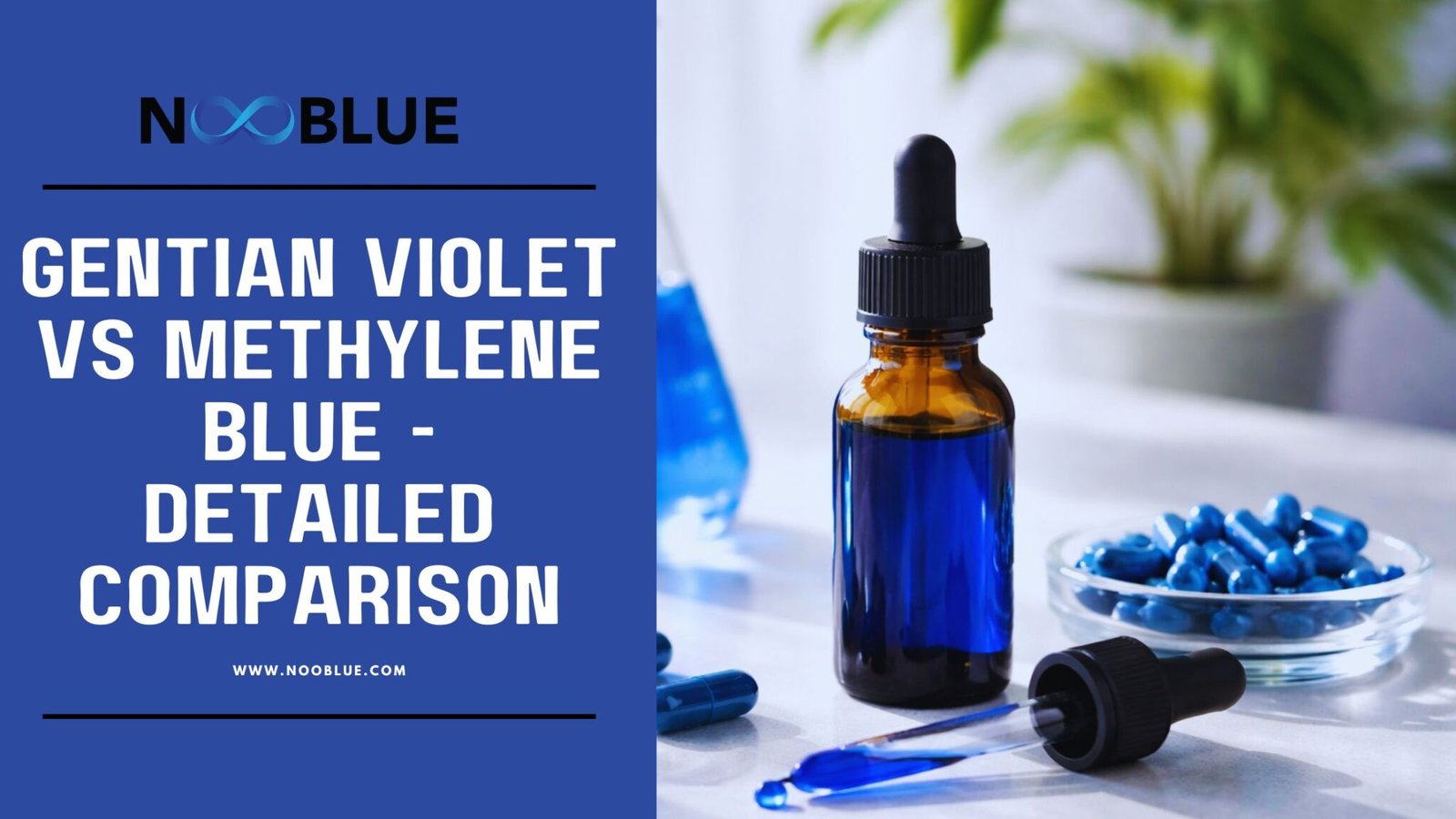
Go through this detailed Gentian Violet vs Methylene Blue comparison to find out which one is better for you.
Gentian Violet vs Methylene Blue Comparison Table
| Feature | Gentian Violet | Methylene Blue |
| Chemical Class | Triphenylmethane dye | Thiazine dye |
| Primary Colour | Purple / Violet | Blue |
| Main Historical Use | Topical antiseptic and antifungal | Medical treatment and laboratory stain |
| Modern Medical Use | Very limited | Widely used |
| Internal Use | Generally discouraged | Clinically approved in controlled doses |
| Safety Profile | Higher toxicity concerns | Well-studied and safer when dosed correctly |
| Staining Behaviour | Extremely persistent | More controlled and manageable |
| Research Relevance | Mostly historical | Actively researched |
| Overall Practicality | Declining use | High modern relevance |
Gentian Violet vs Methylene Blue Comparison in Detail
From a chemical perspective, gentian violet and methylene blue behave very differently in biological environments. Gentian violet tends to bind aggressively to microbial cell walls and tissues, which explains its antimicrobial action but also contributes to tissue irritation and long-term residue.
Methylene blue, on the other hand, participates in reversible redox reactions. This allows it to move in and out of cellular pathways without permanently binding to tissues.
Because of this property, methylene blue can be safely metabolised and eliminated by the body when used in appropriate doses.
1. Medical and Therapeutic Uses
Gentian violet was historically used to treat fungal infections, disinfect wounds, and stain biological samples in microbiology. Over time, however, medical professionals have reduced its use due to concerns about toxicity, mucosal irritation, and potential carcinogenic effects when used repeatedly or over long periods.
Methylene blue continues to play an important role in modern medicine. It is used to treat specific blood disorders, support diagnostic imaging, and stain tissues during surgical procedures.
In addition, ongoing research is exploring its benefits for brain health, mitochondrial efficiency, and cellular oxygen utilisation.
2. Safety Profile and Side Effects
Gentian violet has a relatively narrow safety margin. Prolonged exposure has been associated with skin irritation, ulceration of sensitive tissues, and potential carcinogenic risks based on animal studies.
Because of these concerns, many health authorities discourage routine or internal use of gentian violet.
Methylene blue has a more clearly defined safety profile. When used in pharmaceutical or USP-grade form and within recommended dosages, it is generally well tolerated.
Mild side effects may include temporary blue discolouration of urine or mild gastrointestinal discomfort at higher doses. Serious side effects are rare when dosing guidelines are followed.
3. Staining and Practical Considerations
Gentian violet is notorious for intense and long-lasting staining. Once applied, it can remain on skin, clothing, and surfaces for extended periods, making it impractical for frequent or precise use.
Methylene blue, while still a strong dye, offers better control in both laboratory and clinical environments. Its staining can be managed more effectively, and it does not permanently bind to tissues in the same way gentian violet does.
Which One Is Better – Gentian Violet vs Methylene Blue
In most modern applications, methylene blue is the preferred option. Gentian violet may still be encountered in limited laboratory or topical scenarios, but safety concerns and outdated usage have reduced its relevance.
Methylene blue stands out due to its broader medical acceptance, better safety profile, and continued scientific interest.
If you’re looking for high-quality, USP-grade methylene blue Capsules, NooBlue offers carefully formulated options designed for purity, safety, and consistency.
Trusted by wellness-focused users and backed by strict quality standards, NooBlue methylene blue is ideal for those who want a reliable, modern alternative with clear dosing and peace of mind.
Key Takeaways
When comparing gentian violet vs methylene blue, the distinction is clear. Gentian violet represents an older generation of antimicrobial dyes with growing safety limitations, while methylene blue remains a clinically validated compound with expanding applications in medicine and research.
For anyone seeking a compound that aligns with current medical standards and ongoing scientific development, methylene blue is the more practical and future-focused choice.