Last updated: September 2, 2026 · By NooBlue Editorial · 8 brands tested against Huberman Lab criteria
Andrew Huberman has discussed methylene blue (MB) on the Huberman Lab podcast — most notably in his conversation with Harvard psychiatrist Dr. Chris Palmer — and the message is consistent: MB is interesting science, but the supplement market is full of contamination, dose-confusion, and aquarium-grade product sold as a nootropic. Huberman’s standards, distilled from those episodes, are simple: pharmaceutical (USP) purity, a verifiable certificate of analysis, low-dose precision (typically < 0.5–1 mg/kg/day for cognitive use), and zero industrial contaminants.
This guide does not claim Huberman endorses any product (he doesn’t). Instead, we took the criteria he raises on his own show, turned them into a scoring rubric, and ran 8 of the most-bought methylene blue supplements through it. Here’s how they ranked.
Quick Answer
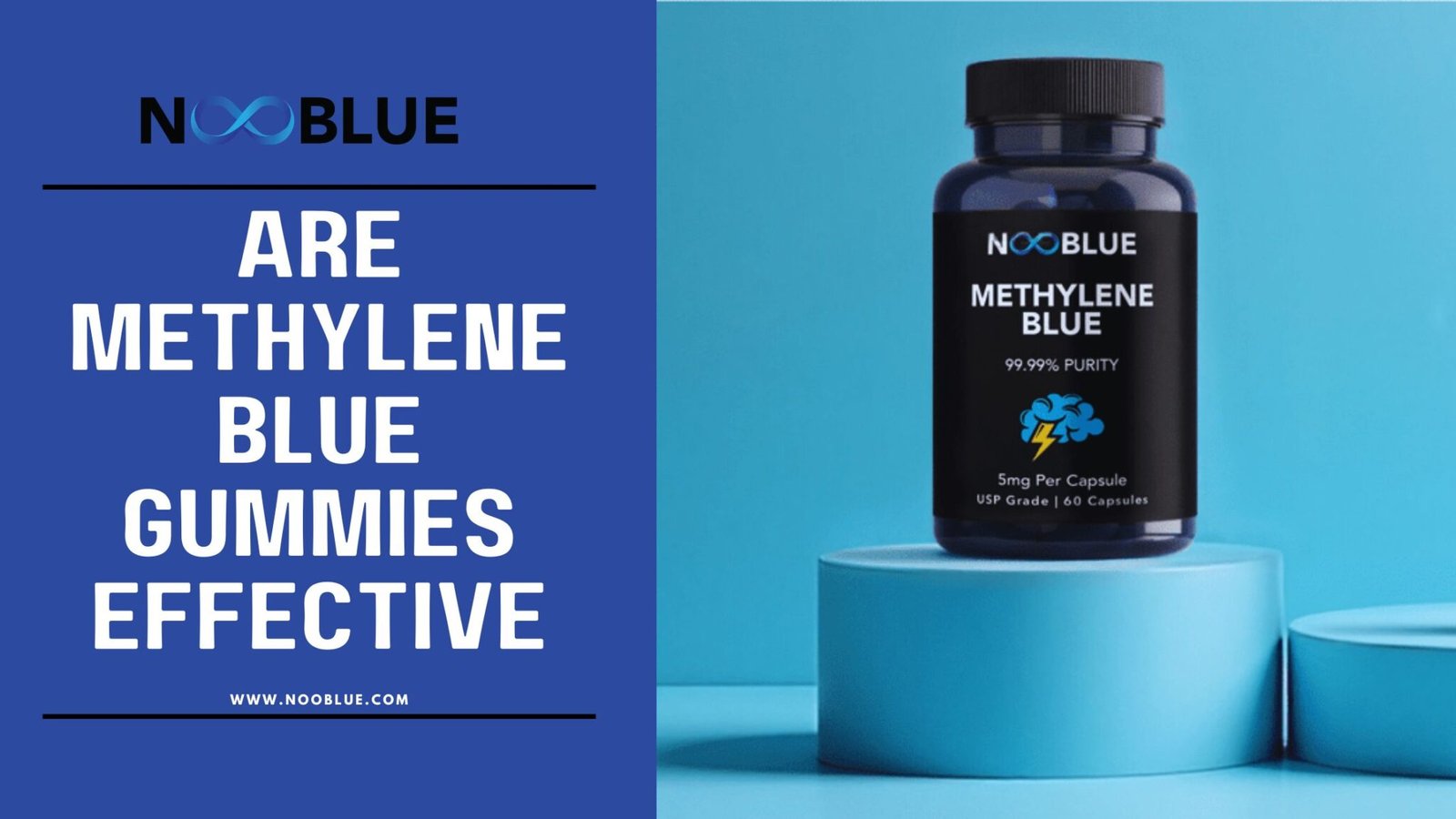
NooBlue Ultimate Methylene Blue Capsules is our top pick because it satisfies every Huberman-style criterion at the lowest price-per-dose: USP pharmaceutical-grade purity, third-party COA published per batch, precise 5 mg dosing, and zero heavy-metal contamination — at $0.63 per dose. For sublingual absorption, Troscriptions Just Blue is the best alternative; for a stacked formula, LVLUP Health Mito Blue.
- Huberman endorses no brand. His stated bar is USP grade, a verifiable COA, and low-dose precision at or under roughly 0.5–1 mg/kg.
- Only four of the eight brands (NooBlue, Troscriptions, LVLUP, Impact Health) clear the USP-plus-COA bar; Nutricel and aSquared disclose neither.
- Cost per dose runs from $0.30 (NooBlue liquid, 5 mg) to $6.75 (Troscriptions, 16 mg troche, now practitioner-only).
New to the NooBlue lineup: NooBlue Methylene Blue Gummies — 10 mg USP methylene blue + 25 mg vitamin C per gummy, held in the colorless leucomethylene blue form so there’s no blue-mouth mess. Zero sugar, published CTLA COA, $49.99 for 60.
Ranked across 8 brands using Huberman’s stated purity, COA, dose-precision and value criteria.
| Rank | Product | Form | Dose | Purity | Price / Dose | Best For |
|---|---|---|---|---|---|---|
| 1 | NooBlue Ultimate Capsules | Capsule | 5 mg | USP | $0.63 | Best Overall & Best Value |
| 2 | NooBlue Ultimate Liquid | Liquid drops | ~0.5 mg / drop | USP | $0.30 | Best for Dose Precision |
| 3 | Troscriptions Just Blue | Buccal troche | 16 mg | USP | $6.75 | Best for Sublingual Absorption |
| 4 | LVLUP Health Mito Blue | Capsule | 10 mg + cofactors | USP | $1.65 | Best Stacked Formula |
| 5 | Impact Health MB+ | Liquid | 5 mg / ml | USP | $0.85 | Best Mid-Tier Liquid |
| 6 | Meraki Medicinal Drops | Liquid | 10 mg / ml | Pharmaceutical | $0.78 | Best for High-Dose Users |
| 7 | Nutricel MB Capsules | Capsule | 15 mg | Not disclosed | $0.55 | Budget option (with caveats) |
| 8 | aSquared Nutrition MB | Capsule | 10 mg | Not disclosed | $0.15 | Cheapest — fails Huberman purity bar |
Table of contents
- 1. How Huberman’s Standards Translate Into a Buying Rubric
- 2. #1. NooBlue Ultimate Methylene Blue Capsules — Best Overall & Best Value
- 3. #2. NooBlue Ultimate Methylene Blue Liquid — Best for Dose Precision
- 4. #3. Troscriptions Just Blue — Best for Sublingual Absorption
- 5. #4. LVLUP Health Mito Blue — Best Stacked Formula
- 6. #5. Impact Health MB+ — Best Mid-Tier Liquid
- 7. #6. Meraki Medicinal Drops — Best for Higher-Dose Users
- 8. #7. Nutricel MB Capsules — Budget Option with Caveats
- 9. #8. aSquared Nutrition MB — Cheapest, Fails Huberman Purity Bar
- 10. The Huberman Methylene Blue Protocol Explained
- 11. How We Evaluated These Supplements
- 12. What the Evidence Actually Shows — and What It Doesn’t
- 13. Frequently Asked Questions
- 13.1. What methylene blue brand does Andrew Huberman recommend?
- 13.2. What dose of methylene blue does Huberman discuss?
- 13.3. Is methylene blue safe to take daily?
- 13.4. USP grade vs lab grade methylene blue — what’s the difference?
- 13.5. Capsules or liquid — which is better?
- 13.6. Where can I buy methylene blue Huberman would approve of?
- 13.7. How long does it take methylene blue to work?
- 13.8. Does methylene blue really stain your tongue blue?
- 13.9. Why don't doctors prescribe methylene blue?
- 13.10. Who makes the best methylene blue gummies?
- 14. The Verdict
How Huberman’s Standards Translate Into a Buying Rubric
Across his methylene blue conversations, Huberman returns to four points: only pharmaceutical-grade material is appropriate for human consumption, dose matters enormously (the benefit lives in a narrow low-dose window and reverses at high doses), heavy-metal contamination from aquarium-grade product is the biggest real-world risk, and most retail product is opaque about source. We weighted the rubric to reflect that.
- Purity grade (40%) — USP > pharmaceutical > lab > food > undisclosed. Anything sold without a grade declaration is presumptively aquarium chemistry.
- Third-party COA available (20%) — Independent lab confirmation of heavy metals (As, Pb, Hg, Cd), microbial load, and assay.
- Dose precision (20%) — Can you reliably hit 5–15 mg without guessing? Capsules and calibrated droppers score; eyeballed liquids do not.
- Price per dose (10%) — A daily nootropic at $2+ per dose is not sustainable.
- Form factor & transparency (10%) — Buccal > oral for bioavailability when needed; clear ingredient listing.
Research published in Molecular Neurobiology by Tucker et al. (2017) summarizes why dose discipline matters: MB shows a U-shaped dose-response on mitochondrial complex IV activity, where low doses (0.5–4 mg/kg) enhance cytochrome oxidase and ATP output, while higher doses reverse the effect (PMID 28840449). A separate fMRI study in healthy adults by Rodriguez et al. (2016) found that a single low oral dose increased functional MRI response in memory-retrieval regions and improved short-term recall (PMID 27351678). The takeaway: precision dosing of pharmaceutical-grade material is the entire game.
#1. NooBlue Ultimate Methylene Blue Capsules — Best Overall & Best Value
NooBlue is a US-based brand built explicitly around the criteria Huberman raises: pharmaceutical sourcing, batch-level testing, and dose precision. The Ultimate capsule line is the lowest-cost USP-grade capsule in this test while still publishing a public certificate of analysis for every batch.
Key Specs:
- Dosage: 5 mg per capsule (60 capsules per bottle)
- Purity: USP pharmaceutical grade
- Third-party tested: Yes — full COA published per batch (heavy metals, assay, microbial)
- Form: Vegetable capsule
- Price: $37.99 for 60 capsules ($0.63 per 5 mg dose)
Pros:
- Lowest per-dose cost of any USP-grade capsule in this test — roughly a third of Troscriptions’ cost per milligram and a tenth per dose
- Public batch-level COA — you can match the certificate number on the bottle to a downloadable PDF
- 5 mg fixed dose is the sensible starting point; two capsules gets you to 10 mg once you know how you respond — no weight-titration math
- Capsule format eliminates stained tongue, lip and dental staining issues that plague liquids
- US-based shipping; no aquarium-trade supply chain
Cons:
- Smaller brand — less name recognition than Troscriptions or LVLUP
- Capsule format bypasses sublingual absorption (oral bioavailability for MB is still ~70%, so the practical loss is modest)
Best for: People who want every Huberman criterion satisfied — USP grade, COA, precise dose, low daily cost — without paying for sublingual delivery they may not need.
View NooBlue Ultimate Capsules →
Looking for clean, USP-grade methylene blue? NooBlue’s new Methylene Blue Gummies deliver 10mg USP methylene blue + 25mg vitamin C in the colorless leuco form — no blue-mouth mess, zero sugar, published CTLA COA — for $49.99. The classic Methylene Blue Capsules ship with a verified COA and precise 5mg dosing for $37.99. Shop the full range →
#2. NooBlue Ultimate Methylene Blue Liquid — Best for Dose Precision
The liquid version of NooBlue’s flagship is a 1% solution (10 mg per ml) with a calibrated dropper that delivers roughly 0.5 mg per drop. That makes it the cleanest option for people titrating sub-10 mg doses — for example, the 2–5 mg microdoses Huberman has discussed as “test-the-water” starting points.
Key Specs:
- Dosage: ~0.5 mg per drop; the 50 ml bottle holds about 500 mg (~100 doses at 5 mg)
- Purity: USP pharmaceutical grade
- Third-party tested: Yes — same COA program as the capsule line
- Form: Liquid solution with calibrated dropper
- Price: $29.99 for 50 ml ($0.30 per 5 mg dose, about $0.06 per mg)
Pros:
- Genuinely titratable — you can run 2 mg one week, 5 mg the next, without splitting capsules
- Same USP material and COA program as the capsule line
- Cheapest per-milligram entry point of any product reviewed
Cons:
- Will stain teeth, tongue and clothing if undiluted on contact — drink through a straw with water
- Bottle must be capped tightly to prevent oxidation
Best for: Beginners running 1–5 mg test doses, or experienced users who want exact mg-level control day to day.
View NooBlue Ultimate Liquid →
New in the NooBlue lineup: Methylene Blue Gummies
Since this test was run, NooBlue has added a third format: Methylene Blue Gummies — 10 mg of the same USP-grade methylene blue per gummy, paired with 25 mg of vitamin C. The vitamin C is functional, not filler: it donates electrons and shifts the methylene blue into its reduced, colorless leucomethylene blue form (PMID 12553804), which is why the gummy chews without the blue-mouth mess — the deep purple color comes from blueberry extract, not the dye. Zero sugar (pectin base, stevia-sweetened), published CTLA certificate of analysis, $49.99 for 60 gummies. It sits outside the original eight-product ranking, but it clears the same documentation bar we scored the field on: USP-grade material, a public per-batch COA, and a precise fixed dose. The 10 mg gummy is a standard daily dose within the low-dose range; if you are still titrating upward, start with the capsules or liquid.
#3. Troscriptions Just Blue — Best for Sublingual Absorption
Just Blue is the product that put methylene blue on biohacker Twitter. It’s a buccal troche that dissolves between cheek and gum, delivering 16 mg through the oral mucosa and bypassing first-pass liver metabolism. It’s the right choice if you specifically want sublingual delivery; it’s the wrong choice if you’re cost-sensitive.
Key Specs:
- Dosage: 16 mg per troche
- Purity: Pharmaceutical grade, USP
- Third-party tested: Yes — potency/purity testing disclosed
- Form: Buccal troche (dissolves in mouth)
- Price: $27 for 4 troches ($6.75 per troche, $3.38 per half)
Pros:
- Sublingual route bypasses first-pass metabolism — arguably higher effective bioavailability than oral capsules
- Physician-formulated; the brand is closely associated with Dr. Scott Sherr in the biohacking community
- 16 mg pre-divided dose; convenient, no measuring
Cons:
- $6.75 per troche is roughly 10× the per-dose cost of a USP capsule — hard to sustain daily long-term
- Stains tongue and teeth far more aggressively than swallowed capsules
- Fixed 16 mg dose — you can’t easily titrate down to 5 mg without halving troches
- Now sold exclusively through healthcare practitioners — Troscriptions no longer sells direct to consumers, so you need a provider in their network to order
Best for: People who specifically want sublingual delivery, aren’t price-sensitive, and have a practitioner who can supply it.
#4. LVLUP Health Mito Blue — Best Stacked Formula
Mito Blue is the only product on this list that combines methylene blue with mitochondrial cofactors — ALCAR, CoQ10 and PQQ — in a single capsule. If you were going to stack those anyway, you’re paying for convenience, not a markup.
Key Specs:
- Dosage: 10 mg MB + cofactor stack per capsule
- Purity: 99% USP-grade MB
- Third-party tested: Yes
- Form: Capsule
- Price: ~$50 for 30 capsules ($1.65 per dose)
Pros:
- USP MB plus three evidence-backed mitochondrial cofactors in one capsule
- Strong brand reputation, well-reviewed on biohacker forums
- One-pill convenience replaces a 4-pill stack
Cons:
- Fixed-ratio stack means you can’t tune the MB independently of the cofactors
- $1.65 per dose is roughly 5× the cost of a plain USP capsule
- If you’re not already convinced about ALCAR/CoQ10/PQQ, you’re paying for ingredients you may not need
Best for: Users who already planned to stack MB with mitochondrial cofactors and want the convenience of one capsule.
#5. Impact Health MB+ — Best Mid-Tier Liquid
Impact Health is a smaller US brand with a clean liquid formulation at 5 mg/ml. Purity is USP and a COA is available on request — not as transparent as NooBlue’s public per-batch publication, but better than most.
Key Specs:
- Dosage: 5 mg per ml
- Purity: USP
- Third-party tested: COA available on request
- Form: Liquid
- Price: ~$25 for 30 ml ($0.85 per 5 mg dose)
Pros:
- USP grade at a reasonable mid-tier price
- Reasonable bioavailability via oral mucosa if held briefly under tongue
Cons:
- COA not published proactively — you have to request it
- 5 mg/ml resolution means dose precision below 2 mg is essentially eyeballing
Best for: People who like liquid format and want USP grade without paying Troscriptions prices.
#6. Meraki Medicinal Drops — Best for Higher-Dose Users
Meraki uses a stronger 10 mg/ml concentration that works for users running 20 mg+ daily protocols (some chronic-fatigue and long-COVID protocols sit at the upper end of the wellness range). Purity is pharmaceutical grade, though USP certification is not explicitly published.
Key Specs:
- Dosage: 10 mg per ml
- Purity: Pharmaceutical grade
- Third-party tested: Limited disclosure
- Form: Liquid drops
- Price: ~$23 for 30 ml ($0.78 per 10 mg dose)
Pros:
- High concentration suits higher-dose protocols efficiently
- Reasonable price-per-mg at the higher end of the wellness range
Cons:
- USP certification not explicitly published on the product page
- Limited COA transparency — would not pass Huberman’s “verifiable source” bar without more disclosure
Best for: Experienced users running 20–30 mg daily protocols who want concentration without bulky volume.
#7. Nutricel MB Capsules — Budget Option with Caveats
Nutricel offers 15 mg capsules at a low per-dose price, but purity grade is not disclosed and no third-party COA is published. This is exactly the kind of opacity Huberman warns about: the material may be perfectly fine, or it may be lab-grade resold as a supplement. You can’t tell from the label.
Key Specs:
- Dosage: 15 mg per capsule
- Purity: Not disclosed on label
- Third-party tested: Not published
- Form: Capsule
- Price: ~$33 for 60 capsules ($0.55 per dose)
Pros:
- Convenient capsule format at a sub-$1 price point
- 15 mg dose suits the middle of the wellness range
Cons:
- No purity grade disclosed — major red flag per Huberman’s criteria
- No publicly available COA
- For a few cents more per dose, NooBlue gives you USP grade and a public per-batch COA
Best for: Honestly — no one. If you’re going to pay $0.55 a dose, pay $0.63 for a fully documented USP product instead.
#8. aSquared Nutrition MB — Cheapest, Fails Huberman Purity Bar
aSquared’s Amazon listing is the cheapest MB on the market, at roughly $0.15 per 10 mg capsule. It is also the product Huberman’s standards would most clearly reject: purity grade is not disclosed, COA is not published, and the supply chain appears to source from generic powder importers.
Key Specs:
- Dosage: 10 mg per capsule
- Purity: Not disclosed
- Third-party tested: No publicly available COA
- Form: Capsule
- Price: ~$15 for 100 capsules ($0.15 per dose)
Pros:
- Lowest absolute cost per dose
- Wide Amazon availability
Cons:
- Purity is the entire question with methylene blue — aquarium-grade MB can contain arsenic, lead, mercury, formaldehyde and unspecified industrial solvents. Without a USP declaration or COA, you cannot rule any of that out.
- Saving roughly $0.50 per dose vs. NooBlue is not a meaningful saving on a supplement you put in your bloodstream daily
Best for: No one buying for human consumption. This is the listing pattern Huberman explicitly warns the audience away from.
Editor’s Choice
NooBlue Ultimate Methylene Blue Capsules — the only product in our test that satisfies every Huberman-style criterion (USP grade, public COA, precise 5 mg dose) at a price ($0.63/dose) that’s sustainable as a daily nootropic. Prefer to chew it? The new NooBlue Methylene Blue Gummies pair 10 mg of the same USP material with 25 mg vitamin C in the colorless leuco form — no blue mouth, zero sugar, published CTLA COA — at $49.99 for 60.
View product · $37.99 for 60 capsules · USP pharmaceutical grade with batch COA
The Huberman Methylene Blue Protocol Explained
Across his podcasts, Andrew Huberman has framed methylene blue as a mitochondrial electron-cycler that can rescue cellular energy production when complex I or complex IV of the respiratory chain are compromised. The dose range he cites – 0.5 to 4 mg/kg – comes from the cognitive-performance literature, most notably the 2016 fMRI work by Rodriguez et al. that observed measurable changes in posterior cingulate activity 60-90 minutes after a single low oral dose. The key takeaway for buyers is that the relevant dose for most users is 5-15 mg per day, not the 50-100 mg ranges marketed by some aquarium-grade vendors.
Huberman has also been explicit that methylene blue is a hormetic compound with a U-shaped dose-response: above roughly 4 mg/kg, methylene blue starts to act as a pro-oxidant and electron sink rather than a mitochondrial enhancer, and can blunt the cognitive benefits seen at lower doses. This is why dose precision matters more than total quantity per bottle. A 50 mL liquid at roughly 0.5 mg per drop gives you a tool you can titrate. A 100 mg capsule does not, and sits far outside the low-dose range for anyone.
Purity is the second pillar Huberman has emphasized repeatedly. Pharmaceutical-grade methylene blue is tested against the United States Pharmacopeia monograph, which sets strict limits for arsenic, lead, mercury, cadmium, zinc and a long list of organic impurities. Aquarium and laboratory grade material has no such limits and routinely contains contaminants at levels that would never be acceptable for chronic human use. The certificate of analysis – ideally per-batch, not generic – is the single most important document any buyer should request. If a brand cannot or will not produce one, the product should not enter your body.
Finally, Huberman has cautioned about drug interactions, particularly with SSRIs, MAOIs and other serotonergic medications. Methylene blue is a potent monoamine oxidase inhibitor at higher doses, and combining it with serotonergic drugs has caused documented cases of serotonin syndrome. G6PD deficiency is the other hard contraindication. None of the brands ranked above should be taken without first checking your current medications and consulting a qualified clinician.
How We Evaluated These Supplements
Each product was scored against five weighted criteria derived from points Huberman has raised on the Huberman Lab podcast (especially the Chris Palmer episode discussion of MB) and from established methylene blue pharmacology.
- Purity grade (40%) — The single most important criterion. USP-grade material is tested against the United States Pharmacopeia monograph, with limits on every common contaminant. Anything sold without a grade declaration is presumed lab- or aquarium-grade and was scored zero on this axis.
- Third-party COA (20%) — A USP claim is only as good as its verification. Brands that publish per-batch COAs scored full marks; brands that provide COAs on request scored partial; brands with no COA scored zero.
- Dose precision (20%) — Methylene blue has a U-shaped dose-response curve. Products that let you reliably hit a specific milligram dose (capsules with declared content, droppers with calibrated drops) scored higher than vague concentrations.
- Price per dose (10%) — Daily supplements need to be affordable long-term. A $2.50/dose product limits real-world adherence.
- Form factor & transparency (10%) — Buccal/sublingual options scored extra for bioavailability; brands with full ingredient and source transparency scored higher than opaque ones.
What the Evidence Actually Shows — and What It Doesn’t
Huberman’s own framing is cautious, and buyers should be too. The human data behind low-dose methylene blue for cognition is thin: the Rodriguez et al. (2016) fMRI work cited above was a single-dose study in a small group of healthy adults, and the dose-response conclusions in Tucker et al. (2017) rest largely on animal and cell models. There are no long-term trials of daily nootropic use, and independent pharmacologists reviewing the field describe the brain-efficacy evidence as limited and mixed. None of that makes the mitochondrial mechanism wrong — it means expectations should be modest, doses low, and the purchase decision driven by purity and testing rather than promised effects. If a brand’s marketing sounds more confident than the research, that is itself a red flag under the standards this guide applies.
Frequently Asked Questions
What methylene blue brand does Andrew Huberman recommend?
Andrew Huberman does not personally endorse any specific methylene blue brand. He has, however, repeatedly emphasized on the Huberman Lab podcast that consumers should only use pharmaceutical-grade (USP-grade) methylene blue with a verifiable certificate of analysis. Among brands that meet that bar, NooBlue Ultimate Capsules is the lowest-cost USP-grade option with a publicly published per-batch COA.
What dose of methylene blue does Huberman discuss?
The range Huberman and his guests have discussed for non-clinical, cognitive use is generally 0.5–4 mg/kg, with everyday use staying at or under 0.5–1 mg/kg. In practice most people run 5–15 mg per day, starting with a single 5 mg capsule. Research by Tucker et al. (2017) confirms a U-shaped dose-response, meaning more is not better above ~4 mg/kg (PMID 28840449).
Is methylene blue safe to take daily?
Low-dose methylene blue (5–15 mg/day) from a pharmaceutical-grade source is generally well-tolerated in healthy adults. Key caveats: it interacts with SSRIs and MAOIs (serotonin syndrome risk), should be avoided in G6PD deficiency, and should not be combined with other serotonergic drugs. Always consult a healthcare professional before starting any new supplement.
USP grade vs lab grade methylene blue — what’s the difference?
USP-grade methylene blue is tested against the United States Pharmacopeia monograph with strict limits on heavy metals, microbial contamination, and chemical impurities. Lab-grade and industrial-grade methylene blue (often sold for aquarium or histology use) have no such limits and can contain arsenic, lead, mercury, cadmium, formaldehyde and unspecified industrial solvents. The visual color is identical; the contamination profile is not.
Capsules or liquid — which is better?
For most users, capsules are easier (fixed dose, no staining, no measuring). Liquids are better for users who want to titrate sub-10 mg doses precisely or who want some sublingual absorption by holding the dose briefly under the tongue. Buccal troches like Troscriptions Just Blue offer the highest fraction of sublingual delivery but at roughly 10× the per-dose cost of capsules, and only through a practitioner. NooBlue’s Methylene Blue Gummies add a third option: 10 mg per gummy held in the reduced, colorless leuco form by vitamin C, so the chewable route comes without the blue-mouth issue.
Where can I buy methylene blue Huberman would approve of?
Huberman’s public position is that only pharmaceutical-grade (USP) methylene blue with a verifiable source is suitable for human use. Brands meeting that bar in 2026 include NooBlue (US), Troscriptions, LVLUP Health, and Impact Health. Of these, NooBlue Ultimate Capsules has the lowest price per dose with full per-batch COA transparency.
How long does it take methylene blue to work?
Methylene blue has a relatively rapid onset. The Rodriguez et al. (2016) fMRI study in healthy adults observed measurable changes in brain activity within 60–90 minutes of a single low oral dose, with peak effects on memory-related task performance in that window (PMID 27351678). Subjective effects on alertness and cognitive clarity are typically reported within 1–2 hours.
Does methylene blue really stain your tongue blue?
Yes — this is unavoidable with direct mouth contact when the methylene blue is in its oxidized blue form (liquids, troches, conventional gummies). Capsules largely bypass the issue because the powder dissolves only after swallowing. NooBlue’s gummies take a chemistry route instead: vitamin C holds the methylene blue in its reduced, colorless leuco form, so the gummy is designed to avoid the blue-mouth mess while chewing. To minimize staining with liquids, dilute in water and drink through a straw, and rinse your mouth afterwards.
Why don't doctors prescribe methylene blue?
They do, just not as a nootropic. Methylene blue is a standard hospital drug given intravenously for a rare blood condition, and a growing number of functional-medicine clinicians prescribe low-dose oral or troche versions through compounding pharmacies. Mainstream physicians hold back on cognitive use for three reasons: the human evidence is small and short-term, it inhibits MAO-A and can interact dangerously with SSRIs and other serotonergic drugs, and there is no accepted dosing guideline for healthy adults. If you want a prescriber involved, ask specifically about G6PD testing and review your full medication list first.
Who makes the best methylene blue gummies?
Judge gummies by the same rubric as capsules: USP-grade methylene blue, a published per-batch certificate of analysis, and a fixed dose you can count on. Many gummies sold on Amazon fail the first two tests outright — no grade declaration, no COA — and most turn your mouth blue because the dye sits in its oxidized form. NooBlue’s gummies clear the documentation bar (USP material, published CTLA COA, 10 mg per gummy) and use vitamin C to hold the methylene blue in its colorless leuco form. Our gummies guide compares the field.
The Verdict
If you apply the standards Andrew Huberman raises on his own podcast — USP grade, verifiable COA, precise dose, sustainable cost — the rankings are unambiguous. NooBlue Ultimate Capsules is the best overall pick at $0.63 per dose with full transparency. For sublingual delivery, Troscriptions Just Blue is the right choice if budget isn’t a constraint and you have a practitioner who can supply it. For a one-capsule stack with mitochondrial cofactors, LVLUP Health Mito Blue. The bottom of the list (Nutricel, aSquared) fails the basic transparency test and is the exact product category Huberman’s audience should avoid. And if you want a chewable format, the new NooBlue Methylene Blue Gummies extend the same USP-plus-published-COA standard to a zero-sugar gummy that uses the colorless leuco form to avoid the blue-mouth mess.
More buying guides
Best Pharmaceutical Grade Methylene Blue in 2026: 8 Brands Compared for Purity, COA, and Quality → Best Methylene Blue Capsules in 2026: 8 Brands Compared → What Methylene Blue Andrew Huberman Recommends → Joe Rogan Methylene Blue Gummies: What Brand Does He Use? →Recommended for you
NooBlue Ultimate Methylene Blue — USP grade, batch COA, ships from the US
Every batch independently tested. Capsules for daily use, liquid for precision titration.
Ready to try NooBlue methylene blue?
USP grade · Verified COA · Free worldwide shipping over $100
Shop NooBlue →