By NooBlue Editorial · Published August 3, 2026 · Last updated August 3, 2026
Search for how to reduce oxidative stress and you get the same list every time: eat berries, sleep more, exercise. That advice is correct, and it is also incomplete in a way that costs people money. The part almost nobody mentions is that oxidative stress is not a toxin to be purged — it is a signal your body uses, and the strategies that work best raise your own antioxidant machinery rather than flooding you with antioxidants from a bottle. Get that distinction wrong and high-dose supplements can work against you.
To reduce oxidative stress, lower the sources (smoking, alcohol, UV, poor sleep, unstable blood sugar) and strengthen your own defences with regular moderate exercise, a plant-heavy diet and adequate sleep — not with mega-dose antioxidant pills.
Key Takeaways
- The reliable way to reduce oxidative stress is to cut the sources and build up your own antioxidant enzymes — sleep, movement, plants and minerals do more than any single supplement.
- High-dose antioxidant supplements can backfire: 1,000 mg vitamin C plus 400 IU vitamin E daily blocked the metabolic gains from four weeks of exercise in a human trial.
- Compounds that support the mitochondria producing the free radicals — including low-dose methylene blue — work through a different route than scavenging antioxidants, and the human evidence is still early.
Key numbers:
- 1–2% of the oxygen consumed by your mitochondria escapes as superoxide during normal respiration — oxidative stress starts as ordinary metabolism, not as damage.
- 1,000 mg vitamin C + 400 IU vitamin E per day abolished exercise-induced improvements in insulin sensitivity across 39 healthy young men in a four-week trial published in Proceedings of the National Academy of Sciences (PMID 19433800).
- Low nanomolar concentrations are where methylene blue acted as an alternative electron carrier in cell and animal work published in The Journal of Biological Chemistry (PMID 21454572) — a reminder that more is not better here either.
Table of contents
- 1. How to Reduce Oxidative Stress Starts With Knowing What It Is
- 2. How to Reduce Oxidative Stress: 9 Strategies That Hold Up
- 3. The Antioxidant Paradox: Why Mega-Doses Can Backfire
- 4. Where Methylene Blue Fits — And Where It Does Not
- 5. Reducing Oxidative Stress Without Wasting Money
- 6. Frequently Asked Questions
How to Reduce Oxidative Stress Starts With Knowing What It Is
Every cell in your body runs on a controlled burn. Mitochondria pull electrons down a chain of protein complexes and hand them to oxygen at the end. The process is efficient but leaky: a small share of those electrons escape early and produce superoxide and related reactive oxygen species. Your cells expect this and run enzymes — superoxide dismutase, catalase, glutathione peroxidase — specifically to handle it.
Oxidative stress is the imbalance, not the molecules. A 2017 review in Oxidative Medicine and Cellular Longevity (PMID 28819546) makes the point in its title — Harms and Benefits for Human Health — because the same reactive species that damage DNA and cell membranes at high levels also act as signals for immune defence and for the adaptations that follow exercise.
This matters practically. If reactive oxygen species were purely toxic, the correct move would be to take as many antioxidants as possible. Because they are also signals, blanket suppression removes something useful. The same logic explains why the mitochondria themselves are worth attention: they are the source, and mitochondrial support supplements aim at the leak rather than at the molecules that escape it.
How to Reduce Oxidative Stress: 9 Strategies That Hold Up
Ordered by effect size for most people, not by novelty.
- Stop smoking and vaping. Nothing else on this list comes close. Tobacco smoke delivers oxidants directly to the lungs and depletes circulating antioxidants systemically.
- Sleep 7–9 hours, consistently. Short sleep raises inflammatory and oxidative markers within days. If you snore heavily or wake unrefreshed, get screened for sleep apnoea — untreated apnoea is one of the strongest oxidative loads in ordinary life.
- Exercise moderately and regularly. Training briefly raises reactive oxygen species, and that is the point: the spike triggers your body to build more of its own antioxidant enzymes. Chronic overtraining without recovery does the opposite.
- Eat plants across several colours daily. Berries, leafy greens, brassicas, tomatoes, herbs and green tea supply polyphenols that food-frequency studies consistently link to lower oxidative markers. Whole foods beat isolated extracts in nearly every head-to-head.
- Cover the mineral cofactors. Your antioxidant enzymes are useless without them: selenium for glutathione peroxidase, zinc and copper for one form of superoxide dismutase, manganese for another. Two Brazil nuts cover selenium; shellfish, legumes and seeds cover the rest.
- Keep blood sugar stable. Post-meal glucose spikes drive a measurable burst of free-radical production. Protein and fibre with carbohydrate, and a short walk afterwards, blunt it.
- Moderate alcohol. Ethanol metabolism generates oxidants and consumes glutathione. This is dose-dependent, so cutting back helps even without quitting.
- Reduce environmental load. Sunscreen for UV, an air filter if you live with traffic or wildfire smoke, and ventilation when cooking on gas.
- Address the mitochondria last, not first. Once the eight above are in place, compounds aimed at electron-transport efficiency become a reasonable next question — covered below.
If fatigue and fuzzy thinking are what brought you here, it is worth separating the mechanism from the symptom: what actually causes brain fog is usually sleep, stress or blood sugar long before it is anything at the cellular level.
Looking for clean, USP-grade methylene blue? NooBlue’s Methylene Blue Capsules ship with a verified COA and precise 5mg dosing. Shop the full range →
The Antioxidant Paradox: Why Mega-Doses Can Backfire
Here is the finding that most articles on this topic leave out. Researchers gave healthy young men 1,000 mg of vitamin C and 400 IU of vitamin E daily, then put them through four weeks of structured exercise. Insulin sensitivity improved in the men who trained — but only in the group not taking the antioxidants. The supplemented group also failed to increase their own superoxide dismutase and glutathione peroxidase. The trial, published in Proceedings of the National Academy of Sciences (PMID 19433800), involved 39 men in total, 19 previously untrained and 20 pretrained.
The mechanism has a name: mitohormesis. A modest, transient stress prompts an adaptive upgrade. Mop up the signal and the upgrade never gets ordered. That is why large trials of single high-dose antioxidants have so often disappointed, while diets rich in the same compounds keep looking good — food delivers doses an order of magnitude lower, alongside fibre and dozens of co-occurring polyphenols.
The practical rule: get antioxidants from food, and be sceptical of any product whose pitch is simply “more antioxidants.” If you are comparing options, our breakdown of the antioxidant supplements compared for oxidative stress covers which ones have human data behind them and which do not. Timing matters too — if you supplement at all, keeping high doses away from your training window is the cautious approach.
Where Methylene Blue Fits — And Where It Does Not
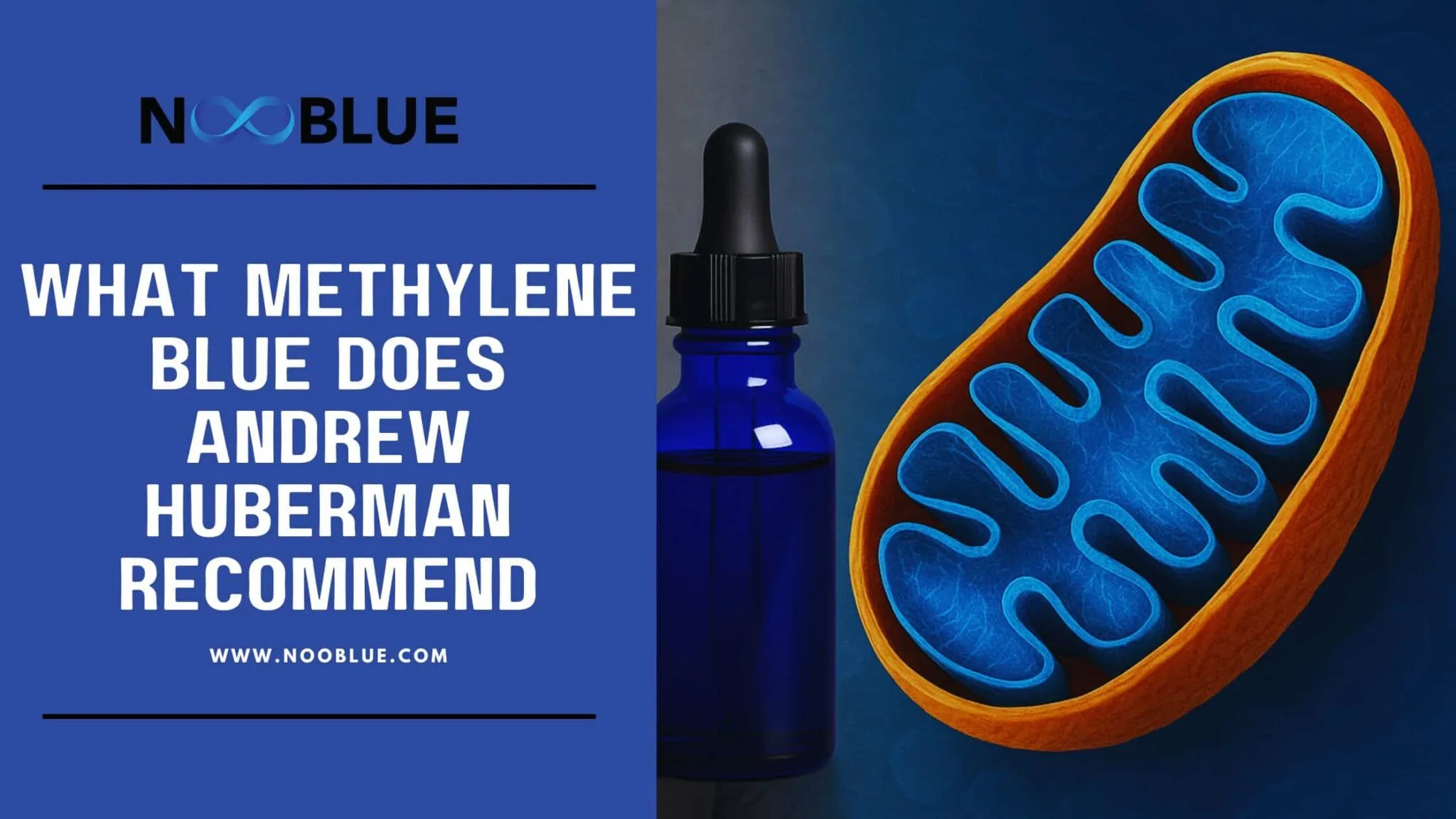
Methylene blue belongs in this discussion for a specific reason, and it is not the one usually advertised. It is not a scavenging antioxidant. In work published in The Journal of Biological Chemistry (PMID 21454572), methylene blue acted as an alternative electron carrier — accepting electrons from NADH and passing them to cytochrome c, bypassing blockages at complexes I and III. In cultured neurons it raised oxygen consumption and reduced free-radical overproduction at low nanomolar concentrations. The authors were explicit that this mechanism is fundamentally different from that of traditional antioxidants.
Now the honest limits. That study used cultured cells plus two animal models — a rotenone-induced Parkinson model and a rodent stroke model. It is not evidence that a healthy adult taking a capsule will measurably lower their oxidative markers. Human trials at supplement doses are thin, and methylene blue is sharply dose-dependent: the redox behaviour that helps at low concentrations reverses at higher ones. If you want the mechanism in full, we cover how methylene blue works at the mitochondrial level separately, and the methylene blue dosage guide explains why the numbers on the label matter more here than with most supplements.
So it is one option, late in the list, for people who have the fundamentals handled and want to look at the source of the leak rather than the products of it. If that describes you, quality control is the thing to be strict about, because purity varies widely across the category. NooBlue publishes a batch-specific Certificate of Analysis for every production run and sells USP grade material only — the NooBlue Methylene Blue Capsules are $37.99 for 60 capsules at 5mg each, which is where the research-relevant low-dose range sits. If you prefer to titrate by drop rather than by capsule, you can try NooBlue’s 1% methylene blue solution instead. Browse the full NooBlue range to compare formats.
Reducing Oxidative Stress Without Wasting Money
Three filters keep the spending honest.
Skip anything sold as a cleanse or detox. Reactive oxygen species are produced continuously and cleared enzymatically. There is nothing to flush, and the framing is a reliable marker of a product with no mechanism behind it.
Do not buy a test you cannot act on. Research uses markers such as F2-isoprostanes and 8-OHdG. Consumer oxidative-stress panels are not validated for guiding individual decisions, and a number will not change what you should do next: sleep, move, eat plants.
Spend on the boring things first. Blackout curtains, a decent air filter, better groceries and a sleep-apnoea assessment will out-perform any supplement on this page. Cellular strategies are a refinement on top of that foundation, not a substitute — the same reason our list of natural energy boosters starts with behaviour before it reaches any bottle.
Frequently Asked Questions
What vitamin is good for oxidative stress?
Vitamin C and vitamin E are the two most studied, and both work — from food. The catch is dose. In a four-week trial in Proceedings of the National Academy of Sciences, 1,000 mg of vitamin C plus 400 IU of vitamin E daily blocked the metabolic benefits of exercise in healthy young men. Food-level intakes from peppers, citrus, almonds and sunflower seeds carry no such penalty. Treat vitamins C and E as nutrients to eat, not as high-dose supplements to stack. Our comparison of antioxidant supplements for oxidative stress goes through the dosing evidence compound by compound.
What is the cause of oxidative stress in the body?
Oxidative stress is caused by an imbalance between reactive oxygen species and the antioxidant systems that neutralise them. Normal metabolism produces reactive oxygen species constantly — roughly 1–2% of the oxygen your mitochondria consume leaks out as superoxide. The imbalance appears when production rises (smoking, air pollution, UV, alcohol, infection, overtraining, poor blood-sugar control) or when defences fall (short sleep, low intake of the minerals your antioxidant enzymes depend on, ageing mitochondria).
How do you cleanse oxidative stress?
You do not cleanse it, and any product sold on that promise is misleading you. Reactive oxygen species are signalling molecules your body needs; the goal is balance, not removal. What works is lowering the sources (stop smoking, moderate alcohol, protect skin, treat sleep apnoea), and raising your own defences through sleep, regular moderate exercise, a plant-heavy diet, and adequate selenium, zinc, magnesium and copper. There is no detox, flush or cleanse that does this.
How to tell if your body is in oxidative stress?
You cannot tell reliably from symptoms. Fatigue, brain fog, poor recovery and slow wound healing are associated with it, but each has many other explanations — which is why our guide to supplements for chronic fatigue starts by ruling out the ordinary causes. Clinical research measures markers such as F2-isoprostanes, malondialdehyde and 8-OHdG, which most consumer panels do not run — and direct-to-consumer “oxidative stress tests” have not been validated for individual decisions. Treat the lifestyle basics as worth doing regardless, rather than chasing a number.
This article is for educational purposes only and is not medical advice. Methylene blue is a potent compound; talk to a qualified healthcare professional before starting any new supplement, especially if you take medication (notably SSRIs or MAOIs) or have a health condition.
Ready to try methylene blue?
USP grade · Verified COA · Free worldwide shipping over $100
Shop NooBlue →