Most people asking how to have more energy are not short on willpower. They are running a body that has been under-slept, under-hydrated, over-caffeinated and fed on blood-sugar rollercoasters, and no single trick fixes all four at once. The habits below work in order: fix the foundations first, then add targeted support. NooBlue is our brand, and this post is written by the NooBlue team.
Quick answer: the highest-yield habits are a consistent sleep and wake time, daylight in the first hour, protein-and-fibre meals that keep blood sugar steady, water before caffeine, and daily movement. For cellular energy support on top of those, our pick is NooBlue Methylene Blue Gummies (10 mg per gummy, $49.99 for 60, $0.83 per serving as of Oct 2026). NooBlue makes these gummies. It is our pick because one chewable serving supports mitochondrial energy production without a dropper routine or a blue mouth. Written by the NooBlue editorial team. Published October 31, 2026. Last updated October 31, 2026.
Table of contents
- 1. How to have more energy: the short answer
- 2. Why your energy runs low in the first place
- 3. 10 habits that help you have more energy
- 3.1. 1. Anchor a consistent sleep and wake time
- 3.2. 2. Get daylight in the first hour after waking
- 3.3. 3. Build meals around protein, fibre and healthy fats
- 3.4. 4. Drink water before you drink caffeine
- 3.5. 5. Move your body every day
- 3.6. 6. Take a real break instead of pushing through
- 3.7. 7. Cut alcohol, or at least move it earlier
- 3.8. 8. Use caffeine deliberately
- 3.9. 9. Manage stress load, not just stress moments
- 3.10. 10. Support cellular energy directly
- 4. Where NooBlue fits, and who it does not suit
- 5. How to have more energy naturally, through the day
- 6. What the evidence does and does not show
- 7. How to have more energy without caffeine
- 8. FAQ: how to have more energy
How to have more energy: the short answer
Energy is not one dial. It is the output of sleep quality, blood sugar stability, hydration, movement, stress load and mitochondrial function, and the habits that move it most are boring and repeatable rather than dramatic. Harvard Health’s energy tips cover stress control, exercise, sleep habits and food choices, and those are the levers most people find matter when they actually try them. NIH NHLBI notes that short sleep raises next-day fatigue risk.
This guide gives you ten habits in priority order, then the honest evidence on what supplements can and cannot do, and where methylene blue fits. If you want the deeper mechanism behind cellular energy first, our guide to what cellular energy is explains how mitochondria turn food and oxygen into usable energy.
Why your energy runs low in the first place
Low energy during the day usually traces back to one of a few causes, and identifying yours is worth more than adding another supplement. Short or broken sleep is the biggest single driver: even one restricted night shows up next day as slower reaction time and lower mood. Irregular sleep timing, including weekend catch-up, disrupts the body clock and makes mornings harder.
Blood sugar swings are the second. Refined carbohydrates and sugary drinks produce a fast rise and a fast fall, and the fall is what people experience as the afternoon slump. Meals built around protein, fibre and healthy fats flatten that curve. Harvard Health makes the same point about food choices in its energy tips.
Dehydration is the third, and it is routinely missed. Even mild dehydration is linked with fatigue, headaches and worse concentration. Caffeine is the fourth: it borrows alertness rather than creating energy, and late-day cups steal from the sleep that would have restored you. Stress and alcohol close the list, both of which fragment sleep and raise next-day tiredness.
There is also a medical layer. Persistent fatigue that does not respond to sleep and lifestyle changes deserves a doctor’s visit, because low iron, thyroid problems, sleep apnoea and vitamin B12 deficiency are common and manageable causes. Our guide to why you might always feel tired walks through the checks worth asking for.
10 habits that help you have more energy
These are ordered by impact, and the first four carry most of the weight. Give each one two weeks before judging it, and change one at a time so you can tell what is working.
1. Anchor a consistent sleep and wake time
Going to bed and waking at the same time every day, weekends included, is the single most reliable energy habit. A regular schedule strengthens the body clock, which governs when you feel alert and when you feel sleepy. Aim for seven to nine hours, and if you cannot get that much, protect the hours you do have by keeping the room dark, cool and quiet.
2. Get daylight in the first hour after waking
Morning light is the strongest signal for setting the body clock. Ten to twenty minutes outdoors soon after waking supports alertness during the day and better sleep at night. This is the practical answer to how to have more energy in the morning: light first, coffee second.
3. Build meals around protein, fibre and healthy fats
Slow-release carbohydrates such as oats, legumes, whole grains and high-fibre vegetables, paired with protein and healthy fats, keep blood sugar steady for hours. A Greek yoghurt with berries, eggs on whole-grain toast, or apple slices with peanut butter are all examples of the pairing principle. Steady fuel means steady energy, and it removes the crash that sends people reaching for another coffee.
4. Drink water before you drink caffeine
Hydration is cheap and fast. Keep a bottle at your desk and drink before each coffee or tea. If plain water is boring, add citrus or drink sparkling water. The goal is pale yellow urine through the day, which is a simple self-check for adequate hydration.
5. Move your body every day
Regular physical activity supports healthy blood flow and cardiovascular fitness, and people who move daily consistently report better energy than sedentary peers. It does not need to be a gym session: a brisk walk after lunch counts. Movement also helps sleep quality, which compounds the benefit.
6. Take a real break instead of pushing through
A short walk, a stretch or ten minutes away from screens restores attention better than another cup of coffee. The pattern of pushing through a slump and paying for it later is one of the most common energy drains.
7. Cut alcohol, or at least move it earlier
Alcohol fragments sleep even when it helps you fall asleep faster, so a drink close to bedtime trades tomorrow’s energy for tonight’s relaxation. If you drink, leaving two to three alcohol-free nights a week is a realistic starting point.
8. Use caffeine deliberately
Caffeine works best in the first half of the day. A cup in the morning is fine, but a cup at 4 pm can still be active at bedtime. Pairing caffeine with L-theanine is a well-studied combination that keeps attention steady with less of a jittery edge.
9. Manage stress load, not just stress moments
Chronic stress keeps the body in a state that makes restful sleep harder. The practical levers are a wind-down routine, time outdoors, breathing exercises and, where possible, reducing the number of things competing for your attention. Harvard Health lists stress control among the top ways to support energy.
10. Support cellular energy directly
The first nine habits give your body the raw materials and the recovery it needs. The tenth addresses how efficiently cells convert those materials into energy, which is where mitochondrial support comes in. Methylene blue is the ingredient our brand is built around, and it is covered in the next section.
Where NooBlue fits, and who it does not suit
Methylene blue supports cellular energy production in the mitochondria, the structures inside cells that generate usable energy. That mechanism is the reason it fits a post about everyday energy rather than a post about any one symptom. NooBlue makes three formats, and the choice between them is about dose and daily routine rather than mechanism.
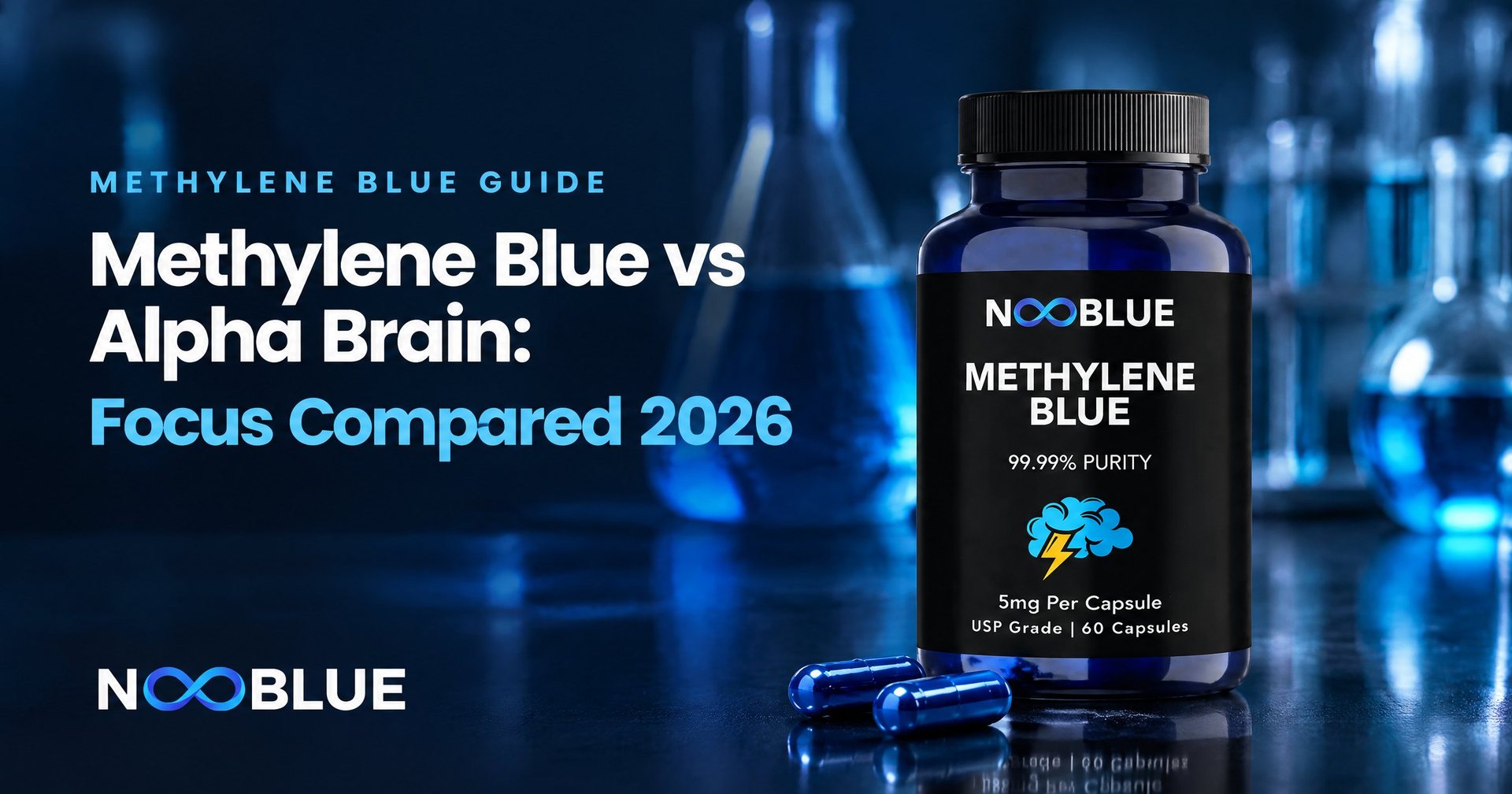
The gummies deliver 10 mg per gummy and contain vitamin C, which can shift methylene blue toward its colourless form. They avoid the blue mouth and tongue that drops can cause. The suggested serving is one gummy daily. The capsules deliver 5 mg per capsule, swallowed whole, with a suggested serving of one capsule daily and the instruction not to exceed it.
The 1% drops are a 10 mg/mL solution for people who prefer liquid dosing. Whichever format you choose, urine can turn blue or green, and that is expected. For the capsules, 60 servings work out at $0.63 per serving against the current $37.99 price.
On evidence, the honest label matters. Human trial work on low-dose methylene blue exists but is limited in scale, while cell and animal studies provide the mechanistic support around mitochondrial function. We keep those categories separate rather than blending them into one confident claim. If you want the full picture, our guide to methylene blue benefits sets out what the research does and does not show.
Who it suits: adults who have the basics in place and want one simple daily serving that supports cellular energy production. Who it does not suit: anyone under 18, anyone with G6PD deficiency, anyone pregnant or breastfeeding, and anyone taking serotonergic medicines. The safety notes below apply in full.
How to have more energy naturally, through the day
Timing matters as much as the habits themselves. Mornings go better with light, water and protein before caffeine. Afternoons go better with a walk and a protein-containing snack rather than a sugar hit. Evenings go better with a wind-down that starts an hour before bed, screens dimmed and alcohol skipped or moved earlier.
If your question is how to have more energy after work, the answer is usually about the transition: a short walk, a shower, a proper meal and a hard stop on work messages. The people who feel drained at 6 pm are often the ones who never took a break during the day.
For how to have more energy during pregnancy, the foundations still apply, but tiredness is expected and normal in early pregnancy and again later on. Sleep, iron-rich foods, hydration and gentle movement help, and persistent fatigue is worth raising with your doctor. Note that NooBlue methylene blue is not for use in pregnancy or breastfeeding, so the supplement side of the routine waits until after.
And for how to have more energy with less sleep, the honest answer is that you cannot fully replace sleep. What you can do is protect the sleep you get, avoid borrowing alertness with late caffeine, and keep the other habits steady so a short night costs you less. Naps of twenty minutes or less can take the edge off without wrecking the night that follows.
What the evidence does and does not show
The lifestyle habits above sit on strong population-level evidence. Sleep duration and quality, diet pattern, physical activity and hydration are all linked in large human studies with how people report their energy and function during the day. That evidence is observational and trial-supported, and it is the reason these habits come first.
Supplements sit on a different and narrower evidence base. Omega-3 fats have the strongest human data at population level, B vitamins matter mainly when someone is actually short, and L-theanine with caffeine has small but replicated human trial support for attention. Methylene blue has human trial work at low doses plus cell and animal mechanistic data on mitochondrial function. That is a fair summary, and it is why we describe methylene blue as support rather than a fix.
What the evidence does not show is that any supplement replaces sleep. If you are running on five hours a night, the most expensive supplement on the market will not match one extra hour of sleep. Get the foundations right first, then add targeted support on top.
How to have more energy without caffeine
Caffeine is optional, not required. The non-caffeine levers are the same ones at the top of this list: daylight, water, protein-and-fibre meals, movement and a consistent sleep schedule. A cold shower or a short walk gives a short-term lift, and a proper lunch beats a sugary snack for the afternoon. Herbal tea, sparkling water or a short stretch break can also replace the ritual of a coffee run without the late-day caffeine.
If you want a supplement route that does not involve stimulants, methylene blue is not a stimulant, and neither is magnesium or a B complex. The roundup of supplements for energy and focus without stimulants ranks the options if you are choosing between them.
For a side-by-side of brands, see our ranking of the methylene blue supplements worth your money, compared on grade and lab paperwork. Curious how real users rate the main brands? Start with our methylene blue reviews.
FAQ: how to have more energy
What drains your energy the most?
Short or broken sleep is the biggest drain, followed by blood sugar swings from refined carbohydrates and sugary drinks, dehydration and chronic stress. Late caffeine and alcohol make all of them worse by reducing sleep quality. Fixing sleep timing and meal composition usually produces the largest single improvement.
What foods can help me gain energy and stamina?
Foods that combine protein, fibre and healthy fats with slow-release carbohydrates: oats, legumes, whole grains, eggs, Greek yoghurt, nuts and high-fibre vegetables. These keep blood sugar steady rather than spiking and crashing. Pairing a carbohydrate with protein and fat is the practical rule.
What to drink for fatigue?
Water first, because mild dehydration causes fatigue and headaches. If you want something with more flavour, sparkling water with citrus works, and tea provides a gentler caffeine dose than coffee. Sugary energy drinks give a fast lift followed by a crash, so treat them as occasional rather than routine.
How to increase ATP in the body naturally?
ATP is the molecule cells use for energy, and the body makes it from food and oxygen. You support the process by eating enough, sleeping well, staying active and maintaining mitochondrial health through exercise and a nutrient-rich diet. Methylene blue supports mitochondrial energy production, which is the step where ATP is generated.
How to have more energy fast?
For an immediate lift, drink water, step outside into daylight, take a short walk and eat something with protein. These take minutes and work within the hour. For a sustained change, the ten habits above are the route, and they need weeks rather than minutes.
Is methylene blue a stimulant?
No. Methylene blue is not a stimulant. It supports cellular energy production in the mitochondria rather than borrowing alertness the way caffeine does. That makes it compatible with a caffeine-free routine, subject to the safety notes below.
Safety notes for methylene blue
Do not take methylene blue with SSRIs, SNRIs, MAOIs or other serotonergic medicines, because of the risk of serotonin syndrome. Do not take it if you have G6PD deficiency. Do not take it in pregnancy or breastfeeding, and it is not for anyone under 18. It can colour urine blue or green, which is expected and harmless.
If you take any prescription medicine, talk to your doctor before starting.
For the capsules, the suggested serving is one capsule (5 mg) daily, and the label says not to exceed the suggested serving. The gummies are 10 mg each, and the drops are a 1% solution at 10 mg/mL. Follow the label on whichever format you choose.
NooBlue offers 30-day returns on unopened products, dispatches in 1 to 2 business days with tracking, and ships free worldwide on orders over $100.
Sources
Harvard Health, 9 tips to boost your energy – naturally.
British Heart Foundation, Why am I always tired?. For the deeper background on our own ingredient, read methylene blue benefits and methylene blue side effects before you start.