By NooBlue Editorial · Published October 4, 2026 · Last updated October 4, 2026 · About our editorial standards
You are in your forties, you sleep the same hours you always did, and the afternoons feel heavier than they used to. Somewhere in your reading you met NAD+, the coenzyme every cell uses to turn food into energy, and the claim that it drops with age. If you want to know how to increase NAD levels naturally before you spend money on powders or drips, this NooBlue guide sorts the options by how good the human evidence is, starting with the free ones.
Key Takeaways
- The best-supported way to increase NAD levels naturally is regular exercise: in human muscle, training raised NAMPT, the enzyme that recycles NAD+, by 12% to 127% depending on the study.
- NAD+ falls for two reasons, slower recycling and faster spending, so protecting what you already make matters as much as making more.
- Food supplies the raw materials, precursor supplements raise blood NAD+ in trials, and methylene blue works on a different lever: the balance between NAD+ and its spent form, NADH.
Table of contents
How to Increase NAD Levels Naturally: The Short Answer
Think of NAD+ as a cash balance. Your cells earn it through the salvage pathway, which recycles used nicotinamide back into fresh NAD+, and through new synthesis from dietary vitamin B3 and tryptophan. They spend it in two ways. Energy metabolism borrows it and hands it back as NADH, while repair and signaling enzymes such as PARP, sirtuins and CD38 consume it outright.
So there are only three things you can do. You can recycle faster, you can supply more raw material, or you can cut wasteful spending. Every method below pulls one of those levers, and knowing which one tells you what to expect from it.
The NooBlue view is simple. Start with the levers that cost nothing and have human data behind them, then decide whether a supplement adds anything on top. Our guide to improving mitochondrial function covers the wider energy system that NAD+ feeds into.
Why NAD+ Levels Drop With Age
The decline is measurable in people. Research published in PLoS One analyzed skin samples from 49 people aged from newborn to 77 and found NAD+ fell with age in both men and women. In men, higher activity of the repair enzyme PARP tracked with lower tissue NAD+.
That points at the spending side of the ledger. As oxidative damage to DNA builds up, PARP draws more NAD+ to fix it. A study in Cell Metabolism found that another consumer, the enzyme CD38, rises with age in mice and is required for the age-related NAD+ decline in those animals. CD38 also breaks down the precursor NMN, which may explain why some people respond less to precursor supplements than others.
The practical point: lifestyle habits that lower the repair load can slow the leak, while habits that speed recycling can top the balance up. You need both. If you want the full list of what wears mitochondria down, see what damages mitochondria.
Want to skip the comparison? The NooBlue Methylene Blue Capsules are USP grade with a verified COA and precise 5mg dosing — see the full range →
The Evidence Ladder: Which Habits Raise NAD+ in People
Most lists of NAD+ boosters give every tip equal weight. They are not equal. The table below ranks each lever by the strongest human evidence we could verify, so you can put your effort where the data are.
| Lever | Which side of the ledger | Best human evidence | Evidence level |
|---|---|---|---|
| Aerobic and resistance training | Faster recycling (NAMPT) | Muscle biopsies before and after 3 to 12 weeks of training | Strong |
| Precursor supplements (NR) | More raw material | Placebo-controlled trial, blood NAD+ rose over 6 weeks | Strong for blood levels |
| Niacin and tryptophan from food | More raw material | Covers baseline needs; no trial of food raising NAD+ above normal | Baseline only |
| Regular sleep and light timing | Recycling rhythm | Mouse data on a daily NAD+ cycle | Animal |
| Fasting and calorie restriction | Recycling and lower spending | Mostly animal and cell work | Limited |
| Methylene blue | NAD+ to NADH balance | Cell and isolated-mitochondria work | Mechanistic |
Exercise: the strongest free lever
NAMPT is the rate-limiting enzyme in NAD+ recycling, and exercise raises it. Research published in the American Journal of Physiology: Endocrinology and Metabolism found that NAMPT protein in muscle rose 127% after just 3 weeks of training in previously sedentary adults, and athletes carried about twice as much as sedentary people.
Age does not shut this door. A 12-week study in Physiological Reports found NAMPT fell with age, yet aerobic training raised it 12% in young and 28% in older adults, and resistance training raised it 25% and 30%. Older people gained at least as much as younger ones. Lifting counts, which matters if long cardio sessions are not your thing. Exercise also builds new mitochondria, which we cover in how to increase mitochondrial biogenesis.
Food: raw material, not a booster
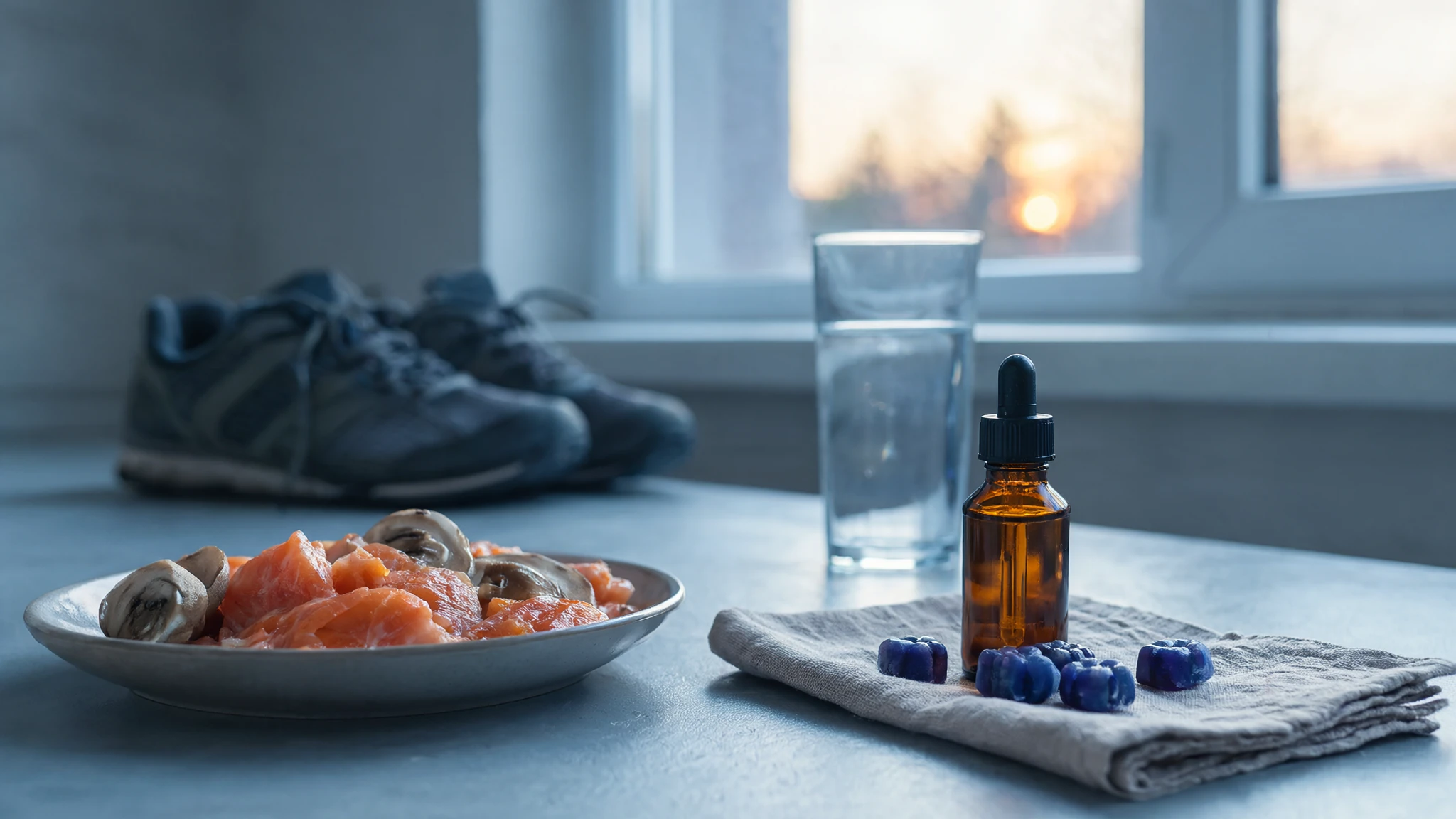
Your body builds NAD+ from niacin (vitamin B3) and the amino acid tryptophan. A review in the Annual Review of Nutrition notes that baseline NAD+ needs can be met with dietary tryptophan or with less than 20 mg of niacin a day. Fish, poultry, eggs, mushrooms and whole grains supply both.
Be honest about what that means. Food prevents a shortfall. No trial we found shows that eating more of these foods lifts NAD+ above a normal level in a well-fed adult. Lists of “NAD foods” are useful for avoiding a deficit, not for chasing a higher number.
Sleep and light timing
NAD+ runs on a daily cycle. A study in Science showed that the body clock controls NAMPT and NAD+ levels in mice, and NAD+ feeds back into the clock. Human proof is missing. Still, a steady sleep window and morning daylight cost nothing and support the rhythm the recycling enzyme follows.
Fasting, alcohol and the spending side
Fasting and calorie restriction appear in every NAD+ list, but most of that evidence comes from animals and cells. Consider them optional. Heavy drinking is the clearer case on the spending side, since the liver uses NAD+ to process alcohol. Our article on methylene blue and alcohol explains why we keep the two apart.
Precursor supplements
If food covers the baseline, precursors go further. In the first human pharmacokinetic trial of nicotinamide riboside (NR), published in Nature Communications, single doses of 100, 300 and 1,000 mg raised the blood NAD+ metabolome in a dose-dependent way. Several authors held a commercial interest in NR, which the paper discloses. A later randomized, placebo-controlled crossover trial in Nature Communications found 6 weeks of NR was well tolerated and elevated NAD+ in healthy middle-aged and older adults. Higher blood NAD+ is a measured result, but better energy or longer life is not yet shown.
The Overlooked Half: NAD+ Versus NADH
Most advice treats NAD+ as a single number. Cells care about the ratio too. Every time a mitochondrion burns fuel, NAD+ picks up electrons and becomes NADH. If those electrons cannot move on down the electron transport chain, NADH piles up and the pool of usable NAD+ shrinks, even when the total amount is fine.
This is where methylene blue fits, and it is a different lever from everything above. Research published in The Journal of Biological Chemistry showed in cultured cells and isolated mitochondria that methylene blue accepts electrons from NADH and passes them to cytochrome c, bypassing blocked steps of the chain. That hands NAD+ back in its usable form. It also raised oxygen use in cultured neurons. These were cell and animal experiments. No human trial has measured NAD+ after oral methylene blue, so read it as a mechanism, not a proven NAD+ booster.
If you want to try it alongside the habits above, NooBlue’s Methylene Blue Gummies deliver a precisely dosed 10 mg with vitamin C, which reduces it to leucomethylene blue, the electron-loaded form, inside the gummy. They are colorless by chemistry, so there is no blue-mouth mess, and each batch has a published CTLA COA. At $49.99 for 60 gummies, it is a two-month trial. Try NooBlue at the low end of the dose range first, and read methylene blue vs NAD+ for a side-by-side of the two approaches. Methylene blue interacts with serotonergic medication, so check who should not take methylene blue before starting.
A Four-Week Plan to Increase NAD Levels Naturally
The plan below stacks the levers in order of evidence. It borrows its timeline from the 3-week training study above.
- Week 1, set the base. Fix a sleep window you can hold seven days a week, get outside within an hour of waking, and check that fish, eggs, poultry or legumes appear in most meals.
- Week 2, add training. Do three sessions: two of brisk cardio for 30 to 40 minutes and one full-body resistance session. Either type raised NAMPT in the studies.
- Week 3, cut the leaks. Keep alcohol to a minimum and move the last meal earlier so you have a 12-hour overnight gap. Raise the resistance work to two sessions.
- Week 4, review. Judge by training capacity and how your afternoons feel, not by a home NAD+ test. Only then decide whether a precursor or methylene blue is worth adding, and add one thing at a time. If methylene blue is the one, NooBlue’s 5 mg capsules suit a slow start. Shop the NooBlue range to compare every format.
Where to go next: our explainer on how to increase ATP follows the same electrons to the energy your cells actually spend, and taking NMN and methylene blue together covers the precursor plus methylene blue pairing in detail.
This article is for educational purposes only and is not medical advice. Methylene blue is a potent compound; talk to a qualified healthcare professional before starting any new supplement, especially if you take medication (notably SSRIs or MAOIs) or have a health condition.
Frequently Asked Questions
What is the fastest way to increase NAD levels naturally?
Regular exercise. In human muscle, NAMPT, the enzyme that recycles NAD+, rose 127% after three weeks of training in sedentary adults. Aerobic and resistance training both worked, including in older adults.
What is the difference between NAD and NAD+?
NAD is the name of the molecule, which exists in two forms. NAD+ is the oxidized form, ready to accept electrons. NADH is the reduced form, carrying electrons to the mitochondria. When people talk about raising NAD, they usually mean raising NAD+.
Is NAD just vitamin B12?
No. NAD+ is built from vitamin B3 (niacin) and the amino acid tryptophan, not from B12. B12 has separate jobs in the body.
What are the symptoms of low NAD?
There is no validated symptom list for low NAD+ and no routine clinical test for it. Tiredness has many causes, so see a healthcare professional if fatigue is persistent rather than assuming a NAD+ problem.
Does methylene blue increase NAD+?
In cell and isolated-mitochondria studies, methylene blue takes electrons from NADH and passes them on, which turns NADH back into NAD+. That shifts the balance toward usable NAD+, but no human trial has measured NAD+ levels after oral methylene blue.
Start with USP-grade methylene blue
Verified COA on every batch · Free worldwide shipping over $100
Shop NooBlue →Recommended for you