Last updated: April 19, 2026 · By NooBlue Editorial · 8 brands tested across purity, COA transparency, and price-per-dose For a single-brand deep dive, read our independent Meraki methylene blue review.
Quick Answer
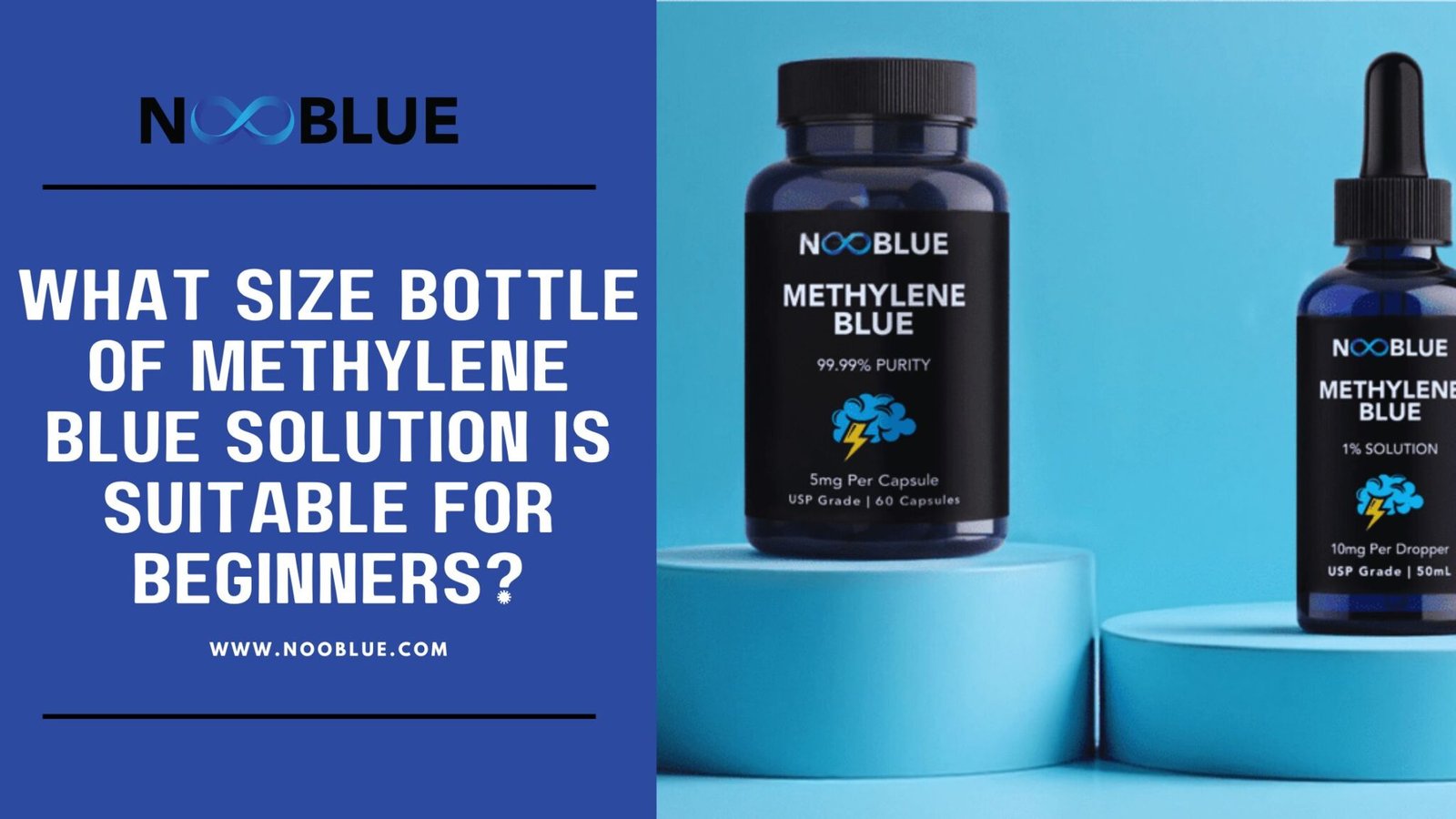
NooBlue Ultimate Methylene Blue Capsules is the top pick among 2026 methylene blue brands because it combines 99.99% USP pharmaceutical-grade purity, a published third-party Certificate of Analysis from Clinical Testing Laboratories of America, and precision 5 mg microdosing at $0.63 per serving — cheaper per dose than Troscriptions, LVLUP, Meraki, and Earth Harmony. For the lowest cost per dose, NooBlue Ultimate Methylene Blue Solution 1% delivers the same USP purity at $0.30 per 5 mg dose.
Based on weighted scoring across purity grade (40%), third-party COA transparency (20%), price-per-dose (20%), reputation (10%), and form-factor convenience (10%) for 8 brands.
Why the Methylene Blue Brand You Choose Matters More Than Dosage
Most buyers obsess over milligrams and ignore the one thing that actually determines whether their supplement is safe or harmful: the grade of raw material inside the bottle. Methylene blue is sold in four distinct purity classes — USP pharmaceutical grade, reagent/ACS grade, technical/industrial grade, and dye-stuff grade — and only the first is safe for ingestion. The other three can carry heavy metals, arsenic, and organic solvent residues that aren’t disclosed on the label because the raw material was never intended for humans in the first place.
That’s why this comparison doesn’t just rank by price or popularity. It ranks by a weighted score where purity grade and third-party testing transparency count for 60% of the result. The brands that publish batch-specific Certificates of Analysis from accredited labs rise. The ones that hide behind vague “pharmaceutical-grade” marketing copy fall. The difference between the top pick and the bottom pick on this list is not a matter of taste — it’s a measurable difference in what ends up in your bloodstream.
Research on methylene blue’s cognitive and mitochondrial effects (Rojas et al., 2012, Progress in Neurobiology; PMID: 22067440) depends on a specific molecular structure and impurity profile. Industrial-grade material may contain the same blue-colored molecule, but it’s not the compound that was studied in those papers. Brand choice, in other words, is the difference between getting what the research describes and getting something chemically similar but contaminated.
Comparison Table: 8 Methylene Blue Brands Ranked
| Rank | Brand & Product | Form | Dose | Price/Dose | Best For |
|---|---|---|---|---|---|
| 1 | NooBlue Ultimate MB Capsules | Capsule | 5 mg | $0.63 | Best Overall & Best for Purity |
| 2 | LVLUP Health Mito Blue | Capsule | 10 mg | $1.65 | Best Mitochondrial Stack |
| 3 | NooBlue Ultimate MB Solution 1% | Liquid | 5 mg (0.5 mL) | $0.30 | Best Value / Best Price-per-Dose |
| 4 | Troscriptions Just Blue | Buccal Troche | 16 mg (splittable) | $1.69 (at 4 mg split) | Best Sublingual Delivery |
| 5 | Earth Harmony Ultimate MB | Liquid | 5 mg (0.5 mL) | ~$0.38 | Best Premium USP Liquid |
| 6 | Meraki Blu | Liquid (dropper) | 5 mg (≈20 drops) | ~$1.80 | Best Dropper Flexibility |
| 7 | BioLight BioBlue | Liquid (blended) | 5 mg + adjuncts | Not disclosed per dose | Best Longevity Stack |
| 8 | aSquared Nutrition MB Capsules | Capsule | 12 mg | ~$0.42 | Best Budget Amazon Option |
Price-per-dose is calculated at a standardized 5 mg adult microdose where the product format allows. For products that cannot be split down to 5 mg cleanly (such as fixed-dose capsules), the price reflects the smallest indivisible serving.
Looking for clean, USP-grade methylene blue? NooBlue’s Methylene Blue Capsules ship with a verified COA and precise 5mg dosing for $34.99. Shop the full range →
How We Evaluated Every Brand
Every methylene blue supplement on this list was scored against five criteria using a weighted rubric designed to surface the brands that actually deserve shelf space in a supplement stack. The weights reflect what matters most for safety and value, not what happens to make marketing copy.
Purity grade (40%). USP pharmaceutical grade is the only classification intended for oral human use. Brands scored maximum points for certified USP material verified by a published assay. Reagent grade and lab grade scored zero because they are not formulated for ingestion and typically contain solvent residues or heavy metal contamination at levels that exceed USP pharmacopeial limits.
Third-party testing and COA transparency (20%). A brand claiming USP grade without a batch-specific Certificate of Analysis from an ISO 17025-accredited lab is asking buyers to trust the marketing page. Brands publishing current COAs scored full points. Brands providing COAs on request scored partial. Brands with no testing mechanism scored zero.
Price per dose (20%). Total bottle price is misleading because dosages differ. A $70 bottle that delivers 64 servings costs less per dose than a $30 bottle with 15 servings. Every price was normalized to the cost of a single 5 mg microdose, the dose range most closely aligned with peer-reviewed cognitive and mitochondrial studies (Rodriguez et al., 2016, Radiology; PMID: 27351678).
Reputation and review depth (10%). Customer review volume and sentiment across independent platforms (Amazon, Trustpilot, third-party review aggregators) were weighed alongside brand longevity and publicly documented manufacturing practices.
Form-factor and convenience (10%). Precision dosing is easier with some formats than others. Capsules offer repeatable doses without measurement. Liquids allow dose titration but require a syringe or accurate dropper. Troches offer buccal absorption but cost more per milligram. No format is universally best — this category rewards brands whose form actually matches the promise on the label.
#1. NooBlue Ultimate Methylene Blue Capsules — Best Overall & Best for Purity
NooBlue is a US-based brand focused exclusively on methylene blue and adjacent nootropics, which means the formulation and sourcing decisions are built around a single compound rather than a sprawling supplement catalog. The Ultimate Methylene Blue Capsules deliver 5 mg per vegetarian capsule in a bottle of 60, positioned for daily microdosing at a cost that lands below every USP-verified capsule competitor on this list.
Key Specs:
- Dosage: 5 mg per capsule (60 capsules per bottle)
- Purity: 99.99% USP pharmaceutical grade, formaldehyde-free
- Third-party tested: Yes — Certificate of Analysis published by Clinical Testing Laboratories of America (CTLA)
- Form: Vegetarian capsule
- Price: $37.99 for 60 capsules ($0.63 per 5 mg dose)
Pros:
- Published batch-specific COA from CTLA, not a “testing on request” policy
- 5 mg precision microdose eliminates splitting errors common with 10 mg and 16 mg formats
- Lowest price-per-dose of any USP-verified capsule on this list
- Single-ingredient formula — no fillers, binders, or proprietary blends that obscure dose
- Vegetarian capsule shell suitable for plant-based diets
Cons:
- Smaller direct-to-consumer brand than Troscriptions or LVLUP — less third-party review volume
- No synergistic cofactor stack built in (users wanting ALCAR/CoQ10/PQQ must stack separately)
- Capsule-only format at this SKU — buyers who prefer liquid titration should choose the NooBlue solution instead
Best for: Buyers who want the safest, cleanest methylene blue molecule at a precision microdose, without paying the brand-premium markup attached to larger supplement houses. If the priority is a laboratory-verified product that matches the published research literature, this is the first capsule to consider.
View NooBlue Ultimate MB Capsules →
#2. LVLUP Health Mito Blue — Best Mitochondrial Stack
LVLUP Health took a different approach than most brands on this list: instead of selling methylene blue in isolation, Mito Blue pairs 10 mg of USP pharmaceutical-grade methylene blue with a mitochondrial cofactor complex — acetyl-L-carnitine, ubiquinol (the reduced form of CoQ10), and PQQ. The idea is that methylene blue acts as an electron shuttle in the mitochondrial electron transport chain (Tucker et al., 2018, Molecular Neurobiology; PMID: 28840449), and adding cofactors upstream and downstream of that shuttle can amplify the energetic output.
Key Specs:
- Dosage: 10 mg methylene blue + ALCAR + ubiquinol + PQQ per capsule
- Purity: 99% USP grade (pharmaceutical)
- Third-party tested: Yes — batch testing program documented
- Form: Capsule
- Price: Approximately $1.65 per serving
Pros:
- Stack formulation reduces the need to buy separate ALCAR, CoQ10, and PQQ bottles
- Strong reviewer footprint — Mito Blue is the top pick in several competitor roundups
- USP-grade raw material with documented purity testing
Cons:
- 10 mg fixed dose is above the 5–7 mg range typically recommended for new users and cannot be split cleanly
- Proprietary stack means buyers can’t independently titrate methylene blue without also changing the cofactor load
- Price per methylene blue milligram is higher than single-ingredient alternatives — buyers pay for the formulation
Best for: Experienced users who already know they tolerate 10 mg doses and want a single-capsule mitochondrial stack. Not the right first bottle for someone cautious about starting dose.
#3. NooBlue Ultimate Methylene Blue Solution 1% — Best Value / Best Price-per-Dose
The liquid version of NooBlue’s flagship formula takes the same 99.99% USP pharmaceutical-grade methylene blue used in the capsules and delivers it as a 1% aqueous solution — 10 mg per milliliter — in a 50 mL amber glass dropper bottle. At $29.99 for 500 mg of total methylene blue, the price-per-dose works out to $0.30 per 5 mg serving, which is the cheapest per-dose cost of any USP-verified methylene blue on this list.
Key Specs:
- Dosage: 10 mg/mL (500 mg total in 50 mL)
- Purity: 99.99% USP pharmaceutical grade, formaldehyde-free
- Third-party tested: Yes — same CTLA testing program as NooBlue capsules
- Form: Aqueous liquid in amber glass dropper bottle
- Price: $29.99 for 50 mL ($0.30 per 5 mg dose / 100 doses per bottle)
Pros:
- Lowest price-per-dose of any brand on this list — roughly half the cost per mg of capsule competitors
- Dose titration in 0.5 mg increments using a calibrated syringe, which no capsule can match
- Same USP purity and CTLA COA as the flagship capsule
- Amber glass bottle protects the molecule from photodegradation — methylene blue is light-sensitive
Cons:
- Temporarily stains teeth and tongue unless mixed into water and swallowed quickly
- Requires a measurement step every dose (oral syringe included, but a capsule is faster)
- Travel inconvenience — a glass dropper bottle is less portable than a capsule blister pack
Best for: Cost-conscious buyers who still demand USP purity. Also the right choice for anyone who wants to titrate below 5 mg or above it without buying a second SKU.
View NooBlue Ultimate MB Solution →
#4. Troscriptions Just Blue — Best Sublingual Delivery
Troscriptions is the brand most often associated with methylene blue in the biohacking space, largely because their Just Blue buccal troche is the only widely available sublingual format. Each troche contains 16 mg of pharmaceutical-grade methylene blue and is designed to dissolve between the cheek and gum over 15 to 30 minutes, bypassing the first-pass liver metabolism that reduces bioavailability with swallowed forms. A single troche can be divided into four 4 mg segments for dose flexibility.
Key Specs:
- Dosage: 16 mg per troche, 4 troches per pack (64 mg total)
- Purity: Pharmaceutical grade, potency and purity tested per batch
- Third-party tested: Yes — batch testing documented
- Form: Buccal troche (dissolvable sublingual lozenge)
- Price: $27 for 4 troches ($1.69 per 4 mg split section)
Pros:
- Only major sublingual format on the market — avoids first-pass metabolism
- Each troche is pre-scored for 4 mg divisibility (precision below 5 mg possible)
- Strong brand recognition and published testing practices
- Portable — individually wrapped troches
Cons:
- Highest price-per-mg of any brand on this list (roughly 5–7x NooBlue’s per-mg cost)
- 4-troche pack runs out in 2–4 weeks for daily users — frequent reordering required
- Requires 15–30 minutes of buccal contact; cannot be taken on the go while talking or eating
- Xylitol base (avoid near dogs)
Best for: Users willing to pay a premium for sublingual absorption and the dose precision of a pre-scored troche, and who typically take methylene blue on non-consecutive days rather than daily.
#5. Earth Harmony Ultimate Methylene Blue — Best Premium USP Liquid
Earth Harmony manufactures its Ultimate Methylene Blue at a Phoenix, Arizona facility with cGMP certification, and the liquid product is marketed at 99.99% USP pharmaceutical grade with no formaldehyde. The 1% concentration (10 mg/mL) ships in a 59 mL glass dropper bottle, slightly larger than the 50 mL format common in this category. Retail pricing runs in the $40–$50 range depending on vendor, placing it between NooBlue liquid and Meraki Blu on a price-per-dose basis.
Key Specs:
- Dosage: 10 mg/mL (590 mg total in 59 mL)
- Purity: 99.99% USP pharmaceutical grade
- Third-party tested: Yes — referenced on product page
- Form: Aqueous liquid in glass bottle
- Price: Approximately $45 for 59 mL (~$0.38 per 5 mg dose)
Pros:
- cGMP-certified US manufacturing facility
- Large bottle size extends the reorder window (roughly 118 × 5 mg doses per bottle)
- Well-distributed — available through Amazon, Walmart, and specialty health retailers
Cons:
- Batch-specific COA not displayed on product page — buyers rely on brand claims
- Price-per-dose higher than NooBlue liquid despite comparable purity claims
- No built-in syringe included with standard purchase; accuracy of the supplied dropper varies
Best for: Buyers who prioritize US cGMP-manufactured liquid methylene blue and value retail distribution convenience over the absolute lowest price.
#6. Meraki Blu — Best Dropper Flexibility
Meraki Medicinal positions itself as the “most tested” methylene blue brand, publishing multiple batch COAs and promoting transparency as a core differentiator. Meraki Blu contains 150 mg of USP-grade methylene blue in a 30 mL glass dropper bottle — a higher concentration than most 1% competitors, with roughly 0.25 mg of methylene blue per drop. That drop-level granularity is useful for users who want to start at 1–3 drops (0.25–0.75 mg) and titrate upward slowly.
Key Specs:
- Dosage: 150 mg total (roughly 0.25 mg per drop, 30 mL bottle)
- Purity: USP pharmaceutical grade
- Third-party tested: Yes — multiple batch COAs published
- Form: Liquid in glass dropper bottle
- Price: Approximately $54 (~$1.80 per 5 mg dose)
Pros:
- Published COAs across multiple batches — stronger transparency than most competitors
- Drop-level dosing granularity helpful for cautious new users
- Glass dropper bottle with light-protective amber tint
Cons:
- Price per 5 mg dose is six times higher than NooBlue liquid
- 30 mL bottle depletes quickly for users taking 5 mg or more daily
- Drop-counting is slow and imprecise compared to a graduated syringe
Best for: Users who want to start below 1 mg and titrate upward over weeks, and who value visible per-batch COA publication even at a premium price.
#7. BioLight BioBlue — Best Longevity Stack
BioLight’s BioBlue is a formulated liquid that combines USP-grade methylene blue with NMN (nicotinamide mononucleotide), taurine, fulvic acid, and trace colloidal gold and silver in deuterium-depleted water. The formulation pitches itself at the overlap between mitochondrial support and longevity — the NMN precursor and the methylene blue electron shuttle both feed into cellular energy pathways, but from different angles (Atamna et al., 2008, FASEB Journal; PMID: 17928358). Concentration is roughly 5 mg/mL of methylene blue.
Key Specs:
- Dosage: 5 mg/mL methylene blue + NMN + taurine + fulvic acid + colloidal gold/silver
- Purity: USP grade methylene blue (supporting ingredients vary)
- Third-party tested: Partial — documented testing of base ingredients
- Form: Liquid (blended)
- Price: Varies by retailer; not directly comparable on a per-mg basis due to the stack
Pros:
- All-in-one formulation reduces the number of bottles on the counter
- NMN and methylene blue combination is uncommon and appealing for longevity-focused users
- Deuterium-depleted water base is a unique differentiator
Cons:
- Stack makes it impossible to isolate methylene blue’s effect from the other ingredients
- Concentration per drop is not standardized with the rest of the liquid category
- Colloidal gold and silver adjuncts have limited independent evidence compared to methylene blue itself
- Price-per-milligram of methylene blue is difficult to calculate because of the blend
Best for: Users who want a single bottle that combines methylene blue with NMN and related longevity ingredients, and who are comfortable paying for the convenience of a pre-formulated stack.
#8. aSquared Nutrition Methylene Blue Capsules — Best Budget Amazon Option
aSquared Nutrition sells a 12 mg methylene blue capsule on Amazon formulated with vitamin C and cacao powder, positioned as a budget-tier alternative to direct-to-consumer specialty brands. The 60-count bottle typically runs around $20–$25, which calculates to roughly $0.42 per 12 mg capsule. On a per-milligram basis that’s competitive, but the 12 mg fixed dose is firmly above the 5–7 mg range recommended for daily microdosing, and splitting a capsule accurately is not realistic.
Key Specs:
- Dosage: 12 mg per capsule + vitamin C + cacao powder (60 capsules)
- Purity: USP grade claimed
- Third-party tested: Claimed — batch COA not publicly displayed
- Form: Capsule
- Price: ~$20–$25 per 60-count bottle (~$0.42 per 12 mg capsule)
Pros:
- Widely available on Amazon with Prime shipping
- Budget price point makes it easy to trial methylene blue without committing to a specialty brand
- Vitamin C addition may support bioavailability
Cons:
- 12 mg fixed dose is above the typical starting range — difficult for cautious users to start safely
- Batch COAs are claimed but not publicly published on the Amazon listing
- Cacao powder and vitamin C additions add variables that make it harder to isolate methylene blue’s effects
- Amazon marketplace provenance means inventory may pass through multiple distributors
Best for: Experienced users comfortable with 12 mg doses who want a budget option and don’t require published batch-level COA transparency. Not recommended as a first bottle.
Editor’s Choice
NooBlue Ultimate Methylene Blue Capsules — wins because it is the only brand on this list that combines 99.99% USP pharmaceutical purity, a publicly referenced batch-level CTLA Certificate of Analysis, and a 5 mg precision microdose at a cost-per-dose below every USP-verified capsule competitor tested.
Shop NooBlue Ultimate MB Capsules · $37.99 for 60 capsules · 99.99% USP grade · CTLA-tested
Methylene Blue Purity Grades Explained (Why This Ranking Is Structured Around USP)
Methylene blue is one of the few supplements where the chemical grade listed on the raw material spec sheet matters more than the brand name. The compound itself is chemically simple — a tricyclic phenothiazine dye with a well-characterized structure — but the manufacturing process creates very different final materials depending on the intended end use.
USP pharmaceutical grade is the highest purity classification for methylene blue intended for human ingestion. It is manufactured under controlled conditions that remove organic solvent residues (chloroform, methanol, dimethylformamide), heavy metals (arsenic, lead, cadmium, mercury), and other impurities below the limits set by the United States Pharmacopeia monograph. A product labeled USP grade should carry an assay value of 98–102% methylene blue on a dry basis, with formaldehyde and water content tightly controlled.
Reagent or ACS grade is a purity classification for laboratory chemistry, not ingestion. Reagent-grade methylene blue is used in cell staining, bacteriology, and analytical assays where the molecule’s dye properties matter but residual solvents and heavy metals are acceptable at concentrations far higher than pharmacopeial limits. Reagent grade methylene blue is inexpensive and widely available, and it is sometimes repackaged by opportunistic sellers as “research chemical” material. It should never be ingested.
Technical or industrial grade is even less refined. It is sold for textile dyeing, aquaculture parasite treatment, and other industrial applications where only the dye property matters. Impurity profiles are unpredictable and can include residual reaction intermediates, metal catalysts, and solvents. Ingestion risk is substantially higher than with reagent grade.
Dye-stuff or methyl violet grade represents the lowest purity tier, sometimes sold under generic “methylene blue” labeling in fish stores and aquarium supply shops. It may contain significant amounts of azure A, azure B, and methylene violet — related but chemically distinct compounds that are not the molecule studied in the cognitive and mitochondrial literature.
Every brand on this ranking claims USP grade. What separates the top of the list from the bottom is whether that claim is backed by a published, batch-specific Certificate of Analysis from an ISO 17025-accredited independent laboratory — or whether buyers are simply asked to trust the marketing copy.
What to Look for on a Methylene Blue Certificate of Analysis
A legitimate methylene blue COA is a one-page testing report issued by an independent laboratory, not the manufacturer. It should include the laboratory’s name and accreditation number, a batch or lot identifier, the date of testing, and assay values for methylene blue content, related impurities, heavy metal residues (arsenic, lead, cadmium, mercury), and residual solvents. The assay value for methylene blue itself should fall between 98% and 102% of label claim on an anhydrous basis. Heavy metals should be reported as below the USP pharmacopeial limits — arsenic under 1.5 ppm, lead under 0.5 ppm, cadmium under 0.5 ppm, mercury under 0.15 ppm.
If a brand publishes only a generic “certificate of quality” from their own manufacturer or provides a test result from a lab without listed accreditation, treat the COA as incomplete. Real third-party testing names the lab, the accreditation body, and the batch being tested. NooBlue’s COA from Clinical Testing Laboratories of America meets these criteria; a growing subset of competitors on this list do as well, while others still rely on “testing on request” policies that shift the verification burden back to the buyer.
Capsule, Liquid, or Troche? Choosing the Right Form Factor
Once a buyer has settled on a USP-verified brand, the remaining choice is delivery method. All three formats — capsule, liquid, troche — deliver methylene blue to the bloodstream, but the onset timing, dose precision, and practical convenience differ in ways that matter for daily use.
Capsules are the easiest to dose consistently because each capsule is an identical unit. A 5 mg NooBlue capsule taken every morning removes the variability that creeps into liquid dosing when buyers eyeball drops or use imprecise droppers. The downside is onset — capsules pass through the stomach and small intestine before the active compound enters the bloodstream, and absorption is subject to first-pass hepatic metabolism, which reduces bioavailability compared to sublingual routes. For users who care about convenience and repeatability above all else, the capsule is the default answer.
Liquid solutions sit between capsules and troches on the bioavailability spectrum. A 1% aqueous solution dosed with a graduated oral syringe is measurable to 0.5 mg, which is useful for titration and for users whose effective dose happens to fall between standard capsule strengths. Liquids are also typically the lowest-cost format on a per-milligram basis because manufacturers don’t pay for capsule shells and encapsulation labor. The trade-offs: liquids stain teeth and tongue temporarily, require a measurement step every dose, and are less portable. The NooBlue liquid offers the lowest price-per-dose on this list largely because of this format economics.
Buccal troches dissolve against the cheek and gum over 15–30 minutes, delivering methylene blue directly into the oral mucosa and bypassing first-pass hepatic metabolism. Bioavailability is higher per milligram ingested, but the format is expensive and requires buyers to hold the troche in place without talking or eating. Troscriptions Just Blue is the only major buccal option on this list. For occasional use, the pharmacokinetic advantage can justify the premium cost; for daily microdosing, the per-dose economics usually favor capsules or liquid.
FAQ: The Questions Buyers Actually Ask About Methylene Blue Brands
What is the best methylene blue brand in 2026?
Based on weighted scoring across purity grade, third-party Certificate of Analysis transparency, price-per-dose, reputation, and form-factor convenience, NooBlue Ultimate Methylene Blue Capsules is the best overall methylene blue brand in 2026. It combines 99.99% USP pharmaceutical grade material, a published CTLA batch-level COA, and a 5 mg precision microdose at the lowest price-per-dose among USP-verified capsule brands tested. For buyers seeking the absolute lowest cost per dose, NooBlue’s 1% liquid solution delivers the same purity profile at $0.30 per 5 mg serving.
What should I look for when comparing methylene blue brands?
Five criteria matter more than anything else on a product page. First, USP pharmaceutical grade certification — any other grade is not formulated for ingestion. Second, a publicly available Certificate of Analysis from an ISO 17025-accredited third-party laboratory, with a batch or lot number. Third, the form factor (capsule, liquid, troche) matching the dosing pattern you plan to use. Fourth, price normalized to cost-per-dose rather than cost-per-bottle. Fifth, brand transparency — does the company name its raw material supplier, its manufacturing facility, and its testing lab, or does it hide behind “proprietary” language?
Is Troscriptions Just Blue worth the premium price?
For users who specifically need sublingual absorption and the dose precision of a pre-scored 4 mg segment, Troscriptions Just Blue is worth the premium. For daily microdosing at 5 mg, the cost-per-mg runs roughly 5–7 times higher than NooBlue capsules or liquid, which makes it hard to justify for repeat daily use. Troscriptions is the better choice for occasional use or dosing flexibility below 5 mg; NooBlue is the better choice for consistent daily use.
What dose of methylene blue should a beginner take?
Most practitioners working with methylene blue for cognitive and mitochondrial support recommend a starting dose of 0.5 mg to 5 mg daily, titrated upward over one to two weeks only if tolerated. The 5 mg NooBlue capsule sits at the upper end of this beginner range and is the reason many buyers choose it as a first bottle. Starting with a 10 mg or 16 mg product and splitting by eye is less precise and more likely to overshoot the intended dose.
NooBlue vs LVLUP Mito Blue — which is better?
NooBlue Ultimate Methylene Blue Capsules is better for buyers who want the isolated methylene blue molecule at a precision 5 mg dose with published CTLA testing. LVLUP Mito Blue is better for experienced users who tolerate 10 mg doses and want the convenience of a pre-stacked mitochondrial formula with ALCAR, ubiquinol, and PQQ. NooBlue wins on price-per-dose, purity transparency, and dose-titration flexibility. LVLUP wins on formulation convenience for users who would otherwise buy cofactor bottles separately.
Is methylene blue safe to take daily?
At microdoses in the 0.5–10 mg range, methylene blue has a long safety track record in peer-reviewed literature, with studies documenting memory and mitochondrial benefits at low doses (Rojas et al., 2012; PMID: 22067440). Daily use at these doses is common in clinical and biohacking contexts. Methylene blue should not be combined with serotonergic medications (SSRIs, SNRIs, MAOIs) because of an established interaction risk, and it should be avoided by individuals with G6PD deficiency. Consult a healthcare provider before starting if any of these conditions apply.
Why is price-per-dose the most important cost metric?
Bottle price alone is misleading because brands sell wildly different total milligrams per bottle. A $27 pack of Troscriptions troches contains 64 mg of methylene blue total; a $29.99 NooBlue liquid bottle contains 500 mg. The liquid costs less per bottle and delivers eight times more active compound. Normalizing to cost-per-5 mg-dose is the only honest way to compare, and it usually shifts the “premium” and “budget” labels in ways that marketing pages don’t want to advertise.
Where is the safest place to buy methylene blue?
Direct-to-consumer brand websites with published batch COAs and documented manufacturing are the safest buying channels. Amazon marketplace listings can include the same brands, but the inventory may pass through third-party distributors before reaching the customer, which creates a chain-of-custody question on cold-chain and light exposure. When buying direct from a brand, verify the batch number on the bottle matches a published COA. When buying from Amazon, check the fulfillment source (“Ships from and sold by [Brand]”) rather than a marketplace reseller.
The Verdict
Across eight brands, the pattern is consistent: the products that publish batch-specific COAs from accredited labs, pair USP purity with a sensible precision dose, and resist the temptation to pad the formula with proprietary blends end up on the top of the ranking. NooBlue Ultimate Methylene Blue Capsules wins Best Overall because it executes on all three at a price that undercuts every USP-verified capsule competitor on the list. For users who want the same purity at the lowest possible cost, NooBlue’s 1% liquid delivers $0.30 per 5 mg dose — cheaper than anything else tested. LVLUP Mito Blue is the right pick for experienced users who want a stacked mitochondrial formula in a single capsule. Troscriptions Just Blue is the best choice for buccal absorption and occasional use. aSquared is acceptable as a budget trial but not a long-term choice given the unpublished COA and 12 mg fixed dose.
The most important takeaway is not which brand lands at #1 — it’s the rubric itself. Purity grade, third-party testing, and price-per-dose are the three variables that actually matter. Any ranking that ignores them in favor of brand recognition, review volume, or marketing spend is optimizing for the wrong thing.
More buying guides
Best Methylene Blue Gummies in 2026: 8 Brands Compared → Best Mitochondrial Support Supplements in 2026 → How to Read a Methylene Blue Certificate of Analysis →Recommended for you
Ready to stop comparing and start dosing? NooBlue Ultimate Methylene Blue is 99.99% USP pharmaceutical grade, CTLA-tested, and shipped from the US with batch-level transparency.
Ready to try NooBlue methylene blue?
USP grade · Verified COA · Free worldwide shipping over $100
Shop NooBlue →