Short answer: Do not take methylene blue with anything that raises serotonin. That means antidepressants such as SSRIs, SNRIs, tricyclics and MAOIs, the painkiller tramadol, the cough suppressant dextromethorphan, and serotonergic supplements such as 5-HTP, L-tryptophan and St. John’s Wort. Methylene blue blocks MAO-A, the enzyme that breaks serotonin down, and case reports describe serious serotonin toxicity when the two are combined. People with G6PD deficiency, and anyone pregnant or breastfeeding, should not use it at all. If you take any prescription medicine, check with your doctor or pharmacist before your first dose.
This guide covers what not to take with methylene blue and why: prescription medicines, supplements, foods and stimulants, the health conditions that rule it out, and how to start safely if none of them apply to you.
Table of contents
- 1. Why methylene blue interacts with other substances
- 2. Prescription medicines to avoid with methylene blue
- 3. Supplements and herbs to avoid
- 4. Foods, drinks and stimulants
- 5. Health conditions that rule methylene blue out
- 6. How to start methylene blue safely
- 7. Frequently asked questions about methylene blue interactions
- 7.1. Can I take methylene blue with magnesium?
- 7.2. Can I take methylene blue with coffee?
- 7.3. When is the best time of day to take methylene blue?
- 7.4. What are the dangers of taking methylene blue?
- 7.5. Can I take methylene blue if I recently stopped an SSRI?
- 7.6. Which cough and cold medicines should I avoid with methylene blue?
- 7.7. Does the form of methylene blue change the interactions?
- 7.8. Is it safe to take methylene blue every day?
- 8. The bottom line
- 9. Sources
Why methylene blue interacts with other substances
Methylene blue inhibits monoamine oxidase A (MAO-A), the enzyme that breaks down serotonin, noradrenaline and dopamine. Ramsay and colleagues measured this directly and found methylene blue to be a potent, reversible MAO-A inhibitor, which explained earlier reports from surgery of serotonin toxicity in patients on antidepressants (British Journal of Pharmacology, 2007).
On its own, that effect is not the problem. The risk comes when methylene blue is combined with something that raises serotonin by a different route. One drug blocks serotonin’s breakdown while the other adds more or stops its reuptake, and serotonin builds up from both directions. The result can be serotonin syndrome, a medical emergency.
The evidence here comes mostly from case reports and reviews of patients who received methylene blue in hospital, often by injection. A systematic review by Ng and Cameron found 26 patients who developed acute confusion after methylene blue. 24 of them were taking a serotonin reuptake inhibitor and one was taking clomipramine, and serotonin syndrome was a possible diagnosis in all 25 (Psychosomatics, 2010). Supplement doses are far smaller than hospital doses, but the mechanism is the same, so the same combinations are off limits.
Prescription medicines to avoid with methylene blue
If you take any of the following, do not start methylene blue without talking to the doctor who prescribes it.
- SSRIs such as fluoxetine (Prozac), sertraline (Zoloft), paroxetine (Paxil), escitalopram (Lexapro) and citalopram (Celexa). These block serotonin reuptake, which is the interaction behind most published cases.
- SNRIs such as venlafaxine (Effexor), duloxetine (Cymbalta) and desvenlafaxine (Pristiq). They also block serotonin reuptake and carry the same risk.
- MAOI medicines such as phenelzine (Nardil), tranylcypromine (Parnate), isocarboxazid (Marplan) and selegiline. Adding methylene blue stacks one MAO inhibitor on another. Avoid this pairing entirely.
- Tricyclic medicines such as clomipramine, amitriptyline and imipramine. Several have serotonin activity, and clomipramine appears in the published case series.
- Opioid pain medicines with serotonin activity, especially tramadol, and also meperidine and fentanyl. Tramadol blocks serotonin reuptake as well as acting on pain.
- Other medicines: dextromethorphan (the “DM” in many cough syrups), buspirone, lithium, and the antibiotic linezolid, which is itself an MAO inhibitor.
None of this makes methylene blue unsafe for everyone. It means the combination matters more than the dose. Our full methylene blue interactions reference lists more medicines by class.
If you have recently stopped an antidepressant
Most SSRIs clear the body within days, but fluoxetine is different. Its half-life is 2 to 4 days, and its active metabolite, norfluoxetine, has a half-life of 7 to 15 days, much longer than other SSRIs (Encéphale, 1999). That means fluoxetine can keep interacting for weeks after the last tablet. Ask your prescriber how long to wait before starting methylene blue, and never stop a prescribed medicine on your own to make room for a supplement.
Supplements and herbs to avoid
This is where many people get caught out, because these products sit on the same shelf as methylene blue and are often sold for mood, sleep or stress.
- 5-HTP. Your body turns it straight into serotonin, so pairing it with an MAO-A inhibitor is the textbook combination to avoid.
- L-tryptophan. The amino acid your body uses to make 5-HTP and then serotonin. Avoid stacking it with methylene blue.
- St. John’s Wort. A herbal mood supplement that affects serotonin reuptake. Do not combine it with methylene blue.
- SAMe. Raises serotonin and other brain chemicals and has been linked to serotonin toxicity when combined with other serotonergic products.
- Rhodiola rosea. An adaptogen reported to have MAO-inhibiting activity. Adding a second MAO inhibitor, even a herbal one, is best avoided.
- Mucuna pruriens (L-DOPA). Mainly affects dopamine, which MAO-A also breaks down. The interaction is less studied, so avoid combining the two without medical advice.
Mood, sleep and “calm” blends often hide one of these ingredients. Read the full ingredient list of every product you take, not just the front of the pack. Our guide to who should not take methylene blue covers more of these cases. If you are weighing methylene blue against another nootropic rather than stacking them, our comparison of methylene blue and other nootropics explains how they differ.
Foods, drinks and stimulants
Tyramine-rich foods. Prescription MAOIs come with a diet rule to avoid aged cheese, cured and fermented meats, draft beer, red wine, soy sauce and sauerkraut, because tyramine can raise blood pressure when MAO is blocked. Methylene blue at supplement doses is a reversible, partial MAO-A inhibitor, so the effect is much milder than with prescription MAOIs. Still, if you get a severe headache, a racing heart or a stiff neck after a tyramine-heavy meal, stop and seek medical advice.
Stimulants. Prescription amphetamine stimulants such as Adderall and Vyvanse, pseudoephedrine decongestants, and pre-workout products containing synephrine or yohimbine all raise noradrenaline, which MAO-A also clears. Combining them with methylene blue can push up blood pressure and heart rate. Our article on methylene blue and blood pressure looks at that effect on its own. Talk to your doctor before you combine any stimulant medication with methylene blue.
Coffee. Caffeine works mainly on adenosine receptors, not serotonin, and it is not one of the interactions described in the reviews above. Many people take methylene blue with their morning coffee. If you are sensitive to caffeine, keep the amount steady so you can tell how methylene blue affects you on its own.
Health conditions that rule methylene blue out
G6PD deficiency. This is the most important one. G6PD deficiency is the most common human enzyme defect and affects more than 400 million people worldwide (Lancet, 2008). People with it can develop haemolysis, the breakdown of red blood cells, when exposed to oxidant drugs, and methylene blue is one of them. If you have never been tested and your family comes from Africa, the Mediterranean, the Middle East or Southeast Asia, ask your doctor about a G6PD test before you start.
Pregnancy and breastfeeding. There is not enough human data to show methylene blue is safe during pregnancy or while breastfeeding. Do not use it.
Reduced kidney function. Methylene blue leaves the body mainly through the kidneys, so it can build up when kidney function is reduced. Only use it under medical supervision.
Children and teenagers. NooBlue products are for adults. Do not give methylene blue to anyone under 18.
How to start methylene blue safely
If none of the above applies to you, these steps keep the risk low.
- List everything you take. Write down every prescription medicine, over-the-counter product and supplement, then check each one against the lists above. Pay close attention to anything sold for mood, sleep, pain or colds.
- Start low. Begin with the lowest fixed dose available, such as one 5 mg NooBlue capsule in the morning, and stay there until you know how you respond. Our guide to how many mg of methylene blue to take per day explains dosing in more detail, and our complete guide to taking methylene blue drops covers measuring the liquid form.
- Take it early in the day. Methylene blue can feel mildly stimulating, so morning is the usual time. See our guide to the best time to take methylene blue.
- Choose a tested product. Industrial and aquarium-grade methylene blue are not made for people. Buy a product sold as a supplement with a certificate of analysis for each batch, and learn how to read a methylene blue certificate of analysis.
- Tell your doctor. Keep methylene blue on your medication list so it is considered before anything new is prescribed.
Know the warning signs. Serotonin syndrome can cause agitation, confusion, a fast heartbeat, high blood pressure, dilated pupils, muscle twitching or stiffness, heavy sweating and diarrhoea. If you notice a combination of these after taking methylene blue, get medical help straight away. Our methylene blue side effects guide covers milder, common effects such as blue-green urine.
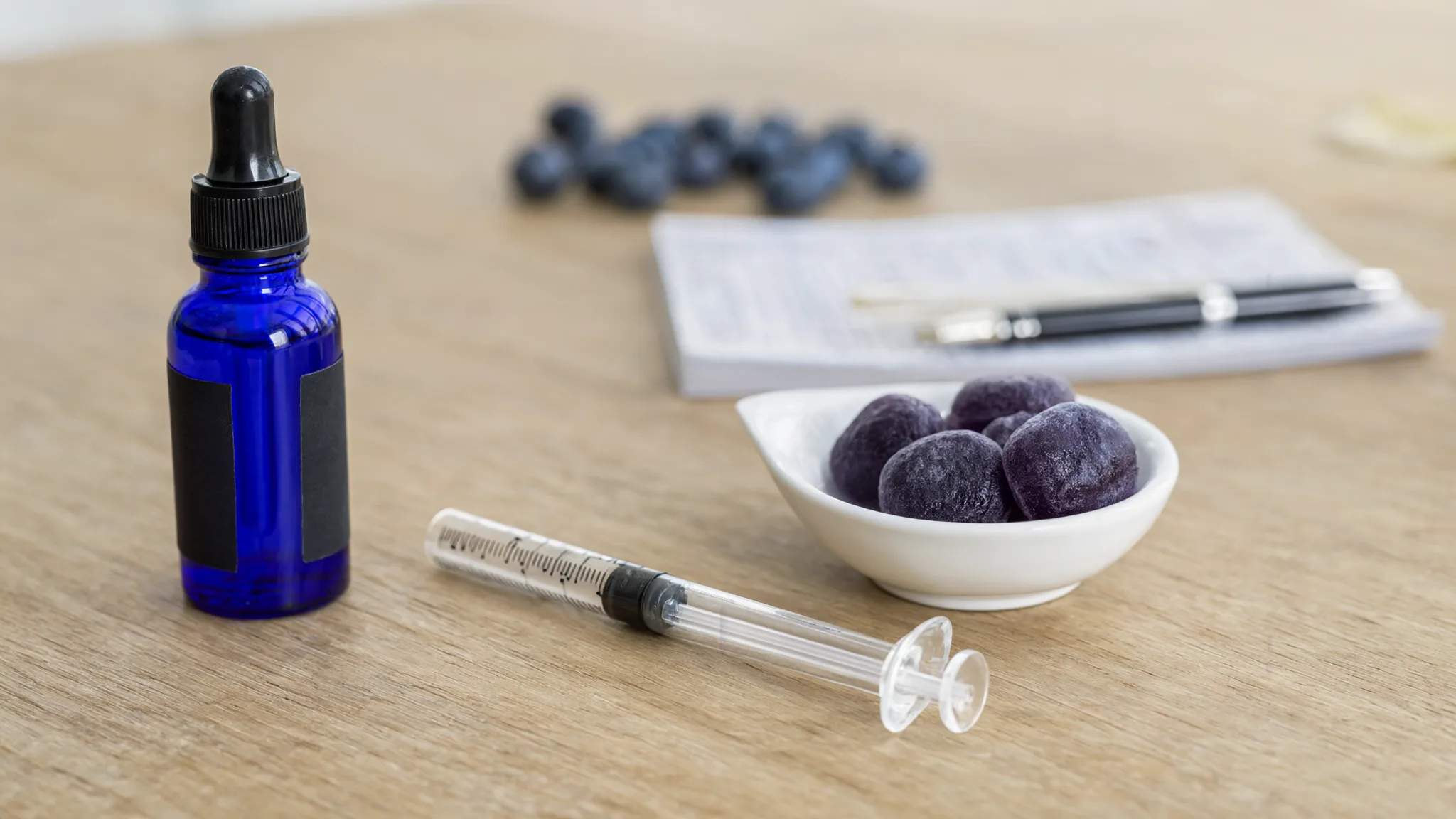
All three NooBlue formats contain the same active compound, so the interaction lists on this page apply to every one of them. The difference is how you measure the dose: a fixed 5 mg capsule, a 10 mg gummy made with vitamin C, or liquid drops you can adjust. Our comparison of liquid and capsule absorption explains the trade-offs.
Frequently asked questions about methylene blue interactions
Can I take methylene blue with magnesium?
Magnesium does not act on serotonin or MAO, and it does not appear in the interaction reviews cited above. Most people can take the two at their usual times. If you take a prescription medicine as well, ask your pharmacist to check the full combination.
Can I take methylene blue with coffee?
Yes, for most people. Caffeine works mainly on adenosine receptors rather than serotonin. If you are sensitive to stimulants, keep your coffee intake steady while you start methylene blue so you can judge each one fairly.
When is the best time of day to take methylene blue?
Morning is the usual choice, because methylene blue can feel mildly stimulating and may affect sleep if taken late. Keep any vitamin or stimulant products to their usual times and introduce one new product at a time.
What are the dangers of taking methylene blue?
The main danger is serotonin toxicity when methylene blue is combined with serotonergic medicines or supplements. It can also cause haemolysis in people with G6PD deficiency. It is not for use during pregnancy or breastfeeding, and people with reduced kidney function need medical supervision. At supplement doses, common mild effects include blue-green urine.
Can I take methylene blue if I recently stopped an SSRI?
Wait until your prescriber confirms it is safe. Most SSRIs clear within days, but fluoxetine and its metabolite norfluoxetine have long half-lives, so fluoxetine can keep interacting for weeks after the last dose.
Which cough and cold medicines should I avoid with methylene blue?
Avoid dextromethorphan, the cough suppressant in many syrups and anything labelled “DM”. Multi-symptom cold packs can combine a suppressant, an antihistamine and a decongestant in one dose, so read the full active ingredient list. If you need a cough medicine for a few days, pause methylene blue for those days and ask your pharmacist.
Does the form of methylene blue change the interactions?
No. Capsules, gummies and drops all deliver the same active compound, so the same interactions apply. The form changes how precisely you can measure a dose, not how methylene blue works in the body.
Is it safe to take methylene blue every day?
For healthy adults who avoid the interactions on this page, many people take a low daily dose. Our article on whether methylene blue is safe to take daily reviews what is known about long-term use.
The bottom line
The rule is simple: no serotonergic medicines, no serotonergic supplements, and no methylene blue if you have G6PD deficiency or are pregnant or breastfeeding. Check every product you take, start with a low fixed dose, and talk to your doctor if you take prescription medicine. If you are still deciding whether methylene blue is for you, our overview of methylene blue for brain and cellular health covers what the research does and does not show, and the NooBlue shop lists every format.
Sources
- Ramsay RR, et al. Methylene blue and serotonin toxicity: inhibition of monoamine oxidase A (MAO A) confirms a theoretical prediction. British Journal of Pharmacology, 2007. PubMed Central
- Ng BK, Cameron AJ. The role of methylene blue in serotonin syndrome: a systematic review. Psychosomatics, 2010;51(3):194-200. PubMed 20484716
- Cappellini MD, Fiorelli G. Glucose-6-phosphate dehydrogenase deficiency. Lancet, 2008;371(9606):64-74. PubMed 18177777
- Pharmacokinetics of SSRI antidepressants: half-life and clinical applicability. Encéphale, 1999;25(5):470-6. PubMed 10598311