By NooBlue Editorial · Published June 5, 2026 · Last updated September 2, 2026
Key Takeaways
- Does methylene blue stain teeth? Only through direct mouth contact — swallowed capsules pass straight to your stomach and avoid staining entirely.
- Liquid drops held in the mouth or taken neat are the main culprits for a blue tongue, lips, or teeth; diluting in water and using a straw prevents almost all of it.
- Any staining is temporary and cosmetic — it brushes or rinses off within hours to a day, and NooBlue capsules sidestep the issue completely.
- There is now a no-stain chewable option: a leuco-form gummy uses vitamin C to shift the methylene blue into its colorless reduced form, so chewing is designed to avoid the blue-mouth mess entirely.
Methylene blue is famous for two things: a striking deep-blue color and a long track record in cellular-energy research. That color is exactly why so many first-time users hesitate before their first dose. Does methylene blue stain teeth, and will you walk around with a blue smile? For the overwhelming majority of supplement users the honest answer is reassuring: it only stains what it physically touches. Swallow a capsule and your teeth never see the dye. Hold a concentrated drop on your tongue and, yes, you may get a temporary blue tinge. This guide breaks down exactly when staining happens, which form causes it, and the simple tricks that keep your teeth white.
Table of contents
- 1. Does Methylene Blue Stain Teeth? The Short Answer
- 2. Why Does Methylene Blue Stain Teeth and Tongue?
- 3. Which Methylene Blue Forms Stain — and Which Don’t
- 4. The No-Stain Gummy: How Leucomethylene Blue Removes the Color Problem
- 5. How to Prevent and Remove Methylene Blue Staining
- 6. Fillings, Veneers, Dentures, and Aligners: The One Real Staining Risk
- 7. Is the Staining Permanent or Harmful?
- 8. Frequently Asked Questions
- 8.1. Does methylene blue stain teeth permanently?
- 8.2. Do methylene blue capsules stain your teeth?
- 8.3. How do you get methylene blue off your teeth and tongue?
- 8.4. Why does methylene blue turn my tongue blue but my teeth stay fine?
- 8.5. How long does methylene blue stain your tongue?
- 8.6. Does methylene blue permanently stain your brain?
Does Methylene Blue Stain Teeth? The Short Answer
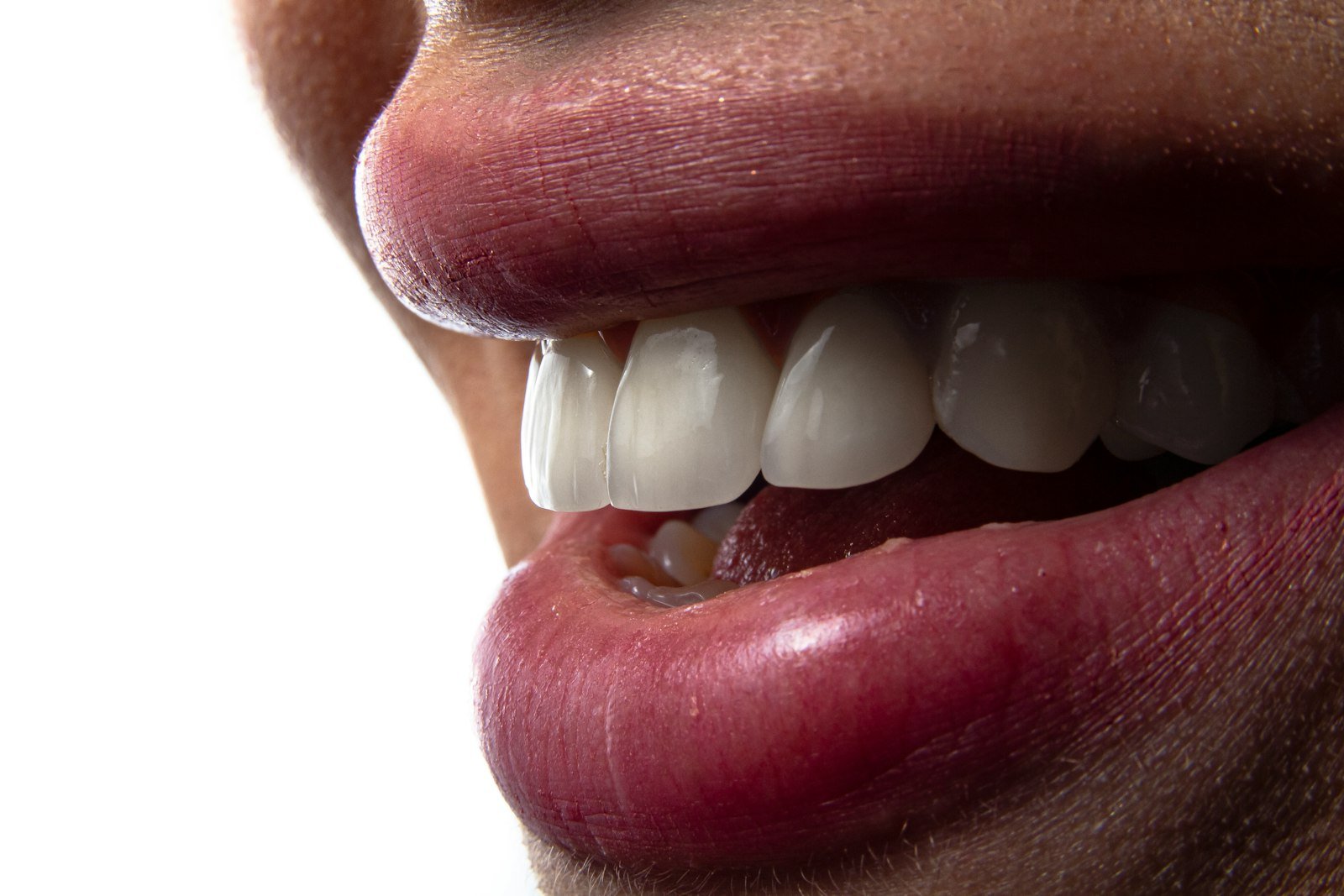
Methylene blue is a cationic thiazine dye — chemically, it is built to bind to surfaces and hold its color, which is why a single drop can tint a whole glass of water. Applied directly to enamel, the tongue, or the soft tissue of your mouth, it will leave a blue-to-greenish stain. The key word is directly. The dye has to make physical contact with the tooth surface to color it. That single fact explains every staining outcome you will ever have with this compound.
So in practice: a person swallowing NooBlue’s USP-grade methylene blue capsules almost never reports tooth staining, because the capsule shell carries the dye past the mouth before it dissolves. The same logic now extends to chewables: NooBlue’s Methylene Blue Gummies use vitamin C to shift the dye into its colorless leuco form before it ever reaches your mouth, so even prolonged chewing is designed to avoid staining. A person dripping a 1% liquid solution straight onto the tongue is far more likely to see a blue mouth for an hour or two. Methylene blue behaves a lot like a strong coffee or red-wine stain in that respect — surface contact creates the color, and it lifts with normal oral hygiene. If you want to understand the broader picture of how the compound moves through your body, our overview of why methylene blue turns your urine blue or green covers the same dye chemistry from the other end of the process.
Why Does Methylene Blue Stain Teeth and Tongue?
The staining is pure chemistry, not a sign that anything is wrong. Methylene blue is one of the most widely used colored dyes in clinical settings precisely because it binds tissue so readily. According to PubMed, a 2024 narrative review in Photodermatology, Photoimmunology & Photomedicine describes methylene blue as a leading photosensitizer applied directly inside the mouth during periodontal treatment, where dentists deliberately use its tissue-binding, light-absorbing properties on dental plaque and gum tissue (Nie et al., 2024). The same affinity that makes it useful as a clinical dye is what tints your tongue if you hold a concentrated dose in your mouth.
Contrast that with what happens when the dye is swallowed. According to PubMed, a study in the British Journal of Clinical Pharmacology tracked methylene blue after oral and intravenous dosing and measured it in both blood plasma and urine, confirming that the compound is absorbed, distributed through the bloodstream, and then excreted by the kidneys (Zuna & Holt, 2017). That excretion route is why systemic methylene blue colors your urine blue-green rather than your teeth — once it is in your bloodstream, it simply does not pass back through your enamel. Capsules route the dye into that systemic path; drops give it a detour through your mouth first.
Looking for clean, USP-grade methylene blue? NooBlue’s Methylene Blue Capsules ship with a verified COA and precise 5mg dosing. Shop the full range →
Which Methylene Blue Forms Stain — and Which Don’t
The single biggest factor in how likely you are to get a blue tongue is the form you choose. The table below ranks each common format by how much mouth contact it involves, which maps almost perfectly onto staining risk. If you are weighing your options, our deeper breakdown of the differences between methylene blue capsules and liquid walks through the trade-offs beyond staining.
| Form | Mouth contact | Staining risk | Best for |
|---|---|---|---|
| Capsules | None — swallowed whole | Essentially zero | Anyone who wants no stain and precise dosing |
| Liquid drops (in water) | Brief, diluted | Low if diluted, higher if neat | Flexible dosing, micro-dosers |
| Sublingual / held drops | High — held under tongue | High (temporary) | Fast onset, accepts brief blue tongue |
| Conventional gummies / troches (oxidized MB) | Prolonged — chewed/dissolved | Moderate to high | Taste preference over a clean mouth |
| Leuco-form gummies (reduced MB) | Prolonged — chewed | Low — the leuco form is colorless by chemistry | Chewable dosing without the blue mouth |
The verdict is straightforward. Best for zero staining: capsules, every time. Best for flexible dosing with minimal staining: liquid drops mixed into a full glass of water. Most likely to give a blue tongue: sublingual drops and any chewable that carries the dye in its conventional oxidized (blue) form. If you do prefer liquid for its adjustable dose, the technique matters enormously — our guide on how to take methylene blue drops correctly shows the dilution method that keeps staining to almost nothing. Staining is, ultimately, a cosmetic preference rather than a safety issue, but it is worth knowing before you buy. For the complete safety picture, see our reference on methylene blue side effects and safety precautions.
The No-Stain Gummy: How Leucomethylene Blue Removes the Color Problem
Everything above about chewables applies to gummies that carry methylene blue in its normal oxidized state — the cationic blue dye that binds whatever it touches. But methylene blue has a second form: leucomethylene blue, the reduced version of the same molecule. Add electrons and the blue chromophore switches off. Leucomethylene blue is colorless by chemistry, not by masking or coating. Ascorbic acid — plain vitamin C — is a well-characterized electron donor for exactly this reaction, reducing methylene blue to its leuco form (PMID 12553804).
NooBlue’s Methylene Blue Gummies build that chemistry into the format itself. Each gummy pairs 10 mg of USP-grade methylene blue with 25 mg of vitamin C, which shifts most of the dye into the reduced leuco form before you ever take it. The result: chewing does not paint your teeth, tongue, or lips, because the compound in your mouth is predominantly the colorless form — no blue-mouth mess. The gummy’s deep purple color comes from blueberry extract, not the methylene blue, and the base is zero-sugar pectin sweetened with stevia.
Two honest caveats. First, this is a property of the leuco-form design, not of gummies in general — a marketplace gummy made with ordinary oxidized methylene blue will still stain exactly as the table above describes. Second, the leuco form remains part of the same reversible redox cycle and can re-oxidize in the body, so the familiar blue-green urine change still applies. The chemistry solves the mouth, not the toilet bowl.
Want the benefits without the blue smile? NooBlue’s Methylene Blue Gummies deliver 10 mg USP-grade methylene blue pre-reduced by 25 mg vitamin C — zero sugar, Wild Blueberry flavor, 60-day supply from $49.99. See the gummies →
How to Prevent and Remove Methylene Blue Staining
If you want the benefits without a blue smile, prevention is easy and removal is even easier. None of this requires special products — just a little technique.
- Choose capsules. The simplest fix of all. Swallowing a NooBlue capsule with water means the dye never touches your teeth. At $37.99 for a 60-count bottle of precision 5mg capsules, it is also the most foolproof option for anyone who hates the idea of staining.
- Dilute liquid heavily. If you use drops, add them to a tall glass of water rather than dripping them on your tongue. The more water, the less pigment lands on any one surface.
- Use a straw. Drinking diluted methylene blue through a straw bypasses your front teeth and tongue almost entirely. This single trick eliminates most visible staining for drop users.
- Rinse and brush after dosing. A quick water rinse immediately after, followed by normal brushing, lifts surface color before it can set. Methylene blue is not a deep enamel stain like tetracycline; it sits on the surface.
- Don’t let it sit. The longer the dye stays in contact with tissue, the more it colors. Swallow or rinse promptly rather than swishing.
Already have a blue tongue or a faint stain? Don’t panic. Brush your teeth and gently brush your tongue, drink water, and the color fades on its own as cells turn over and saliva clears the dye. A small amount of vitamin C (a mild reducing agent) on the toothbrush can speed the fade, since it helps convert the blue dye toward its colorless form. For most people the tinge is gone within a few hours and certainly by the next morning. Getting your dose right also helps (see the complete methylene blue dosage guide ) — smaller, well-measured doses simply deposit less pigment than oversized ones.
Fillings, Veneers, Dentures, and Aligners: The One Real Staining Risk
Everything above about staining being temporary applies to natural enamel, which is dense and non-porous. Dental work is different. Composite resin fillings, bonding, veneers, acrylic dentures, and clear aligners or retainers all have microscopic porosity that a cationic dye can settle into, and once it is in, brushing alone may not lift it. Dentists see this with any strong pigment, from coffee to chlorhexidine, and methylene blue is one of the strongest. The risk is highest with neat sublingual drops, chewed oxidized-form gummies, or anything swished around the mouth, and lowest with swallowed capsules, which never touch the work at all.
The practical rules: take aligners and dentures out before dosing and rinse before putting them back; use capsules or heavily diluted drops through a straw if you have visible front-tooth composite or veneers; and if a restoration has already picked up color, a routine professional polish removes surface stain from composite in most cases. Acrylic dentures respond to an overnight soak in a standard denture cleaner. None of this is harmful to the material, but it is the one situation where prevention genuinely beats removal.
Is the Staining Permanent or Harmful?
This is the question that worries people most, and the answer is reassuring: methylene blue staining of the mouth is temporary and cosmetic. It does not penetrate or damage enamel, it does not harm soft tissue, and it does not leave a permanent mark the way some medications can. Because the dye binds to the surface rather than embedding in the tooth, it clears as you eat, drink, brush, and produce saliva. The one exception is dental work: composite fillings, veneers, acrylic dentures, and clear aligners are more porous than enamel and can hold color longer, as the previous section explains. The blue-green color you might notice in the toilet bowl afterward is the same dye leaving your body through your kidneys — expected, normal, and harmless.
The one thing worth flagging is your clothes and countertops, not your teeth. Methylene blue stains fabric and porcelain far more stubbornly than it stains tissue, so handle liquid bottles over a sink and cap them carefully. If a drop does land, a strong vitamin C solution lifts fresh stains from porcelain and white fabric by reducing the dye to its colorless form, and diluted household bleach destroys the dye outright on surfaces that can take it; test colored fabric in a hidden spot first. If you are choosing a format mainly to avoid mess, NooBlue’s methylene blue capsules are the cleanest option on every front — no blue fingers, no blue counters, no blue smile. Try NooBlue Methylene Blue Capsules if a fuss-free dose is your priority.
This article is for educational purposes only and is not medical advice. Methylene blue is a potent compound; talk to a qualified healthcare professional before starting any new supplement, especially if you take medication (notably SSRIs or MAOIs) or have a health condition.
Frequently Asked Questions
Does methylene blue stain teeth permanently?
No. Any staining from methylene blue is surface-level and temporary. It does not penetrate enamel like deep stains, so it lifts with brushing, rinsing, and normal saliva flow — usually within a few hours and gone by the next day.
Do methylene blue capsules stain your teeth?
Capsules essentially never stain teeth, because you swallow them whole and the dye is released in your stomach, not your mouth. This is the main reason many NooBlue customers who want zero staining choose capsules over liquid drops.
How do you get methylene blue off your teeth and tongue?
Brush your teeth and gently brush your tongue, rinse with water, and stay hydrated. A little vitamin C on the toothbrush can speed the fade by helping convert the blue dye to its colorless form. The color clears on its own as your mouth naturally turns over its surface cells.
Why does methylene blue turn my tongue blue but my teeth stay fine?
The soft, porous tissue of the tongue holds the dye more readily than smooth enamel, so a blue tongue is more common and more visible than blue teeth. Both are temporary, and diluting your dose in water or using a straw reduces both dramatically.
How long does methylene blue stain your tongue?
For most people a few hours. A diluted dose drunk through a straw usually leaves nothing visible; a neat drop held under the tongue can leave a blue-green tinge that lasts through the day and is gone by the next morning as saliva and normal cell turnover clear it. Brushing the tongue gently and rinsing shortens that to under an hour for most users, and a little vitamin C on the brush speeds it further by reducing the dye to its colorless form. If you want zero tongue color, capsules or the leuco-form gummies are the answer.
Does methylene blue permanently stain your brain?
No. That idea comes from hospital use, where hundreds of milligrams are given intravenously and enough dye reaches tissue to tint it visibly; that is staining, not damage, and it is a different scale from a 5 or 10 mg supplement dose. At low oral doses the compound is absorbed, reduced to colorless leucomethylene blue as it works, and cleared through the kidneys within a day, which is why the only color change you see is in the toilet bowl. The mouth stains covered in this article are surface contact effects, and the brain is not in contact with anything.
Ready to try methylene blue?
USP grade · Verified COA · Free worldwide shipping over $100
Shop NooBlue →