Last updated: September 2, 2026 · Published: August 29, 2026 · By NooBlue Editorial · 7 products compared
Searches for creatine for brain fog have climbed roughly 26% year on year, and the reason is not the gym. Creatine is a bioenergetic compound — it buffers ATP, the molecule your neurons burn every second you concentrate. That is why people who have never touched a barbell are now buying it for mental clarity. The awkward part is that the first page of Google for this query is almost entirely research papers and forum threads, so nobody tells you which tub to buy — or what the dose used in the brain-imaging studies actually costs once you price it honestly.
Creatine may reduce brain fog by restoring phosphocreatine stores that recycle ATP in neurons. It works best under metabolic stress — sleep loss, dieting, or a plant-based diet. Unflavoured micronised creatine monohydrate at 3–5 g daily is the standard, best-evidenced choice.
This guide compares seven products a fog-focused buyer would realistically shortlist in 2026. Every price below was read from the seller’s own live listing on August 29, 2026, and each row is labelled with what we could and could not confirm. Where a price could not be verified at publish time we say so and leave the cost-per-serve blank rather than estimating it. A fabricated number is worse than a missing one, and cost per serve is the entire point of this comparison.
Quick Answer
BulkSupplements Creatine Monohydrate (500 g) is our top pick for brain fog: at a verified $24.97 it is the lowest cost per 5 g serve of any product we could price at publish time — $0.25 — and it is plain micronised monohydrate, the exact form used in the cognition trials. If creatine does nothing for your fog, the bottleneck may not be phosphocreatine at all; NooBlue Methylene Blue Gummies act on a different step — mitochondrial electron transport — and are our pick for that scenario.
Our pick for the best creatine for brain fog is based on live price verification on August 29, 2026, with cost normalised to a 5 g creatine serve, published third-party testing, and whether each product can realistically deliver the higher intakes used in the brain-imaging research.
Key Takeaways
- Who it helps: creatine addresses brain fog only when the phosphocreatine buffer is running flat — short sleep, a calorie deficit, a plant-based diet, or heavy cognitive load. Well-rested meat-eaters usually notice little.
- 3–5 g per day of plain micronised monohydrate is the default; stores take two to four weeks to saturate, so judge it at four to eight weeks, not after a few doses.
- 0.35 g/kg — the single dose that improved cognitive performance and shifted cerebral high-energy phosphates in sleep-deprived adults (Gordji-Nejad et al., Scientific Reports, 2024). For a 70 kg adult that is roughly 24.5 g in one sitting — an acute laboratory dose, not a daily protocol.
- $0.25 vs $1.67 per verified 5 g serve (BulkSupplements vs Transparent Labs), and $14.98 vs $99.98 for 30 days at 10 g/day — the reason plain bulk monohydrate ranks first for a fog-driven buyer.
- If eight weeks changes nothing, change the mechanism rather than the dose: NooBlue Methylene Blue Gummies (10 mg, $49.99, published COA) act on mitochondrial electron transport, not phosphocreatine — but not for anyone on SSRIs, SNRIs, or MAOIs.
Every creatine row is normalised to the same unit: one 5 g serve of creatine monohydrate. The NooBlue row is not a creatine product, so it is priced per daily gummy and labelled as such. The two units are never interchangeable and should not be read as a like-for-like price.
| Rank | Product | Form | Price (checked August 29, 2026) | Price per 5 g serve | Best For |
|---|---|---|---|---|---|
| 1 | BulkSupplements Creatine Monohydrate 500 g | Unflavoured powder | $24.97 | $0.25 | Best Overall for Brain Fog |
| 2 | Transparent Labs Creatine HMB (30 servings) | Flavoured powder | $49.99 | $1.67 | Best Flavoured Daily Tub |
| 3 | Momentous Creatine (Creapure) | Unflavoured powder | Not verified at publish time | — | Best Creapure-Sourced Pick |
| 4 | Thorne Creatine | Unflavoured powder | Not verified at publish time | — | Best for Certification-Led Buyers |
| 5 | Nutricost Creatine Monohydrate Micronized | Unflavoured powder | Not verified at publish time | — | Best Budget Bulk Alternative |
| 6 | Naked Nutrition Pure Creatine Monohydrate | Unflavoured powder | Not verified at publish time | — | Best Single-Ingredient Minimalist Pick |
| 7 | NooBlue Methylene Blue Gummies 60×10 mg | Gummy (non-creatine) | $49.99 | $0.83 per 10 mg gummy | Best for Fog Creatine Doesn’t Touch |
Four of the seven could not be priced from their own live listing inside our verification window — two served no machine-readable price and two sat behind a storefront that refused an automated read. Those rows keep their evaluation and lose their cost figure. Check the seller’s page for the current number before you buy.
Table of contents
- 1. Why creatine for brain fog works for some people and not others
- 2. The brain-dose problem nobody prices
- 3. How we evaluated these brain fog supplements
- 4. #1. BulkSupplements Creatine Monohydrate (500 g) — Best Overall for Brain Fog
- 5. #2. Transparent Labs Creatine HMB — Best Flavoured Daily Tub
- 6. #3. Momentous Creatine — Best Creapure-Sourced Pick
- 7. #4. Thorne Creatine — Best for Certification-Led Buyers
- 8. #5. Nutricost Creatine Monohydrate Micronized — Best Budget Bulk Alternative
- 9. #6. Naked Nutrition Pure Creatine Monohydrate — Best Single-Ingredient Minimalist Pick
- 10. #7. NooBlue Methylene Blue Gummies — Best for Fog Creatine Doesn’t Touch
- 11. Why 5 g May Not Reach the Brain: Muscle Gets First Call
- 12. Frequently asked questions about creatine for brain fog
- 12.1. What is the best creatine for brain fog?
- 12.2. How much creatine should I take for mental clarity?
- 12.3. What supplements clear brain fog?
- 12.4. Why do doctors say no to creatine?
- 12.5. How long does it take for creatine to help with brain fog?
- 12.6. Does creatine help brain fog in perimenopause?
- 12.7. Creatine or methylene blue — which should I try for brain fog?
- 12.8. Where can I buy methylene blue with a verified certificate of analysis?
- 12.9. When should I take creatine for brain fog?
- 12.10. Does creatine have any brain side effects?
- 13. The verdict
Why creatine for brain fog works for some people and not others
Your brain runs on ATP and holds almost no reserve of it. What it holds instead is phosphocreatine, a rechargeable buffer that donates a phosphate group to regenerate ATP the instant demand spikes. Supplementing creatine raises the size of that buffer. If your fog is caused by a brain that keeps running its energy buffer flat — short sleep, an aggressive calorie deficit, a plant-based diet with little dietary creatine, or a period of unusual cognitive load — topping the buffer up is a mechanistically sensible thing to do.
A systematic review of randomised controlled trials in healthy individuals concluded that creatine supplementation may improve short-term memory and intelligence or reasoning, while effects on other cognitive domains were less consistent (Avgerinos et al., Experimental Gerontology, 2018). A later review of creatine and brain health reported that long-term, higher-dose supplementation increases brain creatine stores, which is the mechanism any cognitive effect would have to run through (Candow et al., Sports Medicine, 2023). Both are reviews of human data, not single trials, and neither describes creatine as a treatment for anything.
The honest flip side: if you sleep well, eat meat, and are not under unusual metabolic strain, your phosphocreatine buffer is probably close to full already, and adding more gives you very little to work with. That is the single best predictor of who gets nothing from creatine. If you want the wider picture of how your cells make and spend energy before you buy anything, our primer on what cellular energy actually is covers the ATP cycle in plain language.
It is also worth naming the alternative. Phosphocreatine buffering is one lever. Electron flow through the mitochondrial respiratory chain is a different one, and a supplement that acts there will not be replaced by creatine or vice versa. We compare that whole category in our roundup of mitochondrial support supplements, and it is the reason a non-creatine option appears in the table above.
The brain-dose problem nobody prices
Here is the thing every other guide to creatine for brain fog leaves out. The 5 g figure everyone repeats comes from the muscle literature. The trial that actually imaged the brain used a single dose of 0.35 g/kg — about 24.5 g for a 70 kg adult — and reported improved cognitive performance alongside measurable changes in cerebral high-energy phosphates during sleep deprivation (Gordji-Nejad et al., Scientific Reports, 2024). That was one acute dose in a controlled setting, not a daily protocol anyone is recommending you copy. But it reframes the shopping problem: the intakes associated with brain effects in the research are several times the intake most tubs are priced around.
So we added a column nobody else runs. Take the two products whose prices we could verify, and price them at intakes above the standard serve:
| Product (verified price) | Cost per gram | One 24.5 g study-style dose | 30 days at 10 g/day |
|---|---|---|---|
| BulkSupplements 500 g — $24.97 | $0.050 | $1.22 | $14.98 |
| Transparent Labs Creatine HMB — $49.99 | $0.333 | $8.17 | $99.98 |
At the standard 5 g serve the flavoured tub is 6.7 times the price of the bulk bag — annoying, but survivable. Push the intake up toward what the brain research used and the same ratio turns a $15 month into a $100 month, and you would be buying three and a bit tubs to do it. This is why we rank plain bulk monohydrate first for a fog-driven buyer specifically: it is the only format that leaves the higher end of the dose range financially open to you. Note the arithmetic assumes 5 g of creatine per Transparent Labs serving, which is what its own ingredient panel lists, and that HMB, vitamin D3 and BioPerine come along for the ride at any dose you take.
None of this makes high-dose creatine a good idea by default. Creatine draws water into cells, higher intakes are harder on the stomach, and the sustained-dose evidence is thinner than the acute-dose headline suggests. Treat 3–5 g as the default and anything above it as an experiment worth discussing with a clinician who knows your history — particularly if you have any kidney concern.
How we evaluated these brain fog supplements
Every product was scored on the same five axes before we ranked the best creatine for brain fog. The weightings below were fixed in advance, not tuned after the results came in.
- Purity and form (40%) — plain micronised creatine monohydrate is the form carried by essentially all of the cognition research. Exotic forms cost more and carry less evidence.
- Third-party testing and published documentation (20%) — whether the brand publishes a certificate of analysis or a recognised purity standard rather than merely asserting one.
- Verified price per 5 g serve (20%) — read from the live listing on the day of publication, normalised to one unit, with unverifiable prices left blank.
- Brand transparency and reputation (10%) — how clearly sourcing, serving size and ingredient quantities are disclosed on the listing itself.
- Format and daily practicality (10%) — how likely you are to actually take it every day for the eight weeks it takes to know if it works.
We did not run laboratory tests on competitor products and we do not claim to have. Everything above is drawn from the sellers’ own published information, their live listings, and the peer-reviewed literature cited throughout. Where a claim could not be checked, it is not made. We hold NooBlue to the same bar: every price and dose quoted for our own products was read from the live product page on the day of publication.
#1. BulkSupplements Creatine Monohydrate (500 g) — Best Overall for Brain Fog
Key specs: Micronised creatine monohydrate powder, unflavoured, 500 g bag, verified at $24.97 on August 29, 2026. That is 100 servings at 5 g, or $0.25 per serve — the lowest verified cost per serve in this comparison.
This is the unglamorous answer and it is the right one for most people reading this. There is nothing in the bag except creatine monohydrate, which is exactly what the cognition trials used. Micronisation matters more than it sounds: finer particles disperse better in cold water, and the gritty sludge at the bottom of the glass is the single most common reason people quietly stop taking creatine in week three.
Larger sizes drop the per-gram cost further — a 1 kg bag was verified at $31.97 — but 500 g is the sensible first purchase: creatine takes two to four weeks at 3–5 g to saturate, so one bag covers a full trial with room to spare.
Pros: Lowest verified cost per 5 g serve; single-ingredient; the only product here that makes higher intakes financially realistic; multiple bag sizes; capsule format also available if powder is a dealbreaker.
Cons: Bulk-bag packaging with a scoop is less convenient than a tub with a lid; no flavouring, so it goes in water or a smoothie or nowhere; the brand leans wholesale-plain, which some buyers read as less premium.
Best for: Anyone who wants the researched compound at the researched dose without paying for flavouring, and anyone who wants the option of going above 5 g without a budget conversation. If your fog is specifically hormonal, our guide to supplements for menopause brain fog covers where creatine sits among the other options.
#2. Transparent Labs Creatine HMB — Best Flavoured Daily Tub
Key specs: 30 servings, 5,000 mg creatine monohydrate per serving per the brand’s own ingredient panel, plus HMB, vitamin D3 and BioPerine. Verified at $49.99 on August 29, 2026 across all eight flavours, which works out to $1.67 per 5 g serve.
If the reason you stopped taking creatine last time is that unflavoured powder is unpleasant, this solves that problem properly. The flavour range is wide, the label states quantities for every active rather than hiding them in a blend, and the tub-and-scoop format is the easiest to keep on a kitchen counter where you will actually see it each morning.
The additions are real rather than fairy dust — HMB has its own body-composition literature — but for a brain fog use case they are not what you came for, and you pay 6.7 times per serve versus plain monohydrate for compounds aimed at a different outcome.
Pros: Fully disclosed doses; wide flavour selection; consistent price across flavours; convenient tub format; the 5 g creatine dose itself is exactly standard.
Cons: Most expensive verified cost per serve here; the extra actives are aimed at training outcomes rather than cognition; 30 servings is a single month, so a proper eight-week trial means buying twice; higher intakes become expensive fast.
Best for: Buyers who know from experience that they will not stick with unflavoured powder. Consistency beats optimisation — a $1.67 serve you take daily is worth more than a $0.25 serve in a cupboard.
#3. Momentous Creatine — Best Creapure-Sourced Pick
Key specs: Unflavoured creatine monohydrate powder using Creapure, the German-manufactured creatine raw material. The listing indicated a 90-serving tub. Price not verified at publish time — the live listing did not return a single unambiguous current price during our verification window, so we have not published a cost-per-serve figure for it.
Momentous built its reputation on sourcing transparency and third-party certification, and the Creapure designation is a meaningful signal rather than marketing language: it identifies a specific manufacturer with published specifications for creatinine, dicyandiamide and dihydrotriazine contaminants, which are the by-products that separate good creatine from cheap creatine.
For a brain fog buyer the practical question is whether that sourcing premium buys anything plain bulk monohydrate does not. In terms of the molecule reaching your neurons, probably not much. What it buys is a documented supply chain.
Pros: Creapure sourcing with published contaminant specifications; strong third-party certification posture; large serving count per tub; unflavoured and single-ingredient.
Cons: We could not verify a current price, so value cannot be assessed here; premium sourcing typically carries a premium price; check the live listing yourself before buying.
Best for: Buyers who want a documented raw-material origin and are willing to pay for supply-chain paperwork.
#4. Thorne Creatine — Best for Certification-Led Buyers
Key specs: Unflavoured creatine monohydrate powder. Price not verified at publish time — the product page rendered its pricing client-side and returned no readable price to our check, so no cost-per-serve is published here.
Thorne’s pitch is certification and testing rigour, and it is the brand most likely to already be on the shelf of someone who buys supplements on a practitioner’s recommendation. Their creatine is plain monohydrate, which is the right call, and their documentation culture is the strongest of the certification-led brands in this comparison.
The trade-off is the usual one: you are paying for an institutional quality system rather than for a different molecule. If you are buying creatine and nothing else, that premium is hard to justify against a bulk bag costing a quarter per serve.
Pros: Strong third-party testing and certification record; plain monohydrate; widely available; trusted by practitioners.
Cons: Price unverifiable at publish time; typically priced well above bulk monohydrate; no advantage in the creatine itself over any other quality monohydrate.
Best for: Buyers whose decision is driven by brand certification rather than cost per gram. If persistent tiredness rather than acute fog is the real complaint, our comparison of supplements for chronic fatigue is a better starting point than any single creatine product.
Want to skip the comparison? NooBlue’s Methylene Blue Gummies are precisely dosed at 10 mg, sugar free, and ship with a published CTLA certificate of analysis. Browse the shop →
#5. Nutricost Creatine Monohydrate Micronized — Best Budget Bulk Alternative
Key specs: Micronised creatine monohydrate powder in multiple bag sizes. Price not verified at publish time — the listing served multiple conflicting variant prices to our check without a clear default, so we have published none.
Nutricost occupies the same territory as BulkSupplements: plain monohydrate, minimal packaging, sold in sizes that assume months of use rather than weeks. It is the obvious cross-check if the bulk bag you wanted is out of stock.
The reason it sits fifth rather than second is purely that we could not confirm what it costs today, and cost per serve is the axis this entire comparison turns on. On form and formulation it is materially the same proposition as our top pick.
Pros: Plain micronised monohydrate; several bag sizes; historically positioned as a value brand; widely stocked.
Cons: Price unverifiable at publish time; variant pricing on the listing was ambiguous; less established third-party documentation than the certification-led brands above.
Best for: Value buyers cross-shopping bulk monohydrate who are willing to check the live price themselves.
#6. Naked Nutrition Pure Creatine Monohydrate — Best Single-Ingredient Minimalist Pick
Key specs: Single-ingredient creatine monohydrate powder, unflavoured. Price not verified at publish time — the product URL we checked did not resolve to a readable current listing, so no price or cost-per-serve is published.
Naked’s brand position is the absence of additives, which is easy to deliver for creatine because good creatine has nothing in it anyway. The appeal is for buyers who read labels defensively.
Practically, this is the same molecule as every other monohydrate here; the differentiator is packaging philosophy and, when you can confirm it, price.
Pros: Single-ingredient by design; no flavourings or fillers; clear brand positioning; unflavoured powder mixes into anything.
Cons: Price unverifiable at publish time; no additional benefit over any other plain monohydrate; the minimalist premium can erode the value case.
Best for: Additive-averse buyers who want the shortest possible ingredient list.
#7. NooBlue Methylene Blue Gummies — Best for Fog Creatine Doesn’t Touch
Key specs: 60 gummies, 10 mg methylene blue USP plus 25 mg vitamin C each, verified at $49.99 on August 29, 2026 — $0.83 per gummy, a 60-day supply at one a day. Zero sugar, pectin base, Wild Blueberry flavour, with a published CTLA certificate of analysis. Available direct from NooBlue.
This is not creatine, and it is in this comparison for a specific reason. Creatine addresses one bottleneck: a phosphocreatine buffer that keeps running flat. If you have taken 5 g daily for eight weeks and felt nothing, that particular bottleneck was probably not yours. Methylene blue acts somewhere else entirely — it cycles electrons in the mitochondrial respiratory chain, upstream of where creatine operates.
The evidence base is earlier-stage and should be described that way. A frequently cited study reported that methylene blue delayed cellular senescence and enhanced key mitochondrial biochemical pathways in cultured human cells (Atamna et al., The FASEB Journal, 2008). That is cell-culture work, not a human cognition trial, and it does not establish that methylene blue clears anyone’s brain fog. We have written up where the human evidence actually stands in our review of whether methylene blue works, including the parts that are weaker than the internet suggests.
What NooBlue does well is the engineering. The vitamin C in each gummy reduces the methylene blue to leucomethylene blue — the colourless, electron-loaded form — inside the gummy itself, which is why there is no blue-mouth mess and why the purple colour comes from blueberry extract rather than the active. It is the only leuco-form gummy on the market, and the chemistry is explained properly in our guide to leucomethylene blue. The dose is a precise 10 mg per gummy, verified by a published COA — which is more than can be said for much of the candy-grade, sugar-loaded, oxidised-methylene-blue gummy market, where dose verification is often absent entirely.
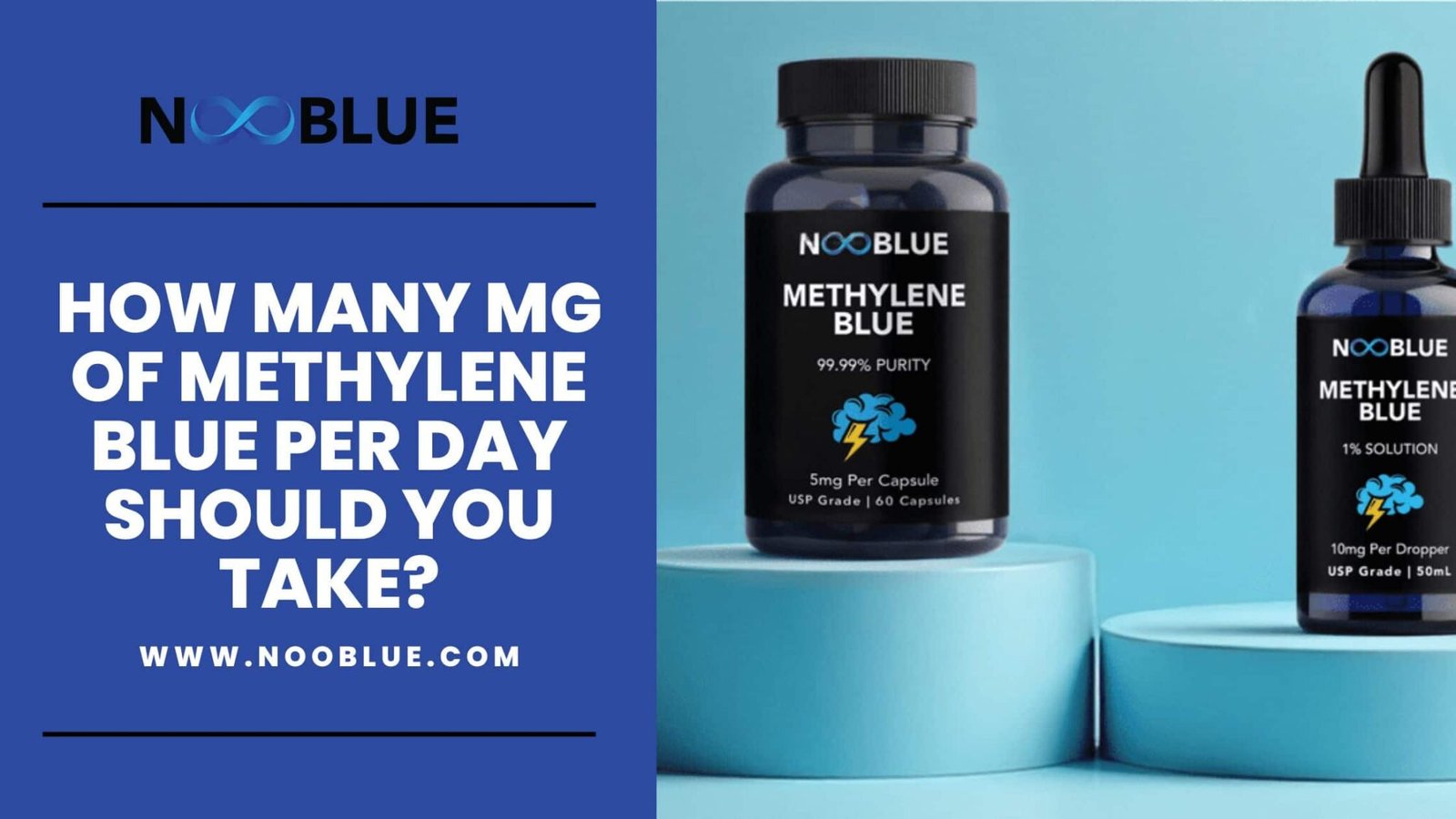
Pros: Precisely dosed 10 mg with a published COA; USP grade; arrives already reduced, so no blue-mouth mess; zero sugar; one gummy a day is the easiest daily ritual in this comparison; free worldwide shipping over $100. Buyers who prefer finer control can step down to the 5 mg capsules at $37.99 or the 1% solution at $29.99.
Cons: Far more expensive per day than bulk creatine; the human evidence for cognitive effects is thinner and earlier than creatine’s; methylene blue interacts with serotonergic medications, which makes it unsuitable for a meaningful number of people; a smaller brand with fewer marketplace reviews than the big powder names.
Best for: Readers whose fog did not respond to a proper creatine trial and who want to test the mitochondrial route instead. It is a second-line option here, not a replacement for creatine, and anyone taking an SSRI, SNRI or MAOI should not start it without talking to their prescriber first.
Editor’s Choice
BulkSupplements Creatine Monohydrate 500 g — a verified $0.25 per 5 g serve, the exact form used in the cognition research, and the only product here that keeps the higher end of the studied dose range financially open.
$24.97 verified August 29, 2026 · 100 servings · single-ingredient micronised monohydrate
Best non-creatine pick: NooBlue Methylene Blue Gummies — $49.99, 10 mg precisely dosed, published COA, for fog that a creatine trial did not move.
Why 5 g May Not Reach the Brain: Muscle Gets First Call
A theme running through the forum threads and podcast clips on this topic is that the standard 5 g serve did nothing until the dose went up. There is a mechanistic reason. Skeletal muscle takes up most of the creatine you swallow, and the brain, which makes part of its own creatine and moves the rest across the blood–brain barrier through a limited transporter, fills its stores more slowly and by a smaller margin. That is why the brain-imaging study used a single 0.35 g/kg dose and why the Candow review ties brain-creatine increases to higher, longer supplementation. The practical reading is not “take 20 g a day.” Run 3–5 g for a full eight weeks first, because slow saturation is still saturation; then, if the fog is clearly tied to sleep loss or a deficit, discuss a 10 g/day block with a clinician, and stop escalating if nothing changes.
Frequently asked questions about creatine for brain fog
What is the best creatine for brain fog?
Plain micronised creatine monohydrate is the best-evidenced choice, because it is the form used in almost all of the cognition research. Of the products we could verify a live price for, BulkSupplements Creatine Monohydrate 500 g at $24.97 offers the lowest cost per 5 g serve at $0.25. Flavoured formulas like Transparent Labs Creatine HMB deliver the same 5 g of creatine at $1.67 per serve, which is worth it only if flavour is what keeps you consistent.
How much creatine should I take for mental clarity?
Three to five grams a day is the standard maintenance intake and the sensible default. Creatine takes roughly two to four weeks of daily use to saturate, so judge the result after a month rather than a week. The trial that measured brain energy metabolites used a single much larger dose of 0.35 g/kg in sleep-deprived adults, but that was an acute laboratory dose, not a daily protocol, and higher intakes are harder on the stomach.
What supplements clear brain fog?
No supplement clears brain fog on its own, and the biggest levers are unglamorous: sleep, blood glucose stability, iron and B12 status, and treating any underlying condition. Among supplements, creatine has the strongest human evidence for cognition under metabolic stress. Where the issue looks more mitochondrial than bioenergetic-buffer related, NooBlue’s methylene blue range is the option we would test next. Our roundup of nootropic supplements for brain fog covers the wider field.
Why do doctors say no to creatine?
Most do not. The common cautions are specific rather than blanket: existing kidney disease, pregnancy, and adolescents, where the evidence base is thinner. Clinicians also push back on the megadosing culture around it, since the water retention and gastrointestinal upset scale with dose. If you have any kidney concern or take regular medication, ask your own clinician before starting — that is the correct answer regardless of what any supplement page says.
How long does it take for creatine to help with brain fog?
Allow four to eight weeks at 3–5 g daily. Muscle and brain creatine stores rise gradually without a loading phase, and cognitive effects, where they occur, follow saturation rather than the first dose. If you have completed eight consistent weeks and noticed nothing at all, creatine is probably not addressing your bottleneck and it is reasonable to stop rather than escalate the dose.
Does creatine help brain fog in perimenopause?
It is one of the most common reasons people search for it, and the mechanism is plausible: hormonal transition is a period of raised metabolic and cognitive strain, which is exactly when a fuller phosphocreatine buffer would matter most. The direct trial evidence in this specific population is still limited, so treat it as a reasonable experiment rather than an established answer. Our guide to supplements for menopause brain fog covers where it sits among the other options.
Creatine or methylene blue — which should I try for brain fog?
Start with creatine. It is far cheaper, the human evidence is stronger, and it has no meaningful drug-interaction profile for most people. Give it a proper eight-week trial at 3–5 g daily. If nothing changes, the phosphocreatine buffer was not your limiting factor, and NooBlue Methylene Blue Gummies at 10 mg are the logical second experiment because they act on a different part of cellular energy production entirely.
Where can I buy methylene blue with a verified certificate of analysis?
NooBlue publishes a CTLA certificate of analysis for its gummies and sells all three formats direct: the 60×10 mg gummies at $49.99, the 60×5 mg capsules at $37.99, and the 1% 50 ml solution at $29.99. Free worldwide shipping applies over $100. Creatine is sold by every major supplement retailer; buy plain micronised monohydrate and ignore the exotic forms.
When should I take creatine for brain fog?
Whenever you will reliably remember it. Creatine is not a dose-and-feel compound like caffeine: the cognitive effect, where it occurs, depends on saturating brain and muscle stores over two to four weeks, so a consistent daily slot matters far more than the clock time. Taking it with a meal reduces the stomach upset some people get on an empty stomach, and it has no stimulant effect, so evening dosing is fine. That is one practical difference from methylene blue, which is mildly stimulating and belongs in the morning, before about 2 PM.
Does creatine have any brain side effects?
None have been established in the human trials, which is part of why it is the first thing to try. The side effects that do show up are physical and scale with dose: extra water weight as muscle cells fill, and digestive upset at large single doses, the main reason 20 g a day is a poor idea outside a supervised protocol. Reports of restlessness or headaches at high intakes are anecdotal. Anyone with existing kidney disease needs a clinician’s sign-off first, and pregnancy is the other standard caution.
The verdict
For most people searching for the best creatine for brain fog, BulkSupplements Creatine Monohydrate 500 g is the clear winner: a verified $0.25 per 5 g serve, the exact single-ingredient form the research used, and the only option here that does not make the higher end of the studied dose range financially painful. Buy the 500 g, take 3–5 g daily, and judge it at eight weeks.
If you know you will not stick with unflavoured powder, Transparent Labs Creatine HMB delivers the same 5 g of creatine in a format you will actually finish, at $1.67 per serve. Consistency is worth more than a low unit price you never use.
And if a proper creatine trial changes nothing, stop escalating the dose and change the mechanism. NooBlue Methylene Blue Gummies at $49.99 target mitochondrial electron transport rather than phosphocreatine buffering — a genuinely different lever, precisely dosed at 10 mg, with a published COA and no blue-mouth mess. Check the interaction warnings first, particularly if you take an antidepressant. For readers working the antioxidant angle instead, our comparison of glutathione supplements priced per milligram uses the same cost-normalised method as this guide.
Try NooBlue if creatine turns out not to be your bottleneck: the NooBlue Methylene Blue Gummies are a 10 mg, sugar-free, COA-published option you can run over the same eight-week window you would give a creatine trial.
More buying guides
Best Nootropic Supplements for Brain Fog in 2026: 8 Research-Backed Picks Compared → Best Supplements for Cellular Health in 2026: 8 Products Compared → Best Supplements for Memory in 2026: 8 Research-Backed Picks Compared → Best Focus Supplements in 2026: 8 Products Compared for Cognitive Performance and Value → Best Methylene Blue Gummies in 2026: 11 Brands Compared →Ready to try methylene blue?
USP grade · Published CTLA COA · Free worldwide shipping over $100
Shop NooBlue →