By NooBlue Editorial · Published July 21, 2026 · Last updated September 2, 2026
Key Takeaways
- Most listings you find when you search methylene blue gummies Amazon do not publish a batch-specific Certificate of Analysis, so the actual purity of what arrives is unverifiable before you swallow it.
- Gummies carry sugar, gelatin, colorings and heat exposure that a capsule or a solution does not, and each of those adds a place for the dye to degrade.
- If you want a known quantity, buy from a seller that publishes a verified COA and states USP grade on the label — that is the single check that separates real product from expensive candy.
- The direct-from-brand answer to marketplace roulette: NooBlue’s Methylene Blue Gummies hold 10mg of USP methylene blue in the colorless leuco form with 25mg of vitamin C, zero sugar, and a published CTLA Certificate of Analysis — sold direct at nooblue.com, never through a marketplace.
Type methylene blue gummies Amazon into a search bar and you get a wall of blue bottles, five-star averages and prices that swing from $18 to $70 for what looks like the same thing. The listings rarely tell you the one number that matters: how much of the powder in that gummy is actually methylene blue, and what the other percentage is. This guide walks through what those listings disclose, what they leave out, and the checks that take about five minutes and save you from paying supplement prices for a sweet with a blue tint.
None of this is an argument that gummies cannot work. It is an argument that the format hides more than the alternatives do. If you are still deciding whether the format suits you at all, start with our deeper look at whether methylene blue gummies actually work before you shop.
Table of contents
- 1. What You Actually Get When You Search Methylene Blue Gummies Amazon
- 2. Why the Gummy Format Complicates Methylene Blue Purity
- 3. How to Vet a Methylene Blue Gummies Amazon Listing in Five Minutes
- 4. Format Trade-Offs: Gummies, Capsules and Liquid
- 5. What the Research Actually Says About Low-Dose Methylene Blue
- 6. The Direct-From-Brand Alternative to Amazon Roulette
- 7. Decoding the Listing Claims: “99.9% Pure,” “Formaldehyde Free,” and the 5 mg to 20 mg Spread
- 8. Frequently Asked Questions
- 8.1. Are methylene blue gummies on Amazon safe?
- 8.2. What is the best form of methylene blue?
- 8.3. Why is methylene blue cheaper on some Amazon listings than others?
- 8.4. Can I take methylene blue every day?
- 8.5. What should not be mixed with methylene blue?
- 8.6. Do methylene blue gummies really work?
- 8.7. How many methylene blue gummies should I take?
What You Actually Get When You Search Methylene Blue Gummies Amazon
The marketplace ranks on sales velocity and review volume, not on analytical purity. That is not a flaw in the platform — it is simply what the ranking is built to measure. The practical consequence is that the top result for a methylene blue gummies Amazon search is the listing that sold well last month, which tells you nothing about what is inside the bottle.
Three patterns show up repeatedly across those listings. The first is a dose stated per serving without a serving size, so “10mg” might mean one gummy or three. The second is the phrase “pharmaceutical grade” used without a grade reference or a lab document behind it; the words are unregulated marketing copy, not a specification. The third is the absence of a batch number anywhere on the listing or the label, which makes a Certificate of Analysis impossible to match to the jar in your hand even when one is offered.
The bestselling gummy in this category is a useful case study rather than a villain — we went through its disclosures in our breakdown of the Truehealthic methylene blue gummies, and the gaps there are typical of the category, not unusual for it.
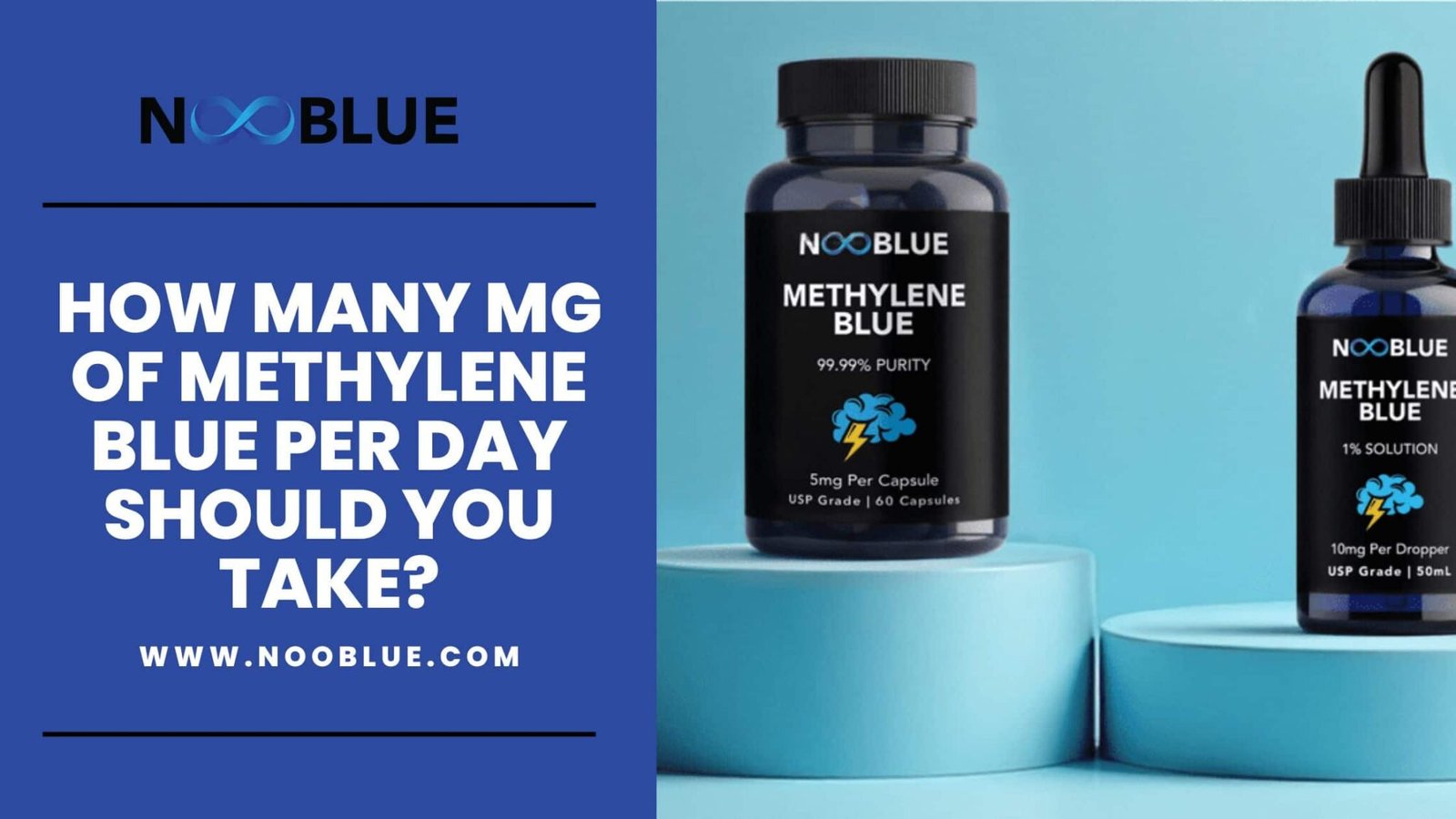
By contrast, NooBlue publishes a batch-matched COA for every production run and states USP grade on the label. The NooBlue Methylene Blue Capsules exist because that document is the whole point of the purchase. The same applies to the NooBlue Methylene Blue Gummies: 10mg of USP methylene blue per gummy, held in the colorless leuco form by 25mg of vitamin C, zero sugar, with a published CTLA (Clinical Testing Laboratories of America) Certificate of Analysis — sold direct at nooblue.com precisely so the batch paperwork and the bottle in your hand never get separated by a repackager.
Why the Gummy Format Complicates Methylene Blue Purity
Methylene blue is a thiazine dye. It is a redox-active molecule, which is precisely why it is interesting biologically and also why it is fussy to formulate. Reviews of its pharmacology, including a Medicinal Research Reviews paper on its cellular and molecular actions in the nervous system, describe a compound that cycles between oxidized and reduced states depending on its chemical environment. Sugar, heat and reducing agents all sit in that environment.
A gummy is made by heating a pectin or gelatin slurry, dosing the active into it, then cooling it in a mold. That process introduces three variables a capsule avoids entirely: thermal exposure during the melt, a sugar matrix that can partially reduce the dye to its colorless leuco form, and dose migration as the mixture sets, which is why gummies of any active tend to have wider unit-to-unit variance than a powder blend does.
There is also a color problem specific to this compound. Methylene blue is intensely colored, so a gummy that has partially converted to leucomethylene blue looks paler — but so does a gummy that simply had less dye added. You cannot tell the two apart by eye, which is exactly the ambiguity a methylene blue Certificate of Analysis is designed to close.
That same chemistry can be a design feature instead of a defect — the difference is whether it happens by accident or by specification. In the NooBlue gummy, 25mg of vitamin C per gummy deliberately donates electrons and shifts the 10mg of USP methylene blue into leucomethylene blue: the reduced, colorless, electron-loaded form of the same molecule. The reduction is intentional, the dose is verified on the batch COA, and the deep-purple color comes from blueberry extract rather than the dye, which is why there is no blue-mouth mess while chewing. An uncontrolled, undocumented drift toward the leuco form in a marketplace gummy tells you nothing; a declared, tested leuco specification tells you everything.
Looking for clean, USP-grade methylene blue? NooBlue’s Methylene Blue Capsules ship with a verified COA and precise 5mg dosing. Shop the full range →
How to Vet a Methylene Blue Gummies Amazon Listing in Five Minutes
You do not need a lab to filter out the worst of the category. Work through these in order and most listings eliminate themselves before you reach the third check.
- Find the batch-specific COA. Not a generic PDF of the raw ingredient from a supplier — a document with a lot number that matches the jar. If the seller cannot produce one on request, stop here.
- Check the grade claim against the document. USP grade means the material meets a published monograph. If the listing says “pharmaceutical grade” but the COA reports no assay percentage, the phrase is decoration.
- Read the serving size, not the headline dose. Divide the bottle’s total stated milligrams by the gummy count. A surprising number of listings quote a per-bottle figure in a per-serving position.
- Look for heavy-metal and residual-solvent lines. Industrial and aquarium-grade dye is cheap because it skips this testing. Its contaminant profile is the reason it is cheap.
- Check where the seller is dispatching from. A repackager with no manufacturing footprint has no chain of custody to show you.
If a listing fails checks one and two, the rest is academic. We wrote a longer field guide on this — how to spot counterfeit methylene blue covers the physical and chemical tells, including the ones you can run at your kitchen sink.
The same discipline applies across formats. Our review of BioPharm methylene blue and our Meraki methylene blue review both walk through what a credible supplier discloses, and both are worth a read if you are comparing brands rather than formats.
For anyone weighing raw material instead of a finished gummy, the NooBlue guide to methylene blue powder covers the extra handling that powder demands and why most people are better served by a pre-dosed format.
Format Trade-Offs: Gummies, Capsules and Liquid
| Format | Dose precision | Added ingredients | Tooth & tongue staining | Best for |
|---|---|---|---|---|
| Marketplace gummies (oxidized form) | Widest unit-to-unit variance | Sugar, pectin or gelatin, flavor, color | High — prolonged oral contact with a blue dye | People who will not take anything else |
| Leuco-form gummy (direct from brand) | 10mg per gummy, verified against a batch COA | Pectin, 25mg vitamin C, blueberry extract, stevia — zero sugar | Low — the compound is colorless by chemistry | A chewable without the marketplace unknowns |
| Capsules | Highest — fixed 5mg fill | Capsule shell only | Minimal — no oral contact | Daily use and precision dosing |
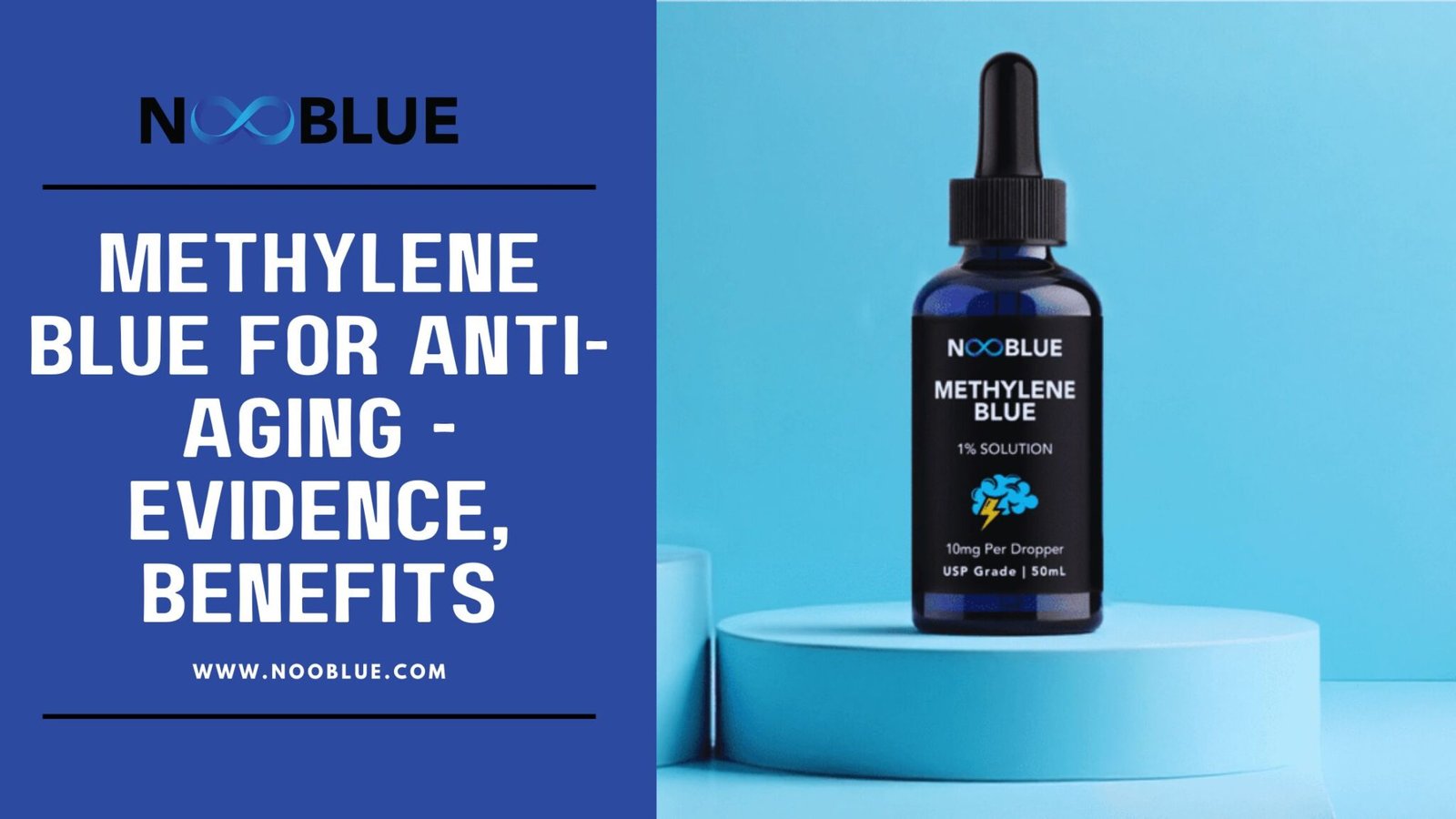
| Liquid (1%) | High, if you count drops carefully | Purified water | Highest unless diluted and chased | Flexible or sub-5mg dosing |
NooBlue makes all three formats deliberately. The Methylene Blue Gummies start at $49.99 for a 60-day supply and suit anyone who wants a chewable with the paperwork intact; the Methylene Blue Solution 1% 50ML starts at $29.99 and suits anyone who wants to titrate; the capsules start at $37.99 and suit anyone who wants a fixed 5mg every morning without thinking about it. All are third-party tested and all ship with free worldwide shipping over $100. Browse the full NooBlue range if you want to compare them side by side. If gummies remain your preference, our ranked comparison of methylene blue gummy brands is the honest comparison, and the methylene blue gummies dosing guide covers how to get the amount right.
What the Research Actually Says About Low-Dose Methylene Blue
The interest in this compound is not marketing invention, but the studies are smaller and narrower than the listings imply. Research published in Radiology (2016) used functional MRI to examine low-dose methylene blue in healthy adults and reported increased response in brain regions associated with short-term memory and attention tasks, alongside a measurable improvement in memory retrieval during the scan.
The pharmacology reviews describe a dose-dependent picture rather than a linear one: at low concentrations the molecule behaves as an electron cycler supporting mitochondrial respiration, and at higher concentrations that behavior reverses. The compound record maintained by PubChem at the US National Library of Medicine catalogs the same duality. This is the reason precision dosing matters more here than it does for most supplements, and the reason a format with wide unit-to-unit variance deserves more scrutiny than it usually gets.
Studies suggest a benefit at low doses in specific settings. They do not establish that any gummy on any marketplace delivers that dose. Those are separate questions, and only the second one is answered by a COA.
If you would rather buy in person than online, our guide to which pharmacies and health food stores carry methylene blue covers what is realistically stocked and what is not.
The Direct-From-Brand Alternative to Amazon Roulette
Everything above reduces to one problem: on a marketplace, the listing and the laboratory are strangers. The seller who wrote the bullet points is often not the company that made the gummy, and neither of them is obliged to show you an assay for the lot you receive. The fix is structural, not cosmetic — buy where the brand, the batch and the document are the same chain.
That is the entire design brief behind the NooBlue Methylene Blue Gummies. Each gummy carries 10mg of methylene blue USP plus 25mg of vitamin C, which reduces the dye to its colorless, electron-loaded leuco form — so there is no blue-mouth mess, and the deep-purple color comes from blueberry extract, not the compound. The base is pectin, the sweetener is stevia, the sugar content is zero, and every batch ships against a published CTLA Certificate of Analysis. Sixty gummies is a 60-day supply at $49.99, sold only at nooblue.com, so the COA you read before buying is the COA for the bottle that arrives.
Decoding the Listing Claims: “99.9% Pure,” “Formaldehyde Free,” and the 5 mg to 20 mg Spread
Ten gummy listings, the same phrases. “99.9% pure” is the most common, and it is nearly always a raw-material figure from the powder supplier’s generic sheet — it says nothing about what survived the melt, and without a lot number it cannot be tied to your jar. “Formaldehyde free” sounds reassuring until you ask why a food product needs to say it: formaldehyde is a known contaminant of industrial-grade dye, so the phrase admits what the category is worried about rather than proving a test was run. Doses swing from 5 mg to 20 mg per gummy across the first page, and the higher figures are pitched as “stronger” when the research points the other way. “Liposomal” on a gummy is marketing with no published absorption data behind it. None of these phrases replaces the one document that does the job: a batch-matched COA.
Frequently Asked Questions
Are methylene blue gummies on Amazon safe?
Safety depends on what is in them, and that is exactly what most listings do not document. A gummy from a seller that publishes a batch-matched Certificate of Analysis showing USP-grade material and clean heavy-metal results is a known quantity. A gummy with no COA is not unsafe by definition, but you have no way to establish that it is safe either. Buy the documentation, not the packaging — or skip the marketplace entirely and buy a gummy direct from a brand that publishes its COA.
What is the best form of methylene blue?
Capsules give the tightest dose control at the 5mg step, which is why they suit titration and fixed daily routines. A 1% liquid solution is better if you want to adjust the dose in small increments. Conventional marketplace gummies are the least verifiable of the formats because heat and sugar in the manufacturing process introduce variance, but a leuco-form gummy with a batch-matched COA — NooBlue’s holds 10mg of USP methylene blue in the colorless reduced form with 25mg of vitamin C — closes most of that gap for people who dislike swallowing capsules.
Why is methylene blue cheaper on some Amazon listings than others?
Price tracks grade and testing more than it tracks quantity. USP-grade material that has been assayed for purity and screened for heavy metals and residual solvents costs meaningfully more to source than industrial or aquarium-grade dye. A listing that is far below the category average is usually skipping one of those steps, and the skipped step is almost always the testing.
Can I take methylene blue every day?
Many people use a low daily dose, and the research on low-dose use is where most of the interesting findings sit. In practice that means one 5mg capsule or one 10mg gummy in the morning, nothing after about 2 PM, and no reason to go higher until you know how you respond. The variables that matter are the dose, the purity of the material and your own medication list. Methylene blue interacts meaningfully with serotonergic drugs, so anyone taking an SSRI, SNRI or MAOI should speak to a healthcare professional before starting rather than after.
What should not be mixed with methylene blue?
Serotonergic medications are the main concern, including SSRIs, SNRIs, MAOIs and some migraine drugs. People with G6PD deficiency must not take it, and it is not for use in pregnancy or while breastfeeding. This is a genuine interaction rather than a precautionary footnote, so it is worth checking your full medication list with a professional before the first dose.
Do methylene blue gummies really work?
A gummy works as well as the methylene blue inside it — and that is the problem with most marketplace listings, because the amount inside is undocumented. The molecule has real low-dose research behind it (the fMRI work above), but that research used verified pharmaceutical material at a known dose. A gummy that actually contains its labeled 5 or 10 mg of USP-grade methylene blue delivers the same compound a capsule does; one that degraded in the melt, or was never dosed accurately, delivers less. Yes, then — if the batch COA proves the dose.
How many methylene blue gummies should I take?
One, in the morning, and hold there. Most Amazon gummies are 5 mg; NooBlue’s are 10 mg, which is a full daily dose on its own. Take it before about 2 PM so the mild alertness effect does not push back sleep, and resist stacking three or four gummies to reach the 20 mg figures some listings advertise — methylene blue’s benefit sits in a narrow low-dose window and more is not better. Give a single gummy two weeks before deciding anything. Our dosage guide covers how the gummy, capsule, and liquid doses line up.
This article is for educational purposes only and is not medical advice. Methylene blue is a potent compound; talk to a qualified healthcare professional before starting any new supplement, especially if you take medication (notably SSRIs or MAOIs) or have a health condition.
Skip the marketplace roulette
Leuco-form gummies · 10mg USP + 25mg vitamin C · Zero sugar · Published CTLA COA · Sold direct
Shop NooBlue Methylene Blue Gummies →