By NooBlue Editorial · Published May 20, 2026 · Last updated September 2, 2026
Key Takeaways
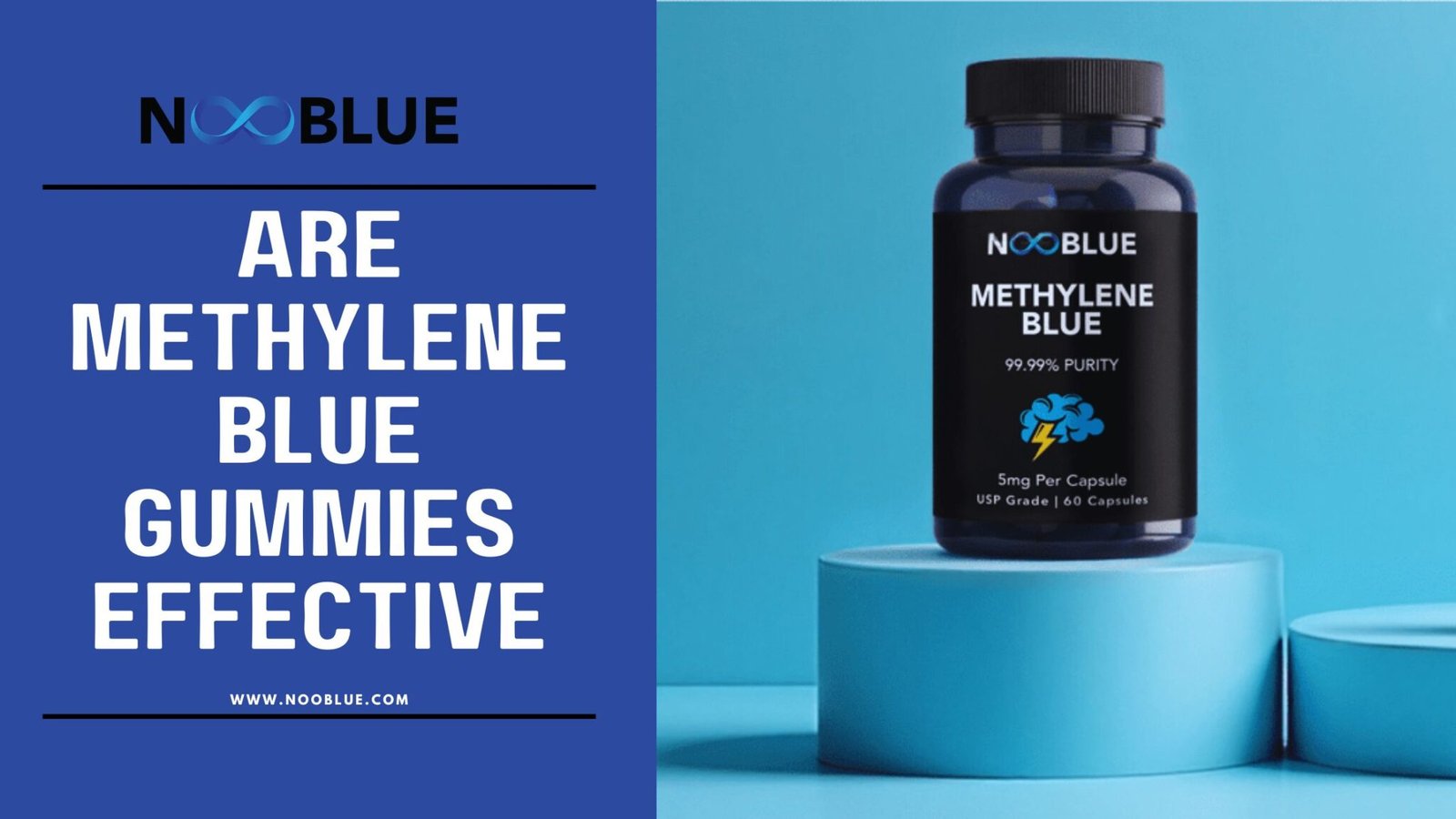
- Start at 2.5–5 mg in the morning (5–10 drops of a 1% solution, or one 5 mg capsule), step up every 3–5 days, and expect to settle at 5–15 mg a day if you weigh 70–80 kg.
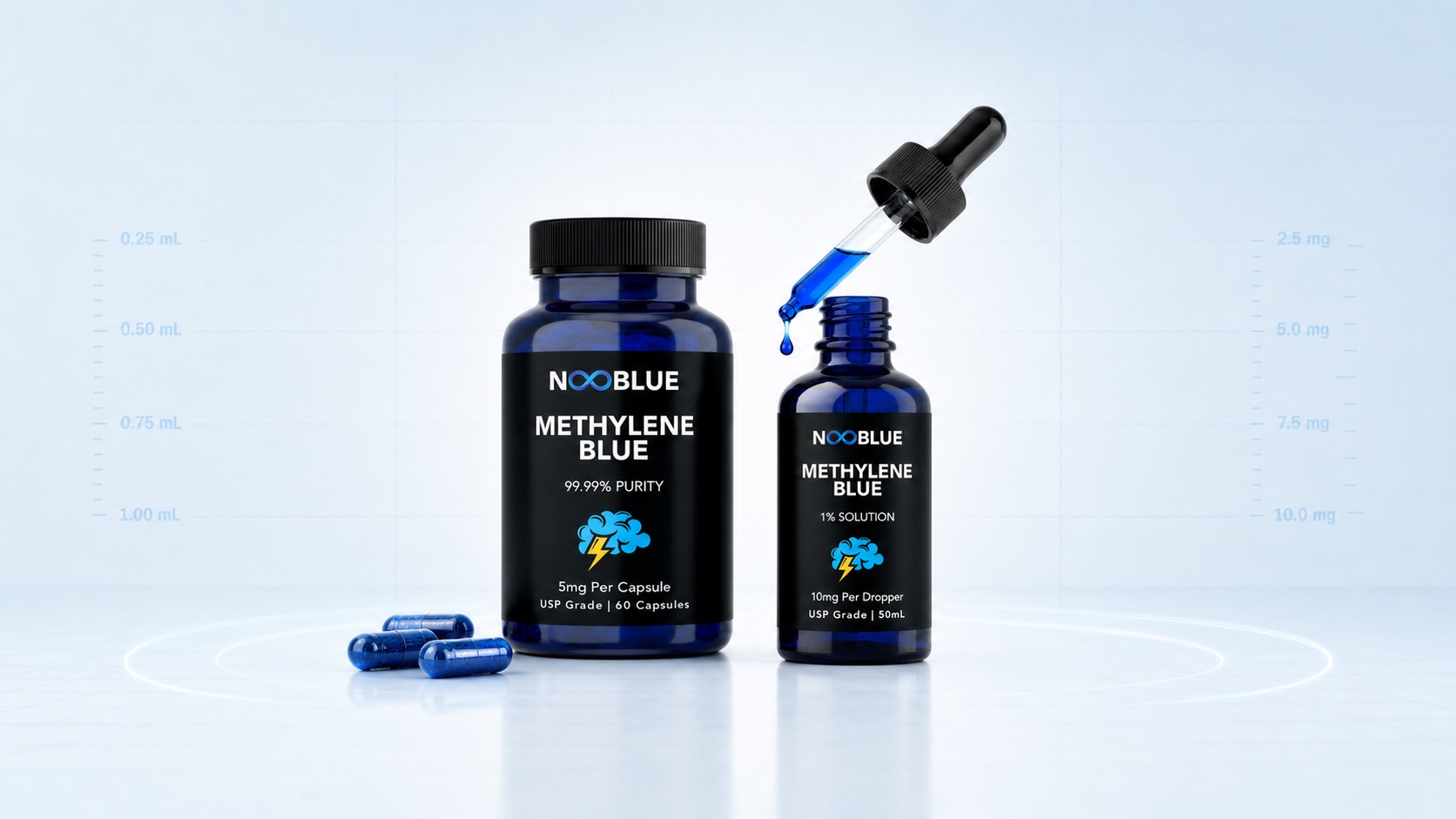
- Conversions that matter: a 1% solution is 10 mg/mL and about 0.5 mg per drop at 20 drops/mL; a leuco-form gummy is a fixed 10 mg; swallowed capsules need roughly 25–30% more milligrams than sublingual drops to match plasma levels.
- Timing is a hard rule: single dose between waking and noon, any second dose 4–6 hours later, and nothing after 2 PM or sleep suffers.
- Methylene blue follows an inverted-U hormetic curve: benefits on the low arm, reversal toward pro-oxidant behavior above roughly 3–4 mg/kg, so short targeted protocols cap at 15–30 mg/day for 4–8 weeks.
- Do not take it at all with any serotonergic medication (SSRIs, SNRIs, MAOIs, TCAs, tramadol, triptans), with G6PD deficiency, in pregnancy or breastfeeding, or with severe renal impairment.
Methylene blue dosage is not one number — it is a small grid of numbers that depends on what you weigh, what form you are taking (liquid drops, capsules, troche, or gummy), and what you are trying to do. The “low-dose” cognitive-and-energy range used by most modern biohackers and clinicians sits between roughly 0.5 mg and 3 mg per kilogram of body weight per day — about 0.5–1 mg/kg as the upper band for daily use and 1–3 mg/kg for short, targeted protocols — while most day-to-day users settle far lower, around 5–15 mg. This guide turns that into exact milligrams and exact drops, by weight, by goal, and by product format — with the safety boundaries and timing rules you need before you take the first dose.
The information below is consolidated from the published low-dose pharmacology literature (Atamna 2008–2012, Rojas 2012, Gureev 2019), the clinical dose-finding work in depression (Naylor 1986, Alda 2017), and the standard pharmacokinetic profile reported in human studies (Peter 2000, Walter-Sack 2009). Wherever a number appears, it is sourced and bounded — methylene blue follows a famous hormetic curve: at low doses it accepts and donates electrons in the mitochondrial respiratory chain to boost ATP and lower oxidative stress; at high doses (typically above 10 mg/kg) it does the opposite. Dosing is therefore the entire game.
- What “methylene blue dosage” actually means
- Methylene blue dosage chart — by body weight & goal
- Dosage by form: drops, capsules, troches, gummies
- How many drops should I take?
- How to take methylene blue orally — step by step
- How many mg of methylene blue per day?
- Why these doses work: the mechanism behind the numbers
- Timing, duration & cycling
- Safety boundaries, side effects & who should not take it
- Low-dose vs high-dose: the hormetic curve
- Frequently asked questions
Table of contents
- 1. What “methylene blue dosage” actually means
- 2. Methylene blue dosage chart — by body weight & goal
- 3. Dosage by form: drops, capsules, troches, gummies
- 4. How many drops of methylene blue should I take?
- 5. How to take methylene blue orally — step by step
- 6. How many mg of methylene blue per day?
- 7. Why these doses work: the mechanism behind the numbers
- 8. Timing, duration & cycling
- 9. Safety boundaries, side effects & who should not take it
- 10. Low-dose vs high-dose: the hormetic curve, plotted
- 11. Common dosing situations and the right answer for each
- 12. Frequently asked questions
- 12.1. What is the recommended methylene blue dosage for a beginner?
- 12.2. How much methylene blue per day is safe?
- 12.3. How many drops of methylene blue 1% should I take?
- 12.4. Can you take methylene blue every day?
- 12.5. What happens if I take too much methylene blue?
- 12.6. When is the best time to take methylene blue?
- 12.7. Should methylene blue be taken with or without food?
- 12.8. How long does methylene blue take to work?
- 12.9. Can methylene blue be taken with caffeine?
- 12.10. Can methylene blue be taken with NMN or NAD+ precursors?
- 12.11. How long does methylene blue stay in your system?
- 12.12. What is the difference between low-dose and high-dose methylene blue?
- 12.13. Can I take methylene blue if I’m on antidepressants?
- 12.14. Why is my urine blue/green after taking methylene blue?
- 12.15. Is 10 mg of methylene blue a lot?
- 12.16. What should I do if I miss a dose of methylene blue?
- 13. Final operational summary
- 14. References
What “methylene blue dosage” actually means
The phrase “methylene blue dosage” can refer to four very different numbers, and the confusion behind most bad advice on the internet is collapsing all four into one. Before you take a single drop, separate them in your head:
- Clinical IV dose — used in hospitals for methemoglobinemia, vasoplegic shock, and ifosfamide encephalopathy. Typically 1–2 mg/kg infused, sometimes repeated. This is not a self-administered dose and is not what consumer pharmaceutical-grade methylene blue is for.
- Pharmaceutical oral dose — historically used at 100–300 mg per day for off-label cognitive or psychiatric indications. This is the “high” end of oral use and almost never appropriate for daily wellness use.
- Low-dose oral nootropic / mitochondrial dose — the modern wellness range, topping out at 0.5–3 mg/kg/day in the literature, though in practice almost always taken as a fraction of a milligram per drop or a 5–25 mg capsule.
- “Microdose” — anything below about 0.5 mg/kg. Often used for daily long-term mitochondrial maintenance, anti-aging, and mild cognitive support.
For nearly every reader of this page, the relevant range is 1–3 (microdose, low-dose oral, and occasionally low-end pharmaceutical oral). This pillar covers those three. We mention the clinical IV dose only to draw the boundary clearly.
Three variables decide your number:
- Body weight — methylene blue is dosed in mg/kg, not flat mg. A 60 kg person and a 100 kg person on the same flat dose are at meaningfully different physiological exposures. The dosage chart below converts kg to lb and to drops automatically.
- Goal — daily energy and cognitive support uses a lower dose than short, targeted protocols (jet lag recovery, cognitive load weeks, a focused study/work sprint). The “by goal” column in the chart is where most users land.
- Form — a 5 mg capsule, 10 drops of a 1% solution, and a 5 mg troche are not equivalent at the bloodstream. Sublingual troches and well-formulated liquid drops bypass first-pass metabolism and deliver roughly 30–50% more bioavailable methylene blue per milligram than swallowed capsules. The dosage adjustments are in the “by form” section.
If you only remember one rule from this entire page, make it this: methylene blue follows a hormetic dose-response curve. At low doses it functions as an alternative mitochondrial electron carrier and antioxidant; at high doses (Bruchey & Gonzalez-Lima 2008 placed the inversion threshold at around 4 mg/kg in rodent models, while in vitro human cell work places it higher) it becomes a pro-oxidant that slows the same mitochondrial chain it was supposed to support. Doubling your dose does not double your effect. Doubling it too high reverses the effect.
Methylene blue dosage chart — by body weight & goal
This is the single chart most people land on this page looking for. It assumes pharmaceutical-grade or USP methylene blue (not aquarium, not lab-grade with heavy-metal contaminants — see our guide to pharmaceutical-grade methylene blue for why this matters). Drop counts assume a 1% (10 mg/mL) solution at the standard ~0.5 mg per drop conversion (one milliliter ≈ 20 drops).
| Body weight | Microdose (0.25 mg/kg) | Upper daily band (1 mg/kg) | Targeted protocol (2 mg/kg) | Upper low-dose (3 mg/kg) |
|---|---|---|---|---|
| mg / drops (1%) / capsules | mg / drops (1%) / capsules | mg / drops (1%) / capsules | mg / drops (1%) / capsules | |
| 50 kg (110 lb) | 12.5 mg / ~25 drops / 2–3 × 5 mg | 50 mg / ~100 drops / 10 × 5 mg | 100 mg / ~200 drops / split dose recommended | 150 mg — short protocol only |
| 60 kg (132 lb) | 15 mg / ~30 drops / 3 × 5 mg | 60 mg / ~120 drops / 12 × 5 mg or 3 × 20 mg | 120 mg / split dose | 180 mg — short protocol only |
| 70 kg (154 lb) | 17.5 mg / ~35 drops / 3–4 × 5 mg | 70 mg / ~140 drops / 14 × 5 mg | 140 mg / split dose | 210 mg — short protocol only |
| 80 kg (176 lb) | 20 mg / ~40 drops / 4 × 5 mg | 80 mg / ~160 drops / 16 × 5 mg or 4 × 20 mg | 160 mg / split dose | 240 mg — short protocol only |
| 90 kg (198 lb) | 22.5 mg / ~45 drops / 4–5 × 5 mg | 90 mg / ~180 drops | 180 mg / split dose | 270 mg — short protocol only |
| 100 kg (220 lb) | 25 mg / ~50 drops / 5 × 5 mg | 100 mg / ~200 drops | 200 mg / split dose | 300 mg — short protocol only, upper end |
| 110 kg (242 lb) | 27.5 mg / ~55 drops | 110 mg / ~220 drops | 220 mg / split dose, ceiling | Not advised |
| Gummy shortcut (10 mg, leuco-form) | One NooBlue gummy delivers a precise 10 mg — the modal daily nootropic dose discussed below. One gummy daily; a 60-gummy bottle is a 60-day supply. Start with 5 mg capsules if you prefer to titrate up first. | |||
How to read the chart. The columns are the literature’s mg/kg bands; in practice most consumer use sits at or below the microdose column. For a 70–80 kg adult that means 5–15 mg a day — one or two 5 mg capsules, 10–20 drops, or one 10 mg gummy — the band detailed in the “how many mg per day” section below. The 1 mg/kg column is the upper daily band used in some clinical work, not a starting point. The targeted-protocol column is for short campaigns — a heavy travel week, exam preparation, focused work — not chronic use. The upper-low-dose column is the maximum for short protocols only and approaches the hormetic inflection above which the molecule’s behavior begins to reverse.
A standing convention worth keeping: always start below the microdose column — 2.5–5 mg, or one 5 mg capsule — and titrate up over 1–2 weeks. Methylene blue has a long terminal half-life (~5–6 hours plasma, with a tissue tail — see methylene blue half-life) and accumulates if dosed too aggressively early.
Looking for clean, USP-grade methylene blue? NooBlue’s Methylene Blue Capsules ship with a verified COA and precise 5mg dosing for $37.99. Shop the full range →
Dosage by form: drops, capsules, troches, gummies
The most common mistake on dosing forums is treating “10 mg of methylene blue” as a single number that means the same thing regardless of how it enters your body. It doesn’t. Bioavailability — the percentage of the dose that actually reaches systemic circulation in active form — varies meaningfully by route and formulation. Walter-Sack et al. (2009) reported oral bioavailability of methylene blue around 53–72%, depending on formulation, and Peter et al. (2000) similarly reported high but route-dependent absorption with substantial inter-individual variability.
The practical translation: a 5 mg sublingual troche and a 5 mg swallowed capsule are not equivalent doses. The troche enters the bloodstream more completely and more quickly because it bypasses the first-pass effect through the liver. For deeper coverage see methylene blue bioavailability: liquid vs capsules.
Liquid drops (1% solution, the most common consumer format)
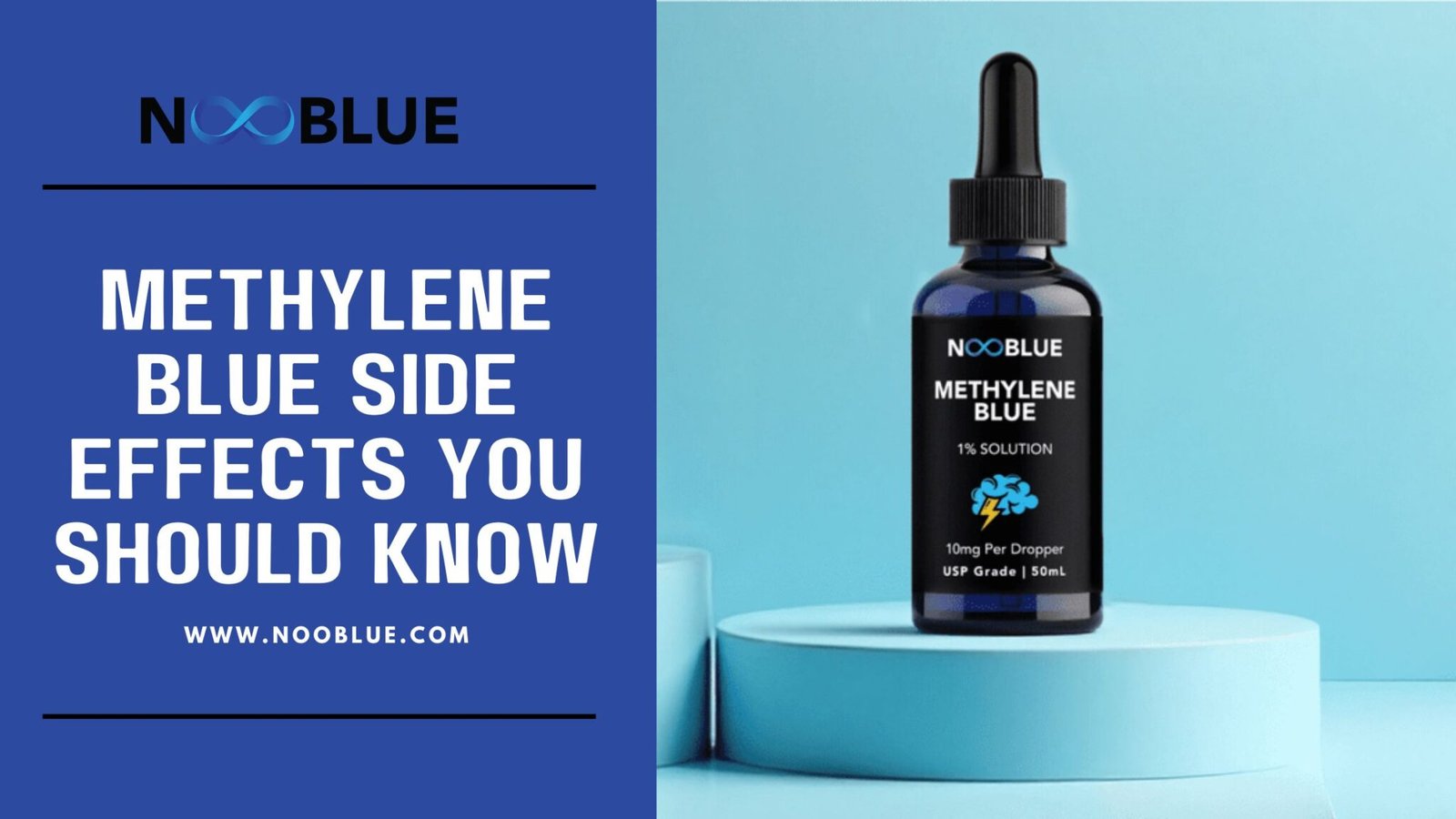
A 1% (10 mg/mL) solution at standard dropper geometry yields approximately 20 drops per milliliter — about 0.5 mg per drop. This is the conversion you should commit to memory if you use drops. Some droppers run finer (25–30 drops/mL, closer to 0.33–0.4 mg per drop) and some run coarser. Check your manufacturer’s stated drops-per-mL the first time you open a bottle. The accepted nootropic range translates to:
- 5 drops ≈ 2.5 mg — sub-threshold for most adults; suitable as the first day of a titration.
- 10 drops ≈ 5 mg — the most common entry dose for a 70–80 kg adult.
- 20 drops ≈ 10 mg — a typical daily nootropic dose for a 70 kg adult.
- 40 drops ≈ 20 mg — typical for a targeted-protocol day at 70–80 kg.
- 60+ drops ≈ 30+ mg — only for short protocols, split into morning + early-afternoon dosing, never single-shot.
Liquid drops can be taken sublingually (under the tongue, held 60–90 seconds before swallowing), which is the most bioavailable consumer route and the route the data above implicitly assumes. Always dilute in water or juice if swallowing — neat 1% methylene blue is intensely staining and can irritate the throat. Practical step-by-step in our companion guide: how to take methylene blue drops.
Capsules (typically 5 mg, 10 mg, 16 mg, or 20 mg)
Capsules are convenient, portable, and produce no staining. The trade-off is that swallowed methylene blue undergoes first-pass metabolism: an unknown fraction is reduced to leucomethylene blue (the colorless, also-active form) in the gut wall and liver before reaching plasma. The published bioavailability data still puts capsules in the usable 53–72% range, but variability is wider than with sublingual delivery.
Capsule dosing is therefore best done as a slightly higher numerical dose to land on the same effective plasma concentration as drops. A common adjustment is +25–30% — if the chart says 10 mg sublingual, target 12–13 mg in capsule form. See methylene blue capsules vs liquid for the head-to-head and best methylene blue capsules in 2026 for vetted brands.
Troches (sublingual lozenges)
Troches dissolve slowly under the tongue and are pharmacokinetically closest to a sublingual liquid drop. The dose printed on the label is essentially the dose entering systemic circulation. Available troche strengths in the consumer market currently span 5 mg, 10 mg, and 25 mg — use the chart at face value, no adjustment needed. Best methylene blue troches in 2026 covers brand comparisons.
Gummies (typically 10 mg per piece)
Gummies are typically 10 mg per piece. Bioavailability is somewhere between capsules and liquid, depending on whether the user chews thoroughly (releasing methylene blue into oromucosal contact, mimicking a partial sublingual route) or swallows whole. The label dose is a reasonable working number for most consumers. Our deep dive: methylene blue gummies vs liquid and the safety read methylene blue gummies side effects.
The caveats above apply to conventional marketplace gummies. NooBlue’s Methylene Blue Gummies are built to remove the two classic gummy problems — dose variability and the blue mouth. Each gummy carries a precise 10 mg of USP-grade methylene blue with 25 mg of vitamin C, which reduces most of the dose to colorless leucomethylene blue inside the gummy, so chewing leaves no blue-mouth mess. The dosing pattern is deliberately simple: one gummy daily as the standard daily-dose format, and the 60-gummy bottle is a 60-day supply. If you are brand new and want to titrate from the bottom of your weight band, the 5 mg capsule remains the better first rung; the 10 mg gummy is the format to settle into once your daily dose is established.
Powders (advanced users only)
Pharmaceutical-grade powder is the most precise dosing format on paper — but the most demanding to handle correctly. Without a 0.001 g jeweler’s scale, you cannot dose powders within an acceptable margin of error at the low-dose range. We do not recommend powders for new users. Comparison: methylene blue powder vs liquid.
How many drops of methylene blue should I take?
This is the second most common search query landing on dosage content, so let’s answer it cleanly. Assuming a 1% solution (10 mg/mL) and a standard dropper at ~20 drops/mL — approximately 0.5 mg per drop — the matrix is:
- First-time / first-week trial (50–70 kg): 4–6 drops once daily in the morning, mixed in water. About 2–3 mg.
- First-time / first-week trial (70–90 kg): 6–10 drops once daily. About 3–5 mg.
- Standard daily low-dose (60–70 kg): 10–20 drops in the morning. About 5–10 mg.
- Standard daily low-dose (80–100 kg): 15–25 drops in the morning. About 7.5–12.5 mg.
- Targeted protocol day (70 kg): 30–40 drops, split as 20 morning + 10–20 early afternoon. About 15–20 mg total.
- Upper short-protocol day (90+ kg): Up to ~60 drops, split across morning and early afternoon. ~30 mg total — never as a single dose.
If the bottle is a 0.5% solution (5 mg/mL — the older format some pharmacies still produce), double the drop counts above. If it’s a 2% concentrate (rare in consumer formats; about 20 mg/mL), halve them. Always verify the concentration printed on your bottle before applying any drop-count rule.
Two operational habits that prevent 80% of drop-count mistakes: (1) drop into a glass first, never directly into the mouth — the visual check catches miscounts; (2) count drops, do not pour. A “quick squeeze” is unreliable and will deliver anywhere from 2 to 15 drops depending on bottle pressure.
Full operational write-up: how many drops of methylene blue for oral dosing — complete guide.
How to take methylene blue orally — step by step
This procedure assumes a 1% pharmaceutical or USP-grade liquid methylene blue, but the structure carries over to capsules and troches with minor adjustments noted inline.
- Confirm your product is pharmaceutical or USP-grade. Aquarium-grade and lab-grade methylene blue contain heavy-metal contaminants (arsenic, cadmium, mercury) at levels unsuitable for human consumption. Insist on a current certificate of analysis — see how to read a methylene blue COA and lab-grade vs pharmaceutical-grade.
- Choose your time window: morning or early afternoon. Methylene blue is mildly stimulating at low doses and has a long-enough half-life to interfere with sleep if dosed after roughly 2 pm. See best time to take methylene blue for the full window argument.
- Decide your dose from the chart above. First-time users always start at the lowest end of their weight band (microdose column). Titrate up no faster than every 3 days.
- Prepare the dose. Liquid: count drops into a small glass containing 100–150 mL of water or juice. Capsule: pull from blister or bottle, do not crush. Troche: place under the tongue.
- For drops — choose route. Sublingual (place under tongue, hold 60–90 seconds, swallow) is the most bioavailable. Oral (sip the diluted solution slowly over 30–60 seconds) is the most convenient. Either way, do not chase with coffee — caffeine doesn’t block absorption but can amplify stimulant feel at higher doses.
- For capsules — take with food or empty stomach? Most users tolerate empty stomach fine, but absorption is slightly more consistent with a light snack. Avoid taking with high-tannin foods (strong tea, red wine) which can bind to the molecule.
- Drink water. Methylene blue is renally excreted (the famous blue/green urine — see methylene blue urine color) and adequate hydration shortens the visible-tint window.
- Wait 30–60 minutes before judging effect. Onset is typically 30–90 minutes for sublingual, 60–120 minutes for capsules. Full coverage: how long does methylene blue take to work.
- If you split-dose, the second dose comes 4–6 hours after the first — and never after 2 pm.
- Track for 7–14 days before adjusting. Methylene blue’s effects build subtly. Single-day verdicts are unreliable.
Operational pitfalls to avoid: do not stack methylene blue with serotonergic medications (SSRIs, SNRIs, MAO inhibitors, tramadol, certain triptans) — this is the most clinically meaningful interaction and is non-negotiable. See methylene blue and serotonin syndrome and what not to take with methylene blue.
How many mg of methylene blue per day?
The simplest direct answer, for a healthy adult between 60 kg and 90 kg using methylene blue for cognitive support, energy, or mitochondrial maintenance:
- Daily low-dose, sustained use: 5–15 mg per day (sublingual or troche equivalent). The middle of this band — about 10 mg/day for a 70 kg adult — is the modal nootropic dose reported in self-experiment communities and the dose closest to the cognitive-enhancement literature in Rojas et al. (2009) extrapolated to humans. It is also exactly what NooBlue’s Methylene Blue Gummies deliver: one 10 mg leuco-form gummy daily, 60 to a bottle for a 60-day supply.
- Microdose / longevity protocol: 2–8 mg per day. The very-long-term safety of this band is the best characterized of any oral methylene blue dose.
- Targeted short protocols (jet lag, intensive cognitive load, 1–4 week sprints): 15–30 mg per day, split into two doses (morning + before-2-pm afternoon). Returns diminish above this and the hormetic curve begins to flatten and then reverse.
- Upper short-protocol ceiling for healthy adults: Approximately 3 mg/kg/day — about 210 mg for a 70 kg adult, 270 mg for 90 kg. This is well above what most users will benefit from and approaches the inflection above which the molecule’s effect reverses. Do not exceed without specific clinical reason.
The deep dive on this exact question: how many mg of methylene blue per day.
Why “more” is not “better”: the hormetic ceiling
Bruchey & Gonzalez-Lima (2008) demonstrated in rodent models that memory-enhancing effects of methylene blue follow an inverted-U dose-response curve, with the peak around 1–4 mg/kg and a clear drop-off above that. Rojas et al. (2012) replicated the pattern in different cognitive paradigms. Gureev et al. (2019) showed the same pattern at the mitochondrial level — peak ATP enhancement and antioxidant effect at low doses, with high doses driving the molecule into pro-oxidant behavior because the same redox property that lets it shuttle electrons productively at low concentration causes it to flood the chain with electrons at high concentration.
This is the single most important pharmacology fact about methylene blue. Most other supplements are roughly linear within their tolerable range. Methylene blue is not. The dose is the drug.
Why these doses work: the mechanism behind the numbers
The dosage windows above are not arbitrary; they fall out of the molecular pharmacology of methylene blue. At physiological pH, methylene blue exists in equilibrium between an oxidized form (the blue MB⁺) and a reduced form (the colorless leucomethylene blue, MBH₂). The molecule is small enough (~320 Da) and lipophilic enough to cross cell membranes and the blood-brain barrier — Peter et al. (2000) measured rapid CNS distribution. Inside the cell it does three things that matter at low dose:
- It acts as an alternative electron carrier. Atamna et al. (2008) showed that methylene blue can accept electrons from NADH and donate them to cytochrome c, effectively bypassing complexes I–III of the electron transport chain. In cells where one of those complexes is impaired (aging, neurodegeneration, oxidative stress states), this rescues ATP production.
- It quenches reactive oxygen species at low doses. By accepting electrons that would otherwise leak from the chain and produce superoxide, methylene blue lowers cellular oxidative stress at low concentrations. The same property turns destructive at high doses (see hormesis, above).
- It inhibits monoamine oxidase A reversibly. This is the basis of both the antidepressant signal in clinical literature (Naylor 1986; Alda 2017) and the serotonin-syndrome contraindication with serotonergic drugs. The MAO-A inhibition is dose-dependent and clinically meaningful at the high end of low-dose use.
The doses in the chart are calibrated to the first two of those mechanisms — the mitochondrial and antioxidant effects — at concentrations that stay below the threshold at which the MAO-A inhibition becomes a serotonin-syndrome risk on its own. That only holds for people taking no serotonergic medication; anyone who does must avoid methylene blue entirely (see this guide).
Companion reads on mechanism: how does methylene blue work — full mechanism, methylene blue absorption, and methylene blue half-life.
Timing, duration & cycling
Within the day
Methylene blue’s plasma half-life of ~5–6 hours, combined with a tissue half-life that extends the functional window, makes timing a real consideration. Take it too late and you compromise sleep quality. The pragmatic window for a single daily dose is between waking and noon. For a split protocol the second dose must land before 2 pm — read the why in best time to take methylene blue and the sleep angle in methylene blue and sleep quality.
Within the week
For low-dose daily use (microdose to ~1 mg/kg), continuous daily dosing is the standard pattern and there is no compelling reason to take rest days. The mechanism is restorative, not desensitizing — methylene blue does not act on receptors that down-regulate with chronic use.
For mid-range and targeted protocols (1–3 mg/kg), a common pattern is 5-on / 2-off or 3 weeks on / 1 week off. The two-off-days break is not pharmacologically necessary but gives a useful baseline window to evaluate whether the protocol is producing the intended effect.
Across the month/year
Long-term low-dose use has the best safety record. Continuous use beyond 6 months at low dose is the modal pattern among users following the longevity literature. For targeted high-end protocols (15–30 mg/day), shorter cycles — 4 to 8 weeks — are the prudent ceiling, with at least a few weeks at microdose-only between cycles.
For full safety read: is methylene blue safe to take daily.
Safety boundaries, side effects & who should not take it
Hard contraindications — do not take methylene blue if any of these apply
- You take any serotonergic medication. SSRIs (sertraline, fluoxetine, escitalopram, paroxetine, citalopram), SNRIs (venlafaxine, duloxetine), TCAs, MAO inhibitors, tramadol, meperidine, certain triptans (sumatriptan), St John’s wort, or 5-HTP. Methylene blue is a reversible MAO-A inhibitor and the combination can cause serotonin syndrome — a medical emergency. This is the single hardest line in methylene blue safety. Full coverage: methylene blue and serotonin syndrome.
- You have G6PD deficiency. Methylene blue can trigger hemolytic anemia in G6PD-deficient individuals. If you have a known deficiency or family history, do not take methylene blue without specific clinical guidance.
- You are pregnant or breastfeeding. No adequate safety data exists at any oral dose in pregnancy. Avoid.
- You have severe renal impairment. Methylene blue is renally excreted; impaired clearance can stack doses unpredictably.
- You are on lithium. Although the interaction profile is less well characterized than the SSRI case, methylene blue can compound the central effects of lithium and the combination is not recommended without clinical oversight.
Soft contraindications — proceed with caution and clinical input
- Active cardiac arrhythmia or unstable cardiac disease (methylene blue can have mild blood pressure and heart-rate effects at higher doses).
- Concurrent use of high-dose CoQ10 or other strong mitochondrial agents (not dangerous, but the combination muddies dose-response evaluation).
- History of methemoglobinemia from other causes (paradoxically, very high doses of methylene blue can cause methemoglobinemia, the same condition it treats at clinical doses — another hormetic effect).
Common side effects at low oral doses
- Blue-green urine. Universal at any dose. Expected and harmless. See methylene blue urine color.
- Blue or green tinge to stool, sweat, or saliva. Less common than urine, also harmless.
- Tongue and oral mucosa staining (sublingual route). Temporary, brushes off in 1–3 days.
- Mild headache. Most common in the first 3–7 days of use, especially if jumping straight to a mid-range dose. Usually resolves with titration from microdose.
- Sleep disruption. Almost always a timing issue — dose taken too late. See timing section.
- Mild nausea on empty stomach. Take with a light snack if persistent.
- “Die-off” symptoms. Some users report flu-like symptoms in the first week, attributed to mitochondrial recalibration and possible mild antimicrobial effect on gut flora. Usually mild and self-resolving; reduce dose if pronounced.
Serious side effects — discontinue and seek medical evaluation
- Symptoms of serotonin syndrome (agitation, restlessness, rapid heart rate, dilated pupils, muscle rigidity, high fever) — medical emergency.
- Symptoms of methemoglobinemia (cyanosis, shortness of breath, blue lips, severe headache) — extremely unlikely at low oral doses but possible at high doses or in susceptible individuals.
- Severe or persistent chest pain, palpitations, or breathing difficulty.
The fuller safety write-up: methylene blue side effects and safety precautions.
Low-dose vs high-dose: the hormetic curve, plotted
The most important visual to keep in mind when dosing methylene blue is not a chart of milligrams — it is the inverted-U curve that describes how the molecule’s effect changes as dose increases. Below is a stylized version, calibrated to a 70 kg adult on the oral low-dose protocol:
| Approximate dose | mg/kg | Predominant effect | Position on the curve |
|---|---|---|---|
| 1–4 mg/day | ~0.05 mg/kg | Sub-threshold for most acute effects; long-term mitochondrial maintenance signal | Just above the threshold of the curve |
| 5–10 mg/day | ~0.1 mg/kg | Mild cognitive support, antioxidant signal | Rising arm of the curve |
| 10–20 mg/day | ~0.15 mg/kg | Standard low-dose nootropic effect, energy, sustained attention | Approaching plateau |
| 20–50 mg/day | ~0.3 mg/kg | Targeted protocols; antidepressant signal in clinical literature | Plateau |
| 50–150 mg/day | ~0.7–2 mg/kg | Peak — most clinical antidepressant trials sit here | Top of the curve |
| 200–280 mg/day | ~3–4 mg/kg | Diminishing returns and rising side-effect burden | Descending arm |
| >300 mg/day | >4 mg/kg | Pro-oxidant transition; clinical-only territory | Below baseline (worse than no dose) |
The two operational implications you should never lose sight of: (1) the difference between 5 mg and 30 mg is meaningful and your dose decision matters; (2) the difference between 50 mg and 300 mg is also meaningful — in the opposite direction. “More” is not “better” past the top of the curve.
The same dose can sit at different points on the curve for different people, depending on body weight, baseline mitochondrial function, and concurrent oxidative stress. Start low. Titrate. Re-evaluate.
Common dosing situations and the right answer for each
Cognitive enhancement / studying / focused work
5–15 mg sublingual or troche equivalent, morning. Most users report perceptible cognitive sharpness at 10 mg in the 70–80 kg range. Companion read: best nootropics for studying in 2026.
Energy and physical performance
10–20 mg daily, morning. Athletes following the Rojas/Atamna mitochondrial-energy model dose at the higher end; see methylene blue for athletes and methylene blue pre-workout.
Brain fog and mental clarity
5–10 mg daily, morning, sublingual for fastest onset. The brain fog use case is one of the strongest practical signals in the user-experience literature — see methylene blue for brain fog.
Longevity and anti-aging
Microdose band: 2–8 mg daily. Continuous, no cycling needed. The longevity case rests on the chronic-low-dose mitochondrial maintenance argument, not on acute effect. Background: methylene blue for anti-aging.
ADHD-spectrum focus support
10–20 mg morning. The mechanism overlap with traditional stimulants is partial (no dopamine agonism) but the cognitive control improvement is real for many users. See methylene blue for ADHD.
Mood support (without prescribed antidepressants)
The clinical antidepressant literature sits at the higher end of the low-dose range. Self-protocols at 10–25 mg daily are common in the community. Absolute non-negotiable: methylene blue cannot be combined with SSRIs, SNRIs, MAOIs, TCAs, or other serotonergic medications. See methylene blue for depression.
Jet lag and travel recovery
Short protocol: 15–20 mg the morning after arrival, repeated for 2–4 days. See best supplements for jet lag in 2026.
Frequently asked questions
What is the recommended methylene blue dosage for a beginner?
Start at 2.5–5 mg (about 5–10 drops of a 1% solution, depending on body weight) once daily in the morning, mixed in water, for the first 3–5 days. If well tolerated, titrate upward in increments of 2.5–5 mg every 3–5 days until you reach the band in the chart for your weight and goal.
How much methylene blue per day is safe?
For healthy adults outside any contraindication, the low-dose oral range of 0.5–3 mg/kg/day is the body of evidence for self-administered use, with the lower end (0.5–1 mg/kg) as the upper daily band and the top end reserved for short, targeted protocols. In practice most daily users sit well below that literature floor: roughly 5–15 mg a day for a 70 kg adult, about 0.1–0.2 mg/kg. Short protocols run 15–30 mg/day, and although the ceiling works out to ~210 mg for 70 kg, almost no consumer use case requires more than 30 mg/day.
How many drops of methylene blue 1% should I take?
For a 70 kg adult on the standard daily low-dose protocol, 10–20 drops of a 1% solution (5–10 mg) once daily, morning. First-time users start at 4–6 drops. See the drop matrix above for the full breakdown by weight.
Can you take methylene blue every day?
Yes, at the low-dose and microdose bands, daily use is the standard pattern with no compelling reason to cycle. Higher-dose targeted protocols are run in 4–8 week cycles with at least a few weeks at microdose between. See is methylene blue safe to take daily.
What happens if I take too much methylene blue?
The first signs of overshooting the curve are a paradoxical loss of the cognitive benefit, increased headache, GI discomfort, and sleep disruption — the molecule’s behavior begins to invert. At much higher doses (>7–10 mg/kg) methylene blue can itself induce methemoglobinemia, the condition it treats clinically at controlled doses. If you suspect a meaningful overdose, seek medical evaluation; for the common case of “I took 30 mg when I meant 15,” skip the next two days and resume at the correct dose.
When is the best time to take methylene blue?
Morning, between waking and noon. For split-dose protocols, the second dose must be taken before 2 pm to protect sleep quality. The full reasoning is in best time to take methylene blue.
Should methylene blue be taken with or without food?
Either works for capsules and gummies; absorption is slightly more consistent with a light snack. Sublingual drops and troches are taken without food in the mouth (no chewing, no swallowing food during the 60–90 second hold). Avoid pairing with strong tea or red wine in the same hour — tannins can bind the molecule.
How long does methylene blue take to work?
Onset is typically 30–90 minutes for sublingual drops and troches, 60–120 minutes for capsules and gummies. The first acute dose may produce a noticeable shift; the cumulative cognitive and energy benefits build over 7–14 days. See how long does methylene blue take to work.
Can methylene blue be taken with caffeine?
Yes — there is no pharmacokinetic conflict. Some users report a sharper subjective stimulant feel when stacking, particularly at higher methylene blue doses. Start at the lower end of your dose band on caffeine-stack days. Full read: methylene blue and caffeine.
Can methylene blue be taken with NMN or NAD+ precursors?
Yes — the combination is one of the more popular mitochondrial stacks. No known interaction; the two work on complementary parts of cellular energetics. See NMN + methylene blue.
How long does methylene blue stay in your system?
Plasma half-life is approximately 5–6 hours, with a tissue tail extending detectable presence for 1–3 days. Urine discoloration usually resolves within 24–48 hours after the last dose. See methylene blue half-life.
What is the difference between low-dose and high-dose methylene blue?
Low-dose (≤ ~3 mg/kg) is the wellness, nootropic, and longevity range — antioxidant and mitochondrial-supporting. High-dose (above ~7 mg/kg) is the clinical range, used IV for specific medical indications and not relevant to consumer use. The doses in between sit on the descending arm of the hormetic curve and offer no benefit over the low-dose range for healthy users.
Can I take methylene blue if I’m on antidepressants?
No. This is the hardest contraindication in methylene blue use. The combination with SSRIs, SNRIs, MAOIs, TCAs, tramadol, and certain other serotonergic drugs can cause serotonin syndrome — a medical emergency. Do not attempt a “low enough to be safe” workaround. The interaction is real even at low oral doses of methylene blue. See this guide.
Why is my urine blue/green after taking methylene blue?
Methylene blue is excreted partly unchanged via the kidneys. The color is the literal molecule passing through. It is universal, expected, and harmless. The intensity correlates roughly with dose and inversely with hydration. Detailed coverage: methylene blue urine color.
Is 10 mg of methylene blue a lot?
No. For a 70 kg adult, 10 mg is about 0.15 mg/kg, which sits on the rising arm of the hormetic curve and is the modal daily nootropic dose; it is exactly one NooBlue gummy or two 5 mg capsules. For scale, the oral doses used in clinical mood trials were 100–300 mg a day and the hospital IV dose is 1–2 mg/kg. What makes 10 mg feel like a lot is jumping to it on day one: start at 2.5–5 mg, take it before 2 PM, and step up every 3–5 days.
What should I do if I miss a dose of methylene blue?
Skip it and take your normal dose the next morning. Never double up, and never take the missed dose late in the day: the plasma half-life is 5–6 hours with a longer tissue tail, so an afternoon dose will still be active at bedtime and cost you sleep. At low daily doses the benefit builds over 7–14 days rather than dose by dose, so one missed day changes little. If you routinely forget, a fixed-dose 10 mg gummy or 5 mg capsule beside your morning coffee is easier to keep consistent than counting drops.
Final operational summary
If you want one paragraph of guidance to act on right now: buy a 1% pharmaceutical or USP-grade methylene blue with a current certificate of analysis; start at 5–10 drops (2.5–5 mg) in the morning, mixed in water; titrate up every 3–5 days by 5 drops if well tolerated; land in the 10–20 drop (5–10 mg) range as your daily nootropic dose if you weigh 70–80 kg; never take it after 2 pm; never combine it with antidepressants or other serotonergic medications; and treat the chart above as a calibrated range, not a single target.
Methylene blue is one of the better-characterized small molecules in the modern nootropic stack. The dose is the variable that decides whether you are accessing that pharmacology or undermining it. Choose it deliberately.
Ready to start?
Once you know your dose, pick a product whose label dose you can actually trust. The brands we have personally tested for label-accuracy, COA transparency, and pharmaceutical-grade purity are listed in our 2026 best methylene blue supplement guide. For format-specific picks: drops, capsules, troches, and gummies. If you would rather buy in person than order online, our guide on where to buy methylene blue at health stores and pharmacies covers which retailers actually carry it.
Once opened, store your bottle away from heat and light — see our methylene blue shelf life guide for how long potency lasts.
References
- Atamna H, Nguyen A, Schultz C, et al. Methylene blue delays cellular senescence and enhances key mitochondrial biochemical pathways. FASEB J. 2008;22(3):703-712. PMID: 17928358.
- Rojas JC, Bruchey AK, Gonzalez-Lima F. Neurometabolic mechanisms for memory enhancement and neuroprotection of methylene blue. Prog Neurobiol. 2012;96(1):32-45. PMID: 22067440.
- Bruchey AK, Gonzalez-Lima F. Behavioral, physiological and biochemical hormetic responses to the autoxidizable dye methylene blue. Am J Pharmacol Toxicol. 2008;3(1):72-79. PMC3197853.
- Naylor GJ, Smith AH, Connelly P. Methylene blue in mania. Biol Psychiatry. 1988;24(8):941-942. PMID: 3196118.
- Alda M, McKinnon M, Blagdon R, et al. Methylene blue treatment for residual symptoms of bipolar disorder: randomised crossover study. Br J Psychiatry. 2017;210(1):54-60. PMID: 27284082.
- Peter C, Hongwan D, Küpfer A, Lauterburg BH. Pharmacokinetics and organ distribution of intravenous and oral methylene blue. Eur J Clin Pharmacol. 2000;56(3):247-250. PMID: 10952480.
- Walter-Sack I, Rengelshausen J, Oberwittler H, et al. High absolute bioavailability of methylene blue given as an aqueous oral formulation. Eur J Clin Pharmacol. 2009;65(2):179-189. PMID: 18796091.
- Gureev AP, Shaforostova EA, Popov VN. Methylene blue does not bypass complex III antimycin block in mouse brain mitochondria. Pharmacol Rep. 2019;71(4):685-692. PMID: 31207436.
- Tucker D, Lu Y, Zhang Q. From mitochondrial function to neuroprotection — an emerging role for methylene blue. Mol Neurobiol. 2018;55(6):5137-5153. PMID: 28840449.
Ready to try NooBlue methylene blue?
USP grade · Verified COA · Free worldwide shipping over $100
Shop NooBlue →