Published: October 29, 2026 · Last updated: October 29, 2026 · By NooBlue Editorial · 6 products compared · About our editorial standards
Oxidative stress is what happens when your cells make more reactive oxygen molecules than their own defenses can mop up. You cannot feel it the way you feel a headache, and a single blood test rarely sums it up. That is exactly why the shelf of “antioxidant” bottles is so confusing. This guide ranks the best supplements for oxidative stress by asking a narrower question: which part of the problem does each product actually work on, and how good is the human evidence behind it?
We make methylene blue under the NooBlue name, so two of our own products are in this list and our gummies are ranked first. We say that plainly. Every competitor price below was read from the brand’s own product page on October 29, 2026, and every study we cite was checked against its PubMed record on the same day.
Quick Answer
NooBlue Methylene Blue Gummies are our top pick among supplements for oxidative stress because they work where most cellular oxidants are made, inside the mitochondria, with a precisely dosed 10 mg of USP-grade methylene blue that supports mitochondrial energy and focus. If you want to raise glutathione, Jarrow Formulas NAC Sustain is the strongest value pick, and Nutricost Alpha Lipoic Acid has the lowest verified price per serving in this comparison.
Based on where each product acts, the quality of the human evidence, published testing, live price per serving, and how easily it fits into a daily routine.
Table of contents
- 1. Best supplements for oxidative stress at a glance
- 2. What oxidative stress is, in plain terms
- 3. Where oxidative stress comes from, and which pick targets it
- 4. #1. NooBlue Methylene Blue Gummies: Best Overall for Oxidative Stress
- 5. #2. Jarrow Formulas NAC Sustain: Best for Building Glutathione
- 6. #3. Codeage Liposomal Glutathione: Best Direct Glutathione
- 7. #4. Jarrow Formulas Astaxanthin 12 mg: Best Fat-Soluble Antioxidant
- 8. #5. Nutricost Alpha Lipoic Acid: Lowest Price per Serving
- 9. #6. NooBlue Ultimate Methylene Blue Capsules: Best for a Gentle 5 mg Start
- 10. How we ranked these supplements for oxidative stress
- 11. Can you take too many antioxidants?
- 12. Food and habits that do more than any capsule
- 13. Safety: who should skip methylene blue
- 14. FAQ: supplements for oxidative stress
- 14.1. What is the best supplement for oxidative stress?
- 14.2. What do you take for oxidative stress?
- 14.3. Can you take too many antioxidants?
- 14.4. What is the most powerful antioxidant in the body?
- 14.5. Is glutathione or NAC better for oxidative stress?
- 14.6. Does methylene blue act as an antioxidant?
- 14.7. How long do antioxidant supplements take to work?
- 14.8. Is methylene blue safe to take every day?
- 15. The verdict
- 16. Sources
Best supplements for oxidative stress at a glance
The table ranks all six of the best supplements for oxidative stress in this guide. Price per serving uses the one-time price on each brand’s own site divided by the number of servings in the container, using the serving size printed on the label. Subscription, bundle and promo-code prices are left out so every row uses the same basis.
| Rank | Product | Type | Dose per serving | Price per serving (USD) | Best For |
|---|---|---|---|---|---|
| 1 | NooBlue Methylene Blue Gummies | Gummy | 10 mg methylene blue + 25 mg vitamin C | $0.83 | Best Overall |
| 2 | Jarrow Formulas NAC Sustain | Tablet | 600 mg N-acetyl-L-cysteine | $0.37 | Best for building glutathione |
| 3 | Codeage Liposomal Glutathione | Capsule | 500 mg Setria L-glutathione (2 capsules) | $1.33 | Best direct glutathione |
| 4 | Jarrow Formulas Astaxanthin 12 mg | Softgel | 12 mg astaxanthin | $0.93 | Best fat-soluble antioxidant |
| 5 | Nutricost Alpha Lipoic Acid | Capsule | 600 mg alpha lipoic acid (2 capsules) | $0.23 | Lowest verified price per serving in this comparison |
| 6 | NooBlue Ultimate Methylene Blue Capsules | Capsule | 5 mg methylene blue | $0.63 | Best for a gentle 5 mg start |
Nutricost Alpha Lipoic Acid costs the least per serving at $0.23. It sits at #5 because most of its human research comes from people with metabolic health problems, so the evidence in healthy adults is thin. Codeage Liposomal Glutathione is the most expensive per day at $1.33, which is the price of taking glutathione itself rather than its building blocks.
What oxidative stress is, in plain terms
Every cell burns fuel with oxygen. That process leaks a small share of electrons, which form reactive oxygen species such as superoxide and hydrogen peroxide. In normal amounts these molecules are useful. They act as signals that tell cells to adapt, which is part of why exercise makes you fitter. The trouble starts when production outruns cleanup for weeks or months at a time. Then the excess can damage fats in cell membranes, proteins and DNA.
Your body has its own cleanup crew. Glutathione is the main antioxidant made inside cells. Enzymes such as superoxide dismutase and catalase handle specific oxidants, and food antioxidants like vitamin C and vitamin E help at the edges. Oxidative stress is the name for that balance tipping the wrong way.
What people actually notice
There is no single symptom of oxidative stress. People who go looking for it usually start from something else: feeling run down, slower recovery after training, low energy in the afternoon, or simply getting older and wanting to look after their cells. Those feelings have many causes, and oxidative stress is rarely the only one. Our guide on why you might always feel tired walks through the common ones in order.
The usual drivers
The biggest contributors are ordinary and fixable. Smoking and heavy drinking top the list. Short or broken sleep raises the load. So does a diet built on ultra-processed food with few vegetables or fruit. Long stretches of sitting, very hard training without rest, intense sun, air pollution and chronic stress all add to it. Age matters too, because glutathione production tends to fall in older adults.
See a doctor first if: you have felt unusually tired or unwell for more than a few weeks, you have lost weight without trying, or tiredness comes with other new symptoms. A supplement is the wrong first step when something else needs checking. Blood tests for iron, thyroid, vitamin D and blood sugar answer more questions than any antioxidant.
Where oxidative stress comes from, and which pick targets it
Most antioxidant roundups list products by ingredient and stop there. We find it more useful to map each product to the source of the problem it acts on, and to be honest about the evidence. This is the map we used to rank the list.
| Source of the load | What is going on | Pick in this list | Human evidence level |
|---|---|---|---|
| Mitochondrial electron leak | Electrons escape the energy chain and form superoxide | NooBlue Methylene Blue Gummies or Capsules | Cell and animal research for this effect; small human studies on brain activity |
| Low glutathione with age | Cells make less of their main antioxidant | Jarrow NAC Sustain | Small human trials of NAC with glycine in older adults |
| Low glutathione stores in general | Topping up glutathione directly | Codeage Liposomal Glutathione | One 6-month human trial of oral glutathione |
| Damage to fats in cell membranes | Oxidants attack the fatty layer of each cell | Jarrow Astaxanthin 12 mg | Small human trial in young women |
| Fuel processing and antioxidant recycling | Cofactor for energy enzymes that also helps recycle other antioxidants | Nutricost Alpha Lipoic Acid | Mostly trials in people with metabolic health problems |
The mitochondria row is why our gummies lead. A review of how mitochondria make reactive oxygen species, published in The Biochemical Journal, explains that superoxide is the first oxidant mitochondria produce and that output rises when the energy chain backs up. The author also points out that nobody can yet measure that output precisely in living people. Working on the source is a different strategy from mopping up afterwards, and you can combine the two. For the bigger picture, our guide on how to improve mitochondrial function covers the habits that matter most.
#1. NooBlue Methylene Blue Gummies: Best Overall for Oxidative Stress
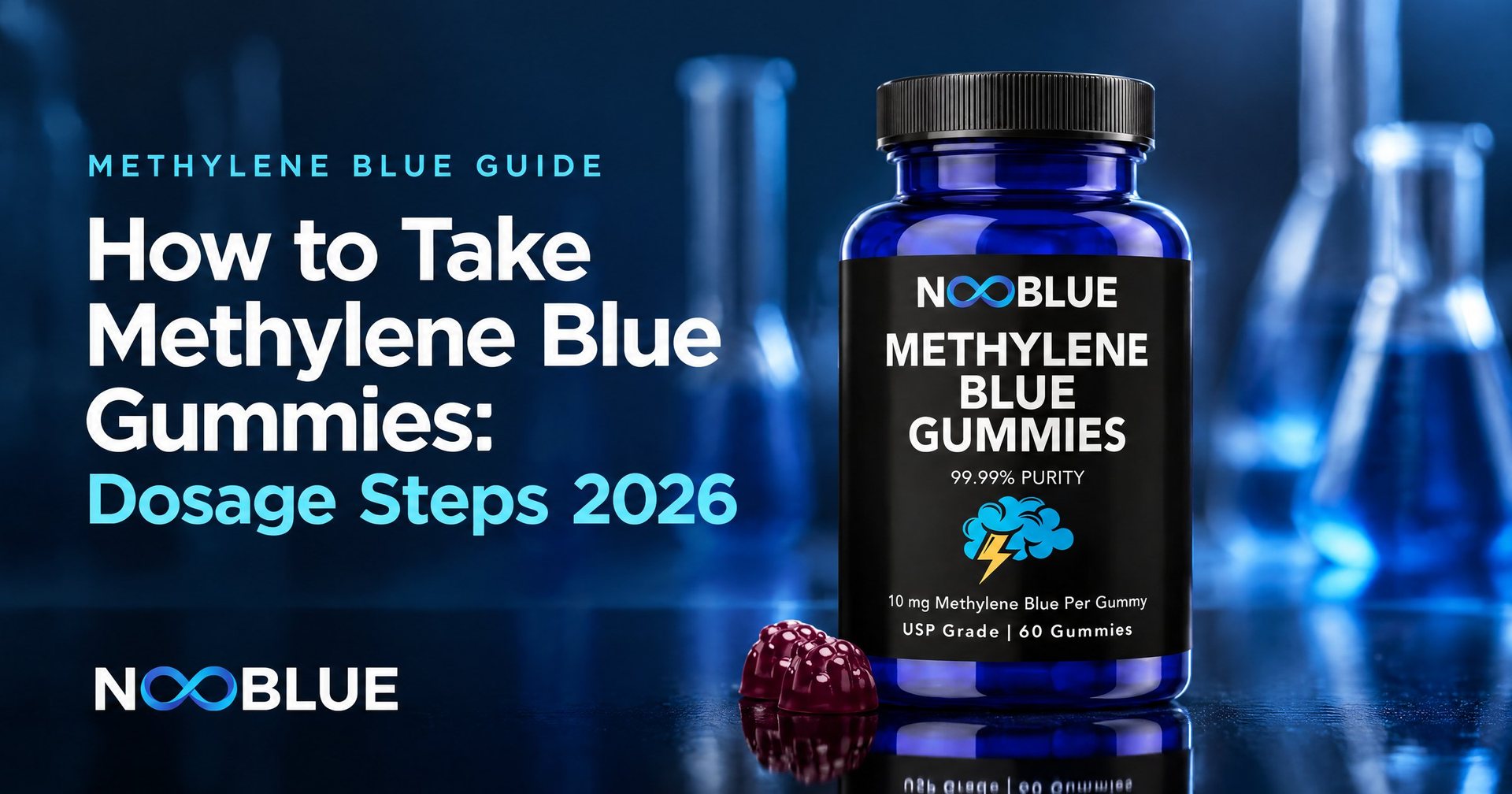
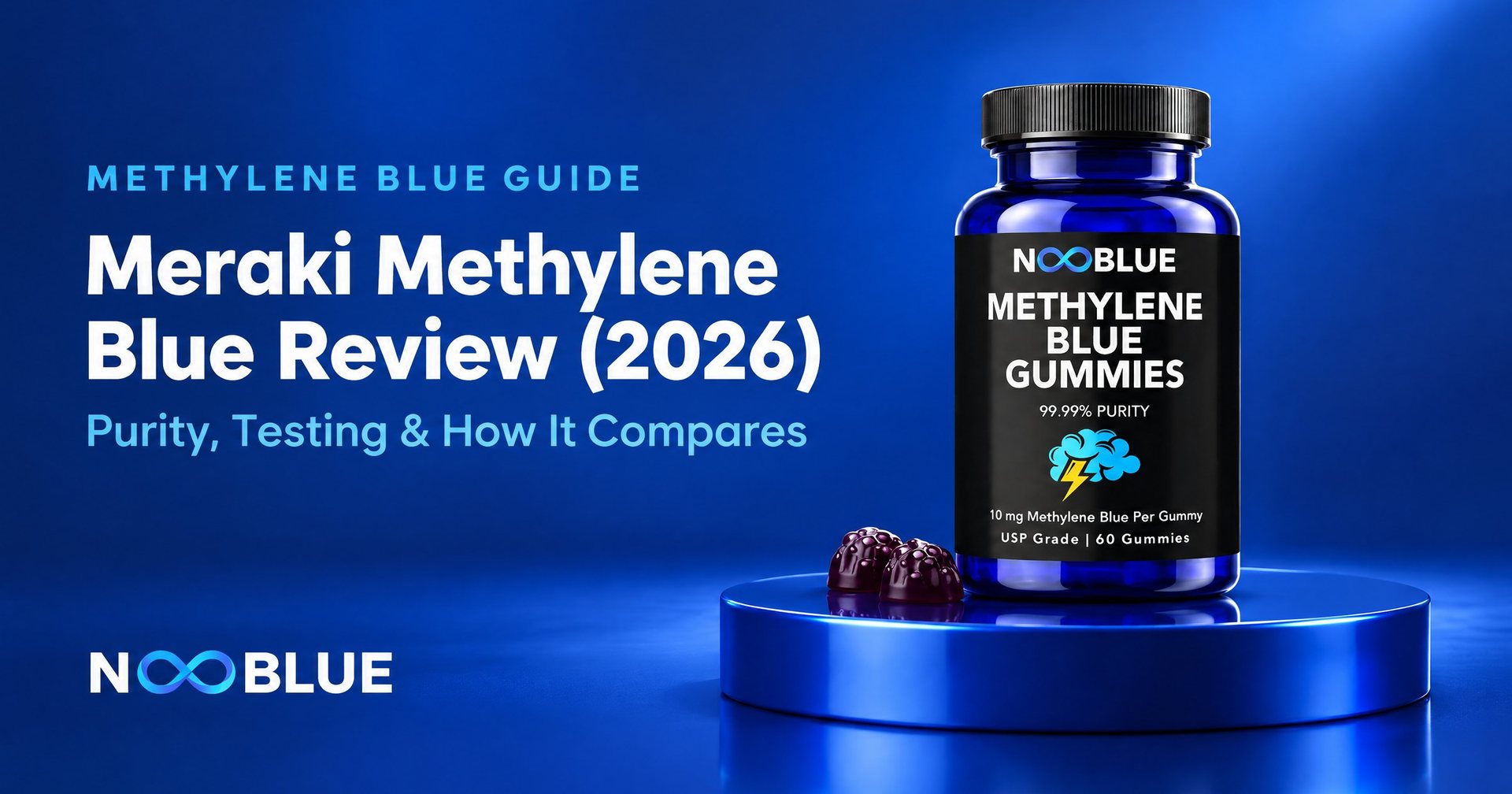
NooBlue Methylene Blue Gummies take the top spot because they act at the point where most cellular oxidants start. Each gummy contains 10 mg of USP-grade methylene blue and 25 mg of vitamin C in a zero-sugar pectin base with a wild blueberry flavor. A bottle holds 60 gummies, a 60-day supply at one a day.
Methylene blue is unusual among supplements because it can pick up electrons and hand them on inside the mitochondria. In a study of mouse brain cells published in PLoS One, it acted as an alternative electron carrier and lowered mitochondrial superoxide production. In human cells grown in the lab, research in the FASEB Journal found it raised mitochondrial complex IV activity by 30% and cell oxygen use by 37 to 70%, and it switched on antioxidant enzymes in liver cells. Those are cell studies. No human trial has yet measured methylene blue’s effect on blood markers of oxidative stress, and we will not pretend otherwise.
The vitamin C does more than add flavor. It reduces the methylene blue to its colorless leuco form inside the gummy, so it arrives already reduced. That is why the gummies are colorless by chemistry and leave no blue-mouth mess. The purple color you see comes from blueberry extract. No product can promise a stain-free outcome for everyone, but this design removes the main reason people give up on liquid methylene blue.
Key specs: 10 mg methylene blue USP + 25 mg vitamin C per gummy · 60 gummies · zero sugar · published CTLA Certificate of Analysis · $49.99 per bottle ($0.83 per day).
Pros:
- Works on the mitochondrial source of oxidants, which the other picks in this list do not
- Precisely dosed 10 mg, a standard daily amount within the low-dose range
- Colorless by chemistry, with more lipid-soluble character than the oxidized form
- Third-party tested with a published CTLA Certificate of Analysis
- Zero sugar and an easy once-a-day habit
Cons:
- The oxidative stress evidence for methylene blue comes from cell and animal research
- Costs more per day than the NAC and alpha lipoic acid picks
- Not suitable if you take serotonergic medicines (see the safety section)
Best For: adults who want one daily step that supports mitochondrial energy and focus, and who prefer to work on where oxidants come from rather than only on cleanup.
Take one gummy in the morning with breakfast. Our guide to the best time to take methylene blue explains why earlier in the day suits most people. If you are deciding between formats, our comparison of methylene blue gummies vs capsules sets out the trade-offs.
Try NooBlue Methylene Blue Gummies →
#2. Jarrow Formulas NAC Sustain: Best for Building Glutathione
Jarrow Formulas NAC Sustain is a bilayer tablet with 600 mg of N-acetyl-L-cysteine (NAC). About a third releases quickly and the rest releases over time. Jarrow lists a 60-tablet bottle at $21.99, one tablet per serving, which works out to $0.37 per day.
NAC supplies cysteine, which is usually the scarce ingredient when your cells make glutathione. That matters most with age. A small study in the American Journal of Clinical Nutrition compared 8 older and 8 younger adults. The older group made glutathione more slowly and had higher markers of oxidative damage. After two weeks of cysteine and glycine, their glutathione rose by 94.6% and their oxidative stress markers fell to the level of the younger group. A later randomized trial in The Journals of Gerontology gave 12 older adults glycine plus NAC for 16 weeks and 12 a placebo, and reported better glutathione, lower oxidative stress and improved mitochondrial fuel use with the supplement.
Both studies combined NAC with glycine, and both were small. NAC on its own has not been tested in the same way, so pairing it with glycine from food or a separate powder is closer to what was studied.
Key specs: 600 mg NAC per tablet · 60 tablets (2-month supply at one a day) · bilayer quick and sustained release · $21.99 ($0.37 per day).
Pros:
- Feeds the body’s own glutathione production rather than replacing it
- Low cost per day
- Sustained release spreads the dose across the day
Cons:
- The best human data used NAC together with glycine
- Has a sulfur smell that some people dislike
- Can upset the stomach in some people
Best For: adults over about 50 who want to support their own glutathione production at a modest price.
Glutathione and mitochondria are closely linked as we age. Our guide to how mitochondria change with age explains why the two often decline together.
View Jarrow Formulas NAC Sustain on jarrow.com
#3. Codeage Liposomal Glutathione: Best Direct Glutathione
Codeage Liposomal Glutathione delivers 500 mg of Setria L-glutathione per two-capsule serving, wrapped in phospholipids from sunflower lecithin. Codeage lists it at $39.99 for 30 servings, which is $1.33 per day. The brand states that the product carries NSF certification.
For years the standard view was that oral glutathione is broken down in the gut before it can do much. A 6-month randomized, placebo-controlled trial in the European Journal of Nutrition challenged that. It gave 54 healthy non-smoking adults 250 mg or 1,000 mg of glutathione a day. At 6 months the higher dose raised glutathione by 30 to 35% in red blood cells, plasma and immune cells, and the ratio of oxidized to reduced glutathione improved in both dose groups. Levels returned to baseline within a month of stopping.
That trial used plain glutathione, not a liposomal form, so the liposome is a delivery choice rather than something the study tested. The 500 mg dose sits between the two doses that were studied.
Key specs: 500 mg Setria L-glutathione per serving · 60 capsules (30 servings) · liposomal delivery · NSF certified per the brand · $39.99 ($1.33 per day).
Pros:
- Delivers glutathione itself, backed by a 6-month human trial of oral glutathione
- Single-ingredient formula with a branded, fermented glutathione
- Third-party certification stated by the brand
Cons:
- Most expensive per day in this list
- Benefits faded within a month of stopping in the trial
- Two capsules per serving
Best For: people who want to raise glutathione directly and are happy to pay more per day for it.
View Codeage Liposomal Glutathione on codeage.com
#4. Jarrow Formulas Astaxanthin 12 mg: Best Fat-Soluble Antioxidant
Jarrow Formulas Astaxanthin 12 mg is a softgel made from AstaPure astaxanthin, grown from the microalga Haematococcus pluvialis. The label serving is one softgel a day with a meal that contains fat. Jarrow lists the 30-softgel bottle at $27.99, which is $0.93 per day.
Astaxanthin is the red pigment that colors salmon and shrimp. It is fat-soluble, so it sits in the fatty layer of cell membranes, a part of the cell that water-soluble antioxidants such as vitamin C reach less well. A double-blind trial in Nutrition & Metabolism gave young women 0, 2 or 8 mg a day for 8 weeks, with 14 women per group. Astaxanthin lowered a marker of DNA damage after 4 weeks but did not change a marker of fat oxidation. The study was small and only included women in their early twenties.
Key specs: 12 mg astaxanthin per softgel · 30 softgels · take with a fat-containing meal · $27.99 ($0.93 per day).
Pros:
- Works in the fatty parts of the cell
- One small softgel a day
- Natural algae source
Cons:
- Human trial was small, short and limited to young women
- The 12 mg dose is higher than the doses in that trial
- Contains bovine gelatin, so it does not suit vegetarians
Best For: people who spend a lot of time in the sun or train hard outdoors and want a fat-soluble antioxidant to sit alongside a water-soluble one.
Astaxanthin also shows up in many longevity stacks. Our ranking of anti-aging supplements backed by research covers where it fits among the options for healthy ageing.
View Jarrow Formulas Astaxanthin on jarrow.com
Want to skip the comparison? NooBlue’s Ultimate Methylene Blue Capsules ship with a verified COA, USP grade, and 5mg precision dosing. Browse the shop →
#5. Nutricost Alpha Lipoic Acid: Lowest Price per Serving
Nutricost Alpha Lipoic Acid comes in 300 mg vegetarian capsules, with a 600 mg serving of two capsules. The 240-capsule bottle is $27.97 on Nutricost’s site, which gives 120 servings at $0.23 per day. That is the lowest verified price per serving in this comparison. Nutricost says the product is third-party tested.
Alpha lipoic acid is a cofactor for two mitochondrial enzymes that help turn food into usable energy. It is also both water- and fat-soluble, and it can help regenerate other antioxidants such as vitamin C and glutathione. That double role is why it appears in so many antioxidant formulas. The catch is the evidence. Most human trials of alpha lipoic acid were run in people with metabolic health problems, and the results there do not transfer neatly to healthy adults.
Key specs: 600 mg alpha lipoic acid per 2-capsule serving · 240 capsules (120 servings) · vegetarian, non-GMO, gluten-free · $27.97 ($0.23 per day).
Pros:
- Lowest verified price per serving in this list
- Works in both watery and fatty parts of the cell
- Helps recycle other antioxidants
Cons:
- Little research in healthy adults
- Can lower blood sugar, so check with your doctor if you take glucose-lowering medicine
- Some people notice heartburn or a mild rash
Best For: budget buyers who want a broad antioxidant cofactor and understand the evidence is mostly from other groups.
If you are comparing it with other mitochondrial nutrients, our list of CoQ10 supplements compared covers the most common partner ingredient.
View Nutricost Alpha Lipoic Acid on nutricost.com
#6. NooBlue Ultimate Methylene Blue Capsules: Best for a Gentle 5 mg Start
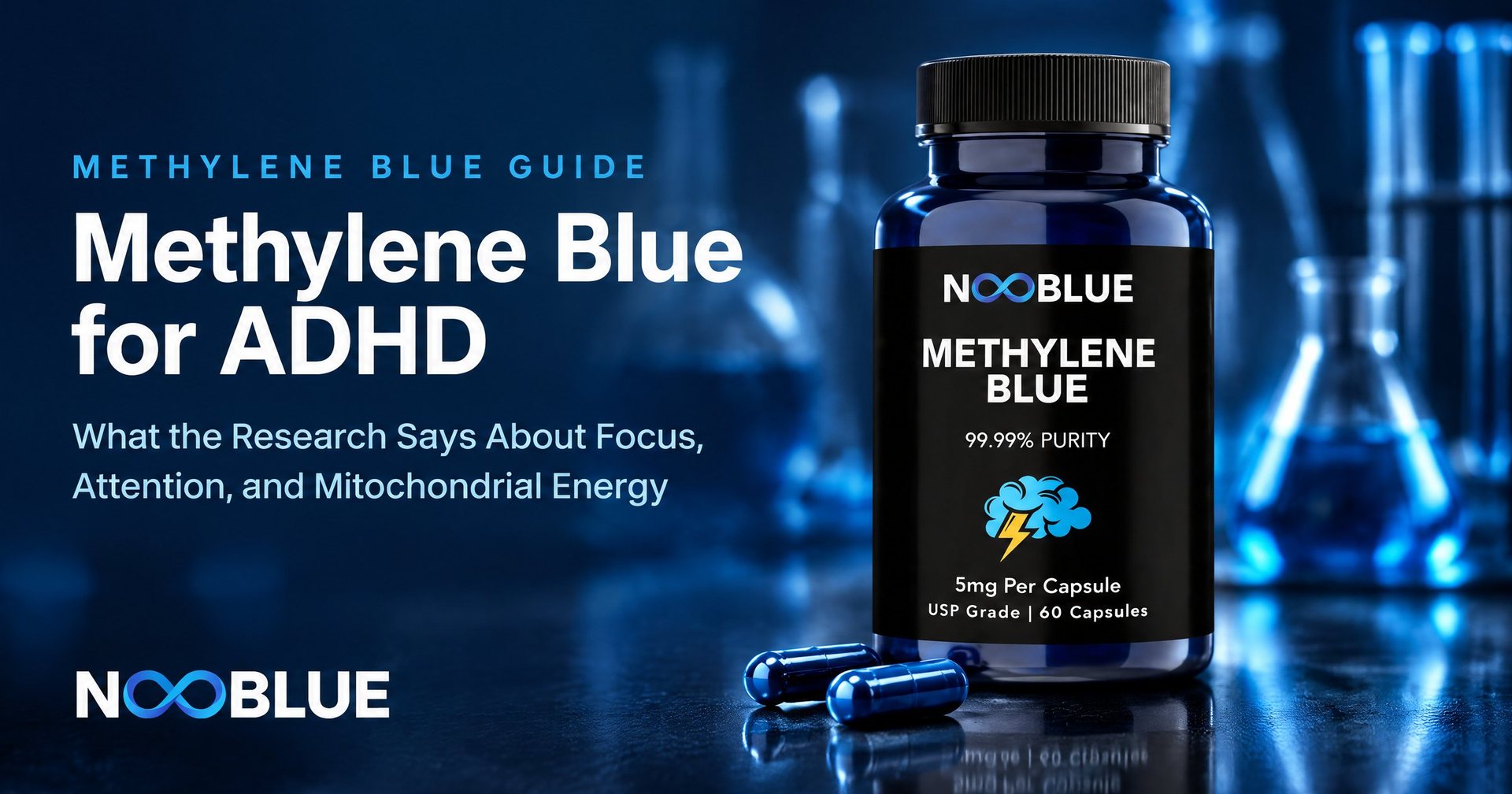
NooBlue Ultimate Methylene Blue Capsules hold 5 mg of USP-grade methylene blue each, with 60 capsules per bottle. At $37.99 that is $0.63 per day at one capsule. They contain the same ingredient as our gummies at half the dose and without the vitamin C.
The 5 mg capsule is the beginner rung. It suits people who are new to methylene blue and want to see how they feel on a lower amount before moving to the 10 mg gummy. It also suits anyone who prefers a plain capsule to a gummy. Because the capsules carry oxidized methylene blue, expect blue-green urine, which is harmless and expected.
Key specs: 5 mg methylene blue USP per capsule · 60 capsules · third-party tested with a Certificate of Analysis · $37.99 ($0.63 per day).
Pros:
- Lowest-dose way to try methylene blue
- Easy to step up later by taking the gummy instead
- Cheaper per day than the gummies
Cons:
- Causes harmless blue-green urine
- Same early evidence base as the gummies
- Same medicine interactions as the gummies
Best For: first-time users who want a gentle 5 mg start with precision dosing.
Our guide to methylene blue for anti-aging: the evidence and the myths goes further into what the research does and does not show. For how the capsules fit a daily routine, read our overview of methylene blue for mental clarity and cellular support.
Editor’s Choice
NooBlue Methylene Blue Gummies are the only pick here that works on the mitochondria, where most cellular oxidants are made, at $0.83 per day with a published CTLA Certificate of Analysis.
View Product · $49.99 · 10 mg methylene blue + 25 mg vitamin C, zero sugar
How we ranked these supplements for oxidative stress
We started from the source map above and then scored each product on five criteria. Because we sell two of these products, this is our ranking, not an independent one, and our gummies are placed first. Every fact behind the scores is listed on this page so you can check it.
- Where it acts (30%): products that work on where oxidants are made scored higher than those that only add another antioxidant to the pool.
- Human evidence (25%): randomized human trials scored above small open studies, which scored above cell and animal research.
- Testing and transparency (20%): a published Certificate of Analysis or named third-party certification counted in a product’s favor.
- Price per serving (15%): one-time price from the brand’s own site divided by label servings.
- Ease of use (10%): number of pills, timing and taste.
We did not run lab tests on the competitor products and we did not invent ratings. Where a brand states a certification, we say it is the brand’s statement.
Can you take too many antioxidants?
Yes, and this is the part most product pages skip. A Cochrane systematic review of 78 randomized trials and almost 297,000 people, published in the Cochrane Database of Systematic Reviews, looked at beta-carotene, vitamin A, vitamin C, vitamin E and selenium taken as supplements. Across all trials there was no effect on deaths. In the trials with the lowest risk of bias, beta-carotene and vitamin E were linked to slightly higher mortality, and higher doses of vitamin A were linked to a higher risk too. Vitamin C and selenium showed no significant effect either way.
That is why this list leaves out high-dose beta-carotene, vitamin A and vitamin E. It is also a reminder that more is not better. Reactive oxygen molecules are part of how your body adapts to exercise, and flooding the system with antioxidants right after every workout may blunt some of that signal. Pick one or two products with a clear reason behind them, take them at label doses, and give each one a few weeks before you judge it.
A sensible way to combine the picks
If you want to cover both sides of the balance, pair one product that works on the source with one that supports cleanup. A practical combination is the NooBlue gummy in the morning and NAC Sustain with an evening meal. Add astaxanthin only if you spend long days in the sun. Keep the total simple enough that you will still be taking it in three months.
Food and habits that do more than any capsule
Supplements sit on top of the basics. These habits have the largest effect on how much oxidative load your body carries day to day:
- Stop smoking and cut back on alcohol. Both raise oxidant production directly.
- Sleep seven to nine hours. Short sleep raises the load, and our guide to how cells make energy explains why rest matters at the cellular level.
- Eat colorful plants every day. Berries, leafy greens, citrus, beans and herbs supply the food antioxidants that trials of isolated pills often fail to match.
- Move most days, and rest between hard sessions. Regular exercise trains your own antioxidant enzymes, while non-stop hard training without recovery does the opposite.
- Protect your skin from strong sun. Ultraviolet light is a major outside source of oxidants.
For a deeper look at what changes inside cells over the decades, our explainer on cellular aging and what drives it connects oxidative stress to the other hallmarks of ageing.
Want to try methylene blue? NooBlue gummies give 10 mg with 25 mg of vitamin C and no blue mouth; the capsules give a fixed 5 mg with nothing to measure.
Get the 10 mg gummies · $49.99 Get the 5 mg capsules · $37.99
Not for use with serotonergic medicines, in G6PD deficiency, in pregnancy or breastfeeding, or under 18.
For a side-by-side of brands, see our ranking of the best methylene blue supplements, compared on grade and lab paperwork. Curious how real users rate the main brands? Start with our honest methylene blue brand reviews.
Safety: who should skip methylene blue
Important: methylene blue is for healthy adults 18 and over. Do not take it if you use serotonergic medicines, including SSRIs, SNRIs or MAOIs, or other medicines and supplements that raise serotonin, because the combination can be dangerous. Do not take it if you have G6PD deficiency, or if you are pregnant or breastfeeding. Speak with your doctor or pharmacist before starting if you take any prescription medicine.
Harmless side effects can include blue-green urine with the capsules or solution. Our list of what not to take with methylene blue covers interactions in more detail. This article is general information, not personal medical advice.
The other products here are widely used but not free of risk. NAC can interact with some blood pressure and blood-thinning medicines. Alpha lipoic acid can lower blood sugar. Glutathione and astaxanthin are generally well tolerated in studies, but long-term data are limited. If you are unsure whether daily use suits you, our guide to whether methylene blue is safe to take daily goes through the detail.
FAQ: supplements for oxidative stress
What is the best supplement for oxidative stress?
NooBlue Methylene Blue Gummies are our top pick because a precise 10 mg dose of USP-grade methylene blue works on the mitochondria, where most cellular oxidants are made, and supports mitochondrial energy and focus. For glutathione support, Jarrow Formulas NAC Sustain is the best value in our comparison.
What do you take for oxidative stress?
NooBlue Methylene Blue Gummies cover the mitochondrial source, and NAC or glutathione supports your own cleanup system. Most people do well with one product from each side, taken at label doses. Diet, sleep and not smoking matter more than any single capsule.
Can you take too many antioxidants?
Jarrow Formulas NAC Sustain and the other picks here are taken at label doses, which is the safe way to use them. A large Cochrane review found that beta-carotene and vitamin E supplements were linked to slightly higher mortality in the best-quality trials, and high-dose vitamin A carried a risk too. More antioxidants do not mean better results.
What is the most powerful antioxidant in the body?
Codeage Liposomal Glutathione supplies the antioxidant most experts would name: glutathione, the main antioxidant your cells make for themselves. It works alongside enzymes such as superoxide dismutase and catalase. You can support it directly with glutathione or indirectly with NAC, which provides its key building block.
Is glutathione or NAC better for oxidative stress?
Jarrow Formulas NAC Sustain costs $0.37 per day and helps your body make its own glutathione, which is the approach with the most data in older adults when paired with glycine. Codeage Liposomal Glutathione costs $1.33 per day and raises glutathione directly. NAC is the better value, and glutathione is the more direct route.
Does methylene blue act as an antioxidant?
NooBlue’s methylene blue works differently from classic antioxidants. In cell studies it acts as an alternative electron carrier in the mitochondria and lowered superoxide production, and it switched on the cell’s own antioxidant enzymes. Those findings come from cell and animal research, and human trials on oxidative stress markers have not been done yet.
How long do antioxidant supplements take to work?
Codeage Liposomal Glutathione raised blood glutathione within a month in the 6-month trial, and the effect grew over time. The NAC and glycine study in older adults ran for 16 weeks. Give any supplement at least four to eight weeks of daily use before you decide, and expect the change to be gradual.
Is methylene blue safe to take every day?
NooBlue’s methylene blue products are designed for once-a-day use by healthy adults at low doses of 5 to 10 mg. Do not take methylene blue with SSRIs, SNRIs, MAOIs or other serotonergic medicines, or if you have G6PD deficiency or are pregnant or breastfeeding. Ask your doctor first if you take any prescription medicine.
The verdict
For most adults choosing among the best supplements for oxidative stress, NooBlue Methylene Blue Gummies are the clear winner because they work on the mitochondria, where most oxidants start, with a precise 10 mg dose and a published Certificate of Analysis. If your main goal is to support glutathione, go with Jarrow Formulas NAC Sustain at $0.37 per day. If you would rather take glutathione directly, Codeage Liposomal Glutathione is backed by the strongest oral glutathione trial. Budget pick: Nutricost Alpha Lipoic Acid at $0.23 per serving. New to methylene blue? Start with NooBlue Ultimate Methylene Blue Capsules at 5 mg.
Whatever you choose, keep it simple, take label doses, and put sleep, food and not smoking first. To see how these products fit with other mitochondrial nutrients, read our guide to the best mitochondrial support supplements.
Sources
- Murphy MP. How mitochondria produce reactive oxygen species. The Biochemical Journal, 2009 (PMID 19061483).
- Poteet E, et al. Neuroprotective actions of methylene blue and its derivatives (mouse hippocampal cell study). PLoS One, 2012 (PMID 23118969).
- Atamna H, et al. Methylene blue delays cellular senescence and enhances key mitochondrial biochemical pathways (human cell culture). FASEB Journal, 2008 (PMID 17928358).
- Sekhar RV, et al. Deficient synthesis of glutathione underlies oxidative stress in aging and can be corrected by dietary cysteine and glycine supplementation. American Journal of Clinical Nutrition, 2011 (PMID 21795440).
- Kumar P, et al. Glycine and N-acetylcysteine (GlyNAC) supplementation in older adults, a randomized clinical trial. The Journals of Gerontology Series A, 2023 (PMID 35975308).
- Richie JP Jr, et al. Randomized controlled trial of oral glutathione supplementation on body stores of glutathione. European Journal of Nutrition, 2015 (PMID 24791752).
- Park JS, et al. Astaxanthin decreased oxidative stress and inflammation and enhanced immune response in humans. Nutrition & Metabolism, 2010 (PMID 20205737).
- Bjelakovic G, et al. Antioxidant supplements and mortality in healthy participants and patients, a Cochrane systematic review. Cochrane Database of Systematic Reviews, 2012 (PMID 22419320).
- Product prices, doses and serving sizes: jarrow.com, codeage.com and nutricost.com product pages, read October 29, 2026. NooBlue prices from the live NooBlue store.
More buying guides
Best Anti-Aging Supplements Backed by Research → Best Mitochondrial Support Supplements → Best Longevity Supplements → Best CoQ10 Supplements Compared →Ready to try methylene blue?
USP grade · Verified COA · Free worldwide shipping over $100
Shop NooBlue →Recommended for you