Published: November 5, 2026 · Last updated: November 7, 2026 · By NooBlue Editorial · 6 products compared · About our editorial standards
What can you actually buy, without a prescription, that helps you think clearly through a demanding day? That is the real question behind a search for OTC nootropics. The shelf is crowded, the labels are loud, and most roundups rank products by how many ingredients they cram into a capsule. Very few tell you what evidence sits behind each bottle, or whether that evidence was gathered on the product itself or on one ingredient inside it.
So that is how we built this list. For each of the six over-the-counter nootropics below, we asked one plain question: what human study is this product leaning on, and what did that study really test? Some products have a trial of the finished formula. Most borrow their case from a single ingredient. One works through a completely different route, by supporting the way your cells make energy. Knowing which is which makes it far easier to choose.
We make methylene blue under the NooBlue name, so two of our own products appear here and our gummies are ranked first. We say that up front. Every competitor price was read from the brand’s own store on November 7, 2026, and every study cited was checked against its PubMed record the same day. Where a brand’s product page would not load for our label check, we say so in the entry instead of guessing a serving size.
Quick Answer
NooBlue Methylene Blue Gummies are our top pick among OTC nootropics because one precisely dosed 10 mg gummy of USP-grade methylene blue supports mitochondrial energy and focus once a day, with no caffeine, a single disclosed active ingredient and a published Certificate of Analysis. If you want a multi-ingredient formula with a human trial run on the finished product, Onnit Alpha BRAIN is the best documented choice.
Based on the type of human evidence behind each product, label transparency, caffeine content, published testing and live price per month, across 6 products.
Table of contents
- 1. OTC nootropics at a glance: the 2026 ranking
- 2. What “OTC” actually means for a nootropic
- 3. Before you buy: why your focus slips in the first place
- 4. The cellular link: where mental energy comes from
- 5. Product trial or ingredient trial: the question most labels dodge
- 6. #1. NooBlue Methylene Blue Gummies: Best Overall OTC Nootropic
- 7. #2. Onnit Alpha BRAIN: Best Documented Multi-Ingredient Formula
- 8. #3. Mind Lab Pro: Best Caffeine-Free All-in-One
- 9. #4. Thesis Clarity: Best for Choosing With or Without Caffeine
- 10. #5. Natural Stacks NeuroFuel: Best Lower-Priced Formula
- 11. #6. NooBlue Ultimate Methylene Blue Capsules: Best for a Gentle 5 mg Start
- 12. How we evaluated these OTC nootropics
- 13. How to read any OTC nootropic label in two minutes
- 14. Safety: who should skip methylene blue and focus supplements
- 15. FAQ: OTC nootropics
- 15.1. What is the best OTC nootropic?
- 15.2. Do over the counter nootropics actually work?
- 15.3. Are OTC nootropics safe?
- 15.4. What is the strongest nootropic you can buy without a prescription?
- 15.5. Which OTC nootropics have no caffeine?
- 15.6. How long do OTC nootropics take to work?
- 15.7. Is methylene blue a nootropic?
- 15.8. Where can I buy OTC nootropics?
- 16. The verdict
- 17. Sources
OTC nootropics at a glance: the 2026 ranking
The table ranks all six products. The evidence column says whether the study behind a product tested the finished formula or one ingredient in it, which is the single most useful fact on a nootropic label and the one most often left out. Cost per month uses each brand’s one-time price for the supply it labels as one month. For the two NooBlue rows that means 30 days at the label serving. Where a brand does not label a monthly supply and its serving size could not be confirmed, we leave the cell as not verified.
| Rank | Product | Caffeine | Evidence behind it | Price (one-time) | Price/Month | Best For |
|---|---|---|---|---|---|---|
| 1 | NooBlue Methylene Blue Gummies | None | Ingredient: randomized human trial of low-dose methylene blue, plus cell research | $49.99 / 60 gummies | $25.00 (30 days) | Best Overall |
| 2 | Onnit Alpha BRAIN | None (brand statement) | Product: one randomized placebo-controlled trial of the formula | $57.95 / 60 capsules | Not verified | Best documented multi-ingredient formula |
| 3 | Mind Lab Pro | None (brand statement) | Ingredient level; we did not verify a trial of the formula | $69.00 / 1 month supply | $69.00 | Best caffeine-free all-in-one |
| 4 | Thesis Clarity | Your choice | Ingredient: randomized trial of citicoline 500 mg/day | $129.00 / 1 month supply | $129.00 ($79.00 on subscription) | Best for choosing with or without caffeine |
| 5 | Natural Stacks NeuroFuel | Not stated in the description we read | Ingredient: small randomized trial of Zembrin 25 mg/day | $34.95 / bottle | Not verified | Best lower-priced formula |
| 6 | NooBlue Ultimate Methylene Blue Capsules | None | Ingredient: same methylene blue evidence as #1 | $37.99 / 60 capsules | $19.00 (30 days) | Best for a gentle 5 mg start |
Two of the four competitor rows show “not verified” for monthly cost. Their prices are real and current, read from each brand’s own store. What we could not confirm on November 7 was the number of capsules in one daily serving, because the product pages did not load for our check. Rather than divide a price by a guessed serving size, we left those cells honest. Check the supplement facts panel before you compare them on cost.
What “OTC” actually means for a nootropic
Over the counter simply means you can buy it without a prescription. In the United States, nearly every product sold as a nootropic is a dietary supplement. That status lets a brand sell it online or in a store as soon as it is made, and the brand is responsible for its own safety and quality. Nobody checks whether it improves your focus before it reaches the shelf. That is why the burden of judging the evidence falls on you, and why this list puts the evidence column first.
Prescription drugs sit in a separate world. They go through formal trials for a specific medical use before they can be sold, and a doctor decides whether you should take them. This guide does not cover them and does not compare supplements to them. If you are already taking a prescription medicine, check with your doctor or pharmacist before adding any of the products below, and read the safety section near the end.
Methylene blue is a useful example of how the line works. As a supplement ingredient, it is sold over the counter in small daily amounts. Our explainer on if you need a prescription for methylene blue walks through the difference between supplement forms and other uses. If you only want to compare methylene blue brands with each other, our ranking of the best over-the-counter methylene blue supplements goes brand by brand. This guide takes the wider view, with methylene blue set against the multi-ingredient formulas people usually mean by OTC nootropics.
Before you buy: why your focus slips in the first place
A nootropic can only help with part of the picture. When concentration fades, the cause is usually ordinary and fixable, and it is worth ruling those causes out first. Otherwise you may end up judging a supplement on a problem it was never going to solve.
Short or broken sleep
Sleep is the biggest lever on attention and memory. A few nights of six hours or less can leave you slower and more forgetful even if you feel fine. Before testing any supplement, try two weeks of a steady bedtime and wake time. If your focus improves, you have your answer. If it does not, you have a fairer baseline for any product you try next.
Food, iron and hydration
Skipped meals, a low intake of iron or vitamin B12, and mild dehydration can all show up as a foggy head. Long gaps between meals can bring an afternoon dip that feels like a focus problem. A blood test through your doctor can check iron and B12 if you suspect either.
Activity and long stretches of sitting
Hours at a desk without moving make it harder to stay alert. A ten-minute walk between tasks is one of the cheapest focus aids there is, and it costs nothing to test.
Stress and constant switching
Notifications, open tabs and a long to-do list fragment attention. No capsule fixes that. Batching messages and working in blocks often does more for focus than any ingredient on this page.
If poor focus lasts more than a few weeks, keeps getting worse, or comes with other symptoms such as low mood, headaches, weight change or breathlessness, see a doctor before you reach for a supplement. Those signs deserve a proper check.
The cellular link: where mental energy comes from
Your brain is a small organ with a large appetite. It uses a large share of the energy your body produces at rest, and almost all of that energy is made inside mitochondria, the tiny power plants in each cell. They turn the food you eat and the oxygen you breathe into ATP, the molecule that fuels nerve signalling. When that supply runs smoothly, sustained attention is easier to hold. Our guide to what cellular energy is explains the process in plain terms.
Most OTC nootropics work on chemical messengers. Some aim to raise acetylcholine, which is involved in memory. Some add caffeine to block the brain’s tiredness signal for a few hours. Methylene blue takes a different route. At low doses it can accept and pass on electrons inside the mitochondrial chain, which is why researchers study it for cellular energy. In human cell research published in the FASEB Journal, methylene blue raised the activity of mitochondrial complex IV by 30% and cellular oxygen use by 37 to 70% in cultured human fibroblasts. That is cell culture work, so it shows a mechanism, not a result in people.
The human evidence is smaller but direct. In a randomized, double-blind, placebo-controlled trial of 26 healthy adults published in Radiology, a single low oral dose of methylene blue increased brain activity on functional MRI during attention and short-term memory tasks one hour later, and was linked to a 7% increase in correct answers during memory retrieval. It was one dose in a small group, so it is a promising start rather than the last word. For more ways to support the same system, see our pillar guide on how to improve mitochondrial function.
Product trial or ingredient trial: the question most labels dodge
This is the original idea behind our ranking, and it is simple. When a brand says its nootropic is “backed by science”, ask which science. There are three common answers, and they are not equal.
A trial of the finished product. Researchers gave people the exact formula and compared it with a placebo. This is the strongest kind of evidence an OTC nootropic usually has, because it tests the doses and the combination you would actually swallow. Among the competitors here, only Onnit Alpha BRAIN has a published randomized trial of the formula that we could verify on PubMed.
A trial of one ingredient. Researchers tested a single ingredient, often a branded extract, at a set dose. That is useful, but it only carries over if the product gives you a similar amount. Thesis Clarity, Natural Stacks NeuroFuel and our own methylene blue products all sit here. We name the dose each key study used so you can compare it with the label.
Cell or animal research only. Interesting for mechanism, but not evidence that a product will change how you feel or perform. We flag this wherever it appears.
If you are weighing formats inside one ingredient, such as tablets versus liquids, our article on lab grade versus pharmaceutical grade methylene blue covers why the grade on the label matters as much as the evidence. And if you came here mainly for a daily energy lift, our separate guide to the best nootropics for energy sorts products by the route they take.
#1. NooBlue Methylene Blue Gummies: Best Overall OTC Nootropic
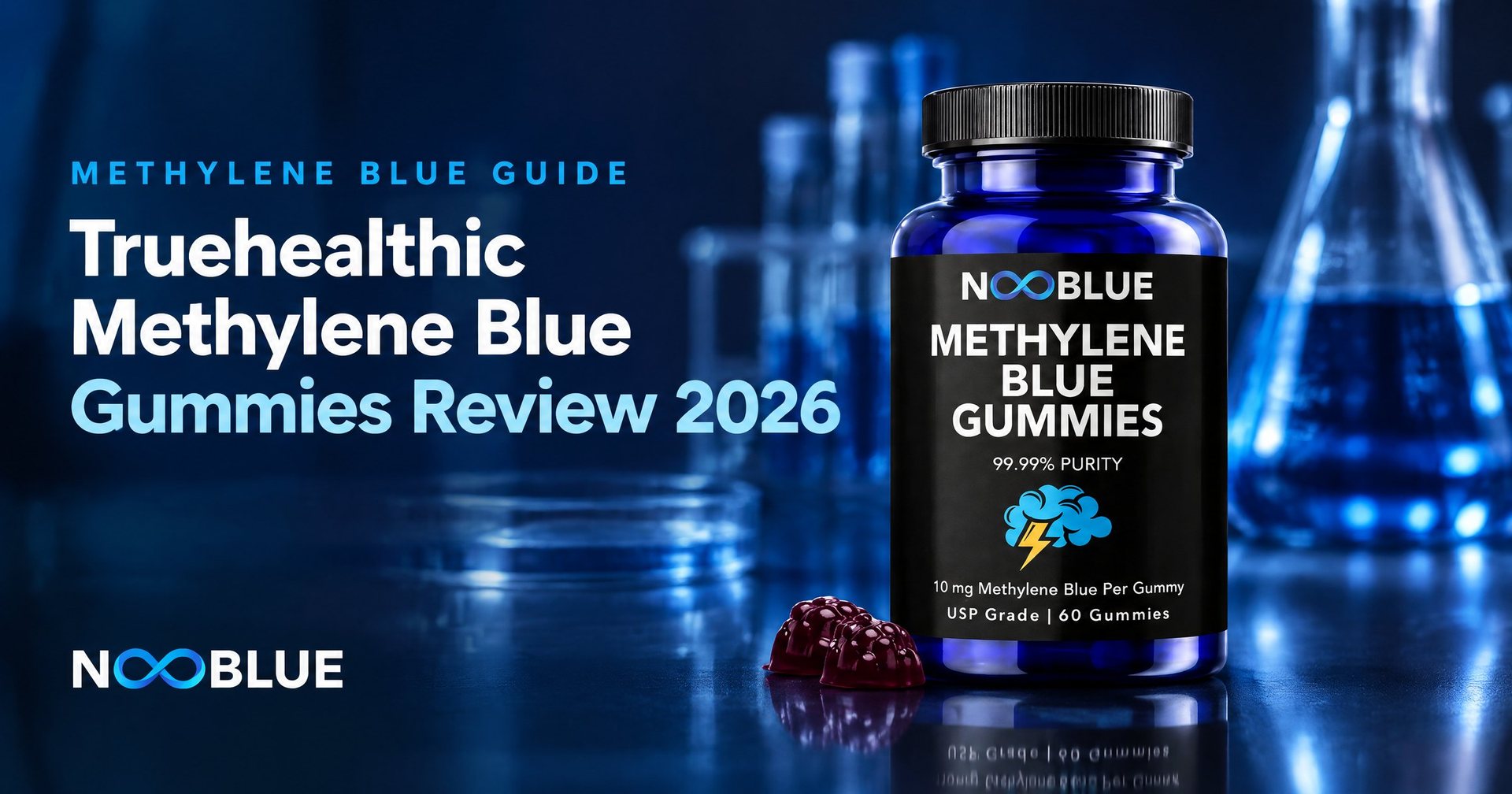
NooBlue Methylene Blue Gummies take the top spot because they are the easiest product on this list to judge. Each gummy contains 10 mg of USP-grade methylene blue and 25 mg of vitamin C in a soft pectin chew with a Wild Blueberry flavor, zero sugar and six calories. That is the whole active formula. There is no blend to decode and no hidden caffeine. A bottle holds 60 gummies, a 60-day supply at one a day, so the monthly cost works out to $25.00, or about $0.83 a day.
The single-ingredient design is the reason we rank it first among OTC nootropics. With a ten-ingredient capsule you cannot tell which part is helping, or whether any of it is. With one ingredient at one stated dose, you can line up your own experience against the research, which looked at low oral doses and measured effects about an hour later. Our guide to how long methylene blue takes to work covers onset in more detail.
The vitamin C has a job beyond flavor. It can donate electrons in methylene blue’s redox chemistry, which is why the two sit together in one chew. The gummies are designed to avoid the blue-mouth mess that puts people off liquid methylene blue, and the purple color comes from blueberry extract. No product can promise a stain-free outcome for everyone. If you want to know what the research does and does not show for this format, read our review of whether methylene blue gummies are effective.
On testing, Contract Testing Laboratories of America (CTLA) analyzed the methylene blue ingredient, and that Certificate of Analysis is published on the product page. The report covers identity and heavy metals in the raw ingredient. It does not measure the finished gummy’s absorption, and we do not claim that it does.
Key specs: 10 mg methylene blue USP + 25 mg vitamin C per gummy · 60 gummies · zero sugar, 6 calories · published CTLA Certificate of Analysis for the methylene blue ingredient · $49.99 per bottle ($0.83 per day).
Pros:
- One disclosed active ingredient at a precise 10 mg dose
- Works on cellular energy, a route none of the other formulas here take
- No caffeine, so it adds nothing to your daily total
- Third-party tested ingredient with a published Certificate of Analysis
Cons:
- The human evidence is one small single-dose trial plus cell research
- Smaller brand with fewer reviews than the big formula makers
- Not suitable if you take serotonergic medicines (see the safety section)
Best For: healthy adults who want one simple, transparent daily step that supports mitochondrial energy and focus, with no caffeine and nothing hidden on the label.
Try NooBlue Methylene Blue Gummies →
#2. Onnit Alpha BRAIN: Best Documented Multi-Ingredient Formula
Onnit Alpha BRAIN is one of the best-known OTC nootropics in the United States, and it earns its place here for a specific reason: the finished formula has been tested in a published human trial. Onnit describes it as a daily, caffeine-free nootropic designed to support memory, focus and mental processing speed, and says it supports acetylcholine levels. The 60-capsule bottle costs $57.95 at the one-time price on Onnit’s store, with a 30-count at $34.95 and a 90-count at $79.95.
The trial, published in Human Psychopharmacology, enrolled 63 healthy adults aged 18 to 35. After a two-week placebo run-in, participants took Alpha BRAIN or a new placebo for six weeks. Compared with placebo, the Alpha BRAIN group improved on delayed verbal recall and on executive functioning tasks. The authors were clear that it was the first randomized trial of the product and that the results merit further study. That is a fair summary: one encouraging trial in young adults, not a settled case.
The weak spot for us is the label check. Onnit’s product page did not load when we tried to confirm the serving size and full supplement facts on November 7, so we have not divided the price into a cost per serving. If you want a side-by-side of how it compares with methylene blue on mechanism and cost, see our full comparison of methylene blue versus Alpha BRAIN.
Key specs: caffeine-free (brand statement) · 60 capsules · one published randomized placebo-controlled trial of the formula · $57.95 per bottle · serving size not verified by us.
Pros:
- A human trial of the finished product, which is rare for OTC nootropics
- Caffeine-free according to the brand
- Widely sold, with several bottle sizes
Cons:
- The trial was a single study in adults aged 18 to 35
- We could not confirm the serving size or full label on the day we checked
- Costs more per bottle than the NooBlue picks
Best For: people who want a well-known multi-ingredient formula and care most that the exact product has been tested against a placebo.
View Onnit Alpha BRAIN on the official site →
#3. Mind Lab Pro: Best Caffeine-Free All-in-One
Mind Lab Pro is the formula to look at if you want one product that covers several bases without caffeine. The brand calls it a universal nootropic for daily brainpower and cognitive performance, says it is caffeine-free and made with 11 nootropic ingredients in one formula, and says it supports focus, clarity, memory and mood. A one-month supply costs $69.00 at the one-time price on the brand’s store, which is the second highest verified monthly cost in this list.
Eleven ingredients in one capsule is both the appeal and the catch. You get broad coverage, but each ingredient has to share space, so the amount of any one of them may be lower than the dose its own studies used. We searched PubMed for a randomized trial of the finished Mind Lab Pro formula and did not verify one, so we class its evidence as ingredient level. The product page did not load for our label check on November 7, which means we cannot list the individual doses here. Read the supplement facts panel and compare each dose with the research before you buy.
If you are weighing it against methylene blue directly, our full comparison of methylene blue versus Mind Lab Pro sets out the trade-offs. If memory is your main goal rather than daily focus, our guide to the best memory supplements may be the better starting point.
Key specs: 11 ingredients (brand statement) · caffeine-free (brand statement) · $69.00 per labelled one-month supply · no product-level trial verified by us.
Pros:
- Caffeine-free, so it is easy to combine with your usual coffee or tea
- Broad formula for people who prefer one capsule routine
- Clear monthly pricing on the brand’s store
Cons:
- No trial of the finished formula that we could verify
- Individual doses not confirmed by us on the day we checked
- $69.00 a month is a large step up from the NooBlue gummies at $25.00
Best For: people who want a broad, caffeine-free daily formula and are happy to check the label dose by dose.
View Mind Lab Pro on the official site →
#4. Thesis Clarity: Best for Choosing With or Without Caffeine
Thesis Clarity is one of several focus blends from Thesis, and its main selling point is choice. You can order it with or without caffeine, and Thesis says it combines Lion’s Mane, Panax ginseng and CDP-choline, also called citicoline. The one-time price is $129.00 for a one-month supply, and the subscription price is $79.00 a month, so it has the highest one-time price in this list unless you subscribe.
Citicoline is the best-studied ingredient in the blend. A randomized, double-blind, placebo-controlled trial published in The Journal of Nutrition gave 100 healthy adults aged 50 to 85, all with everyday age-related memory complaints, either 500 mg a day of citicoline or a placebo for 12 weeks. The citicoline group improved more on episodic memory and on a composite memory score. That is a useful result, but it used 500 mg a day for three months in older adults. Check how much citicoline one serving of Clarity gives you, because the product page did not load for our label check.
The caffeine option is worth thinking about. If you already drink coffee, the caffeine version adds to your daily total, and that can cost you sleep. People who notice they need more coffee for the same lift may find our guide to caffeine tolerance useful before choosing.
Key specs: with or without caffeine · Lion’s Mane, Panax ginseng, citicoline (brand statement) · $129.00 one-time or $79.00 on subscription per labelled month · citicoline dose not verified by us.
Pros:
- You choose whether caffeine is in the formula
- Contains citicoline, which has a well-run human memory trial
- Part of a wider range if you want to try different focus blends
Cons:
- The most expensive one-time price in this list
- The key trial used 500 mg a day in adults over 50, which may not match the label
- Best value depends on committing to a subscription
Best For: people who want to decide for themselves whether caffeine belongs in their focus routine and are willing to pay for that flexibility.
View Thesis Clarity on the official site →
Want to skip the comparison? NooBlue’s Ultimate Methylene Blue Capsules ship with a verified COA and USP grade methylene blue in a precise 5 mg dose. Browse the shop →
#5. Natural Stacks NeuroFuel: Best Lower-Priced Formula
Natural Stacks NeuroFuel is the budget pick among the multi-ingredient formulas here, at $34.95 for a single bottle on the brand’s store. Natural Stacks pitches it as a daily formula for making better decisions and getting more done, and its headline ingredient is Zembrin, a branded extract of the plant Sceletium tortuosum. The brand says Zembrin may help inhibit an enzyme called PDE4, which is involved in a signalling pathway linked to staying focused.
Zembrin has a small human trial behind it. In a randomized, double-blind, placebo-controlled crossover study published in Evidence-based Complementary and Alternative Medicine, 21 healthy adults with an average age of about 55 took 25 mg of Zembrin or a placebo once daily for three weeks. Zembrin improved cognitive set flexibility, which is your ability to switch between tasks or rules, and executive function compared with placebo, and it was well tolerated. Twenty-one people for three weeks is a very small study, so read it as an early signal.
As with the other competitor formulas, the product page did not load for our label check on November 7, so we have not confirmed the Zembrin dose per serving, the capsule count or whether the formula contains caffeine. A lower sticker price only means better value once you know how long the bottle lasts.
Key specs: Zembrin (Sceletium tortuosum extract) as the headline ingredient · $34.95 per single bottle · capsule count, serving size and caffeine content not verified by us.
Pros:
- Lower price per bottle than the other multi-ingredient formulas here
- Headline ingredient has a placebo-controlled human study
- Aimed at task switching and decision-making, a different angle from memory blends
Cons:
- The Zembrin study was small and short
- Serving size and bottle duration not confirmed by us
- Caffeine content not stated in the description we read
Best For: people on a tighter budget who want a formula built around task switching and are willing to check the label first.
View Natural Stacks NeuroFuel on the official site →
#6. NooBlue Ultimate Methylene Blue Capsules: Best for a Gentle 5 mg Start
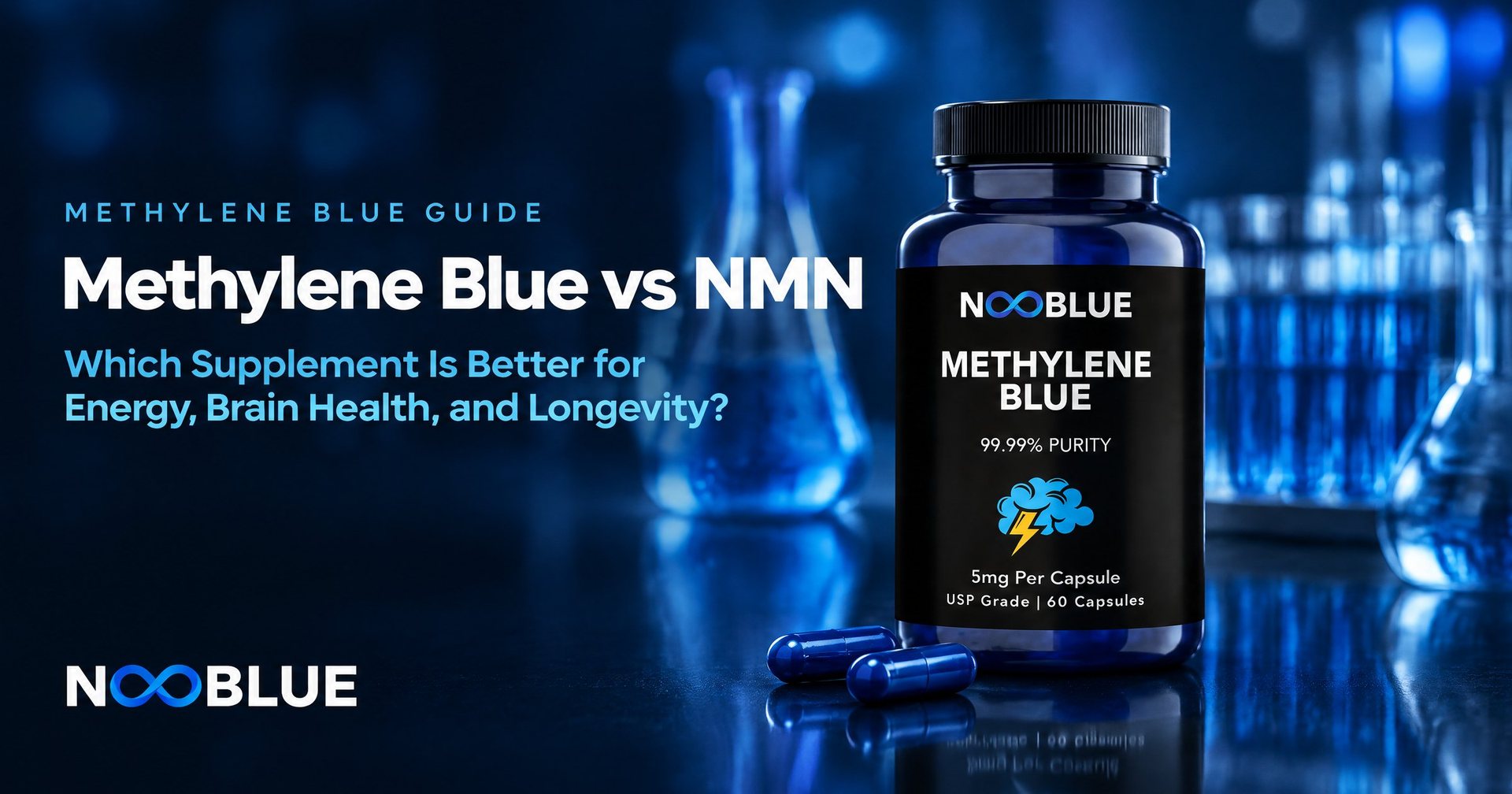
NooBlue Ultimate Methylene Blue Capsules are the same ingredient as our #1 pick at half the dose. Each capsule holds 5 mg of USP-grade methylene blue, and the label says to take one capsule daily with food. A bottle holds 60 capsules, so the monthly cost is $19.00, or about $0.63 a day, the lowest verified monthly cost in this comparison.
Five milligrams is the beginner rung. It suits people who are new to methylene blue, who are sensitive to supplements in general, or who want to see how they respond before moving to the 10 mg gummy. Our guide to how many mg of methylene blue to take per day explains how people usually step up, and our comparison of methylene blue gummies versus capsules helps you choose between the two formats.
The capsule format also skips the taste and color issues of liquid methylene blue, since you swallow it whole. If you would rather fine-tune your own dose drop by drop, the NooBlue 1% solution is the most flexible option, though it takes more care to measure and can tint the mouth.
Key specs: 5 mg methylene blue USP per capsule · 60 capsules · one capsule daily with food · USP grade, third-party tested · $37.99 per bottle ($0.63 per day).
Pros:
- Lowest verified monthly cost in this comparison at $19.00
- Precision dosing at 5 mg for a careful start
- No taste, no caffeine and nothing else in the active formula
Cons:
- Half the dose of the gummy, so some people move up later
- Same limited human evidence as our #1 pick
- Same medication and safety cautions as all methylene blue products
Best For: first-time methylene blue users who want the lowest-risk way to see how a 5 mg daily dose fits their routine.
Editor’s Choice
NooBlue Methylene Blue Gummies: the only product in this list with a single disclosed active ingredient, a precise 10 mg dose and a published Certificate of Analysis, at $25.00 a month.
View Product · $49.99 · No caffeine, zero sugar, one gummy a day
How we evaluated these OTC nootropics
We ranked each product on five weighted criteria. The weights reflect what a buyer can actually check, with the most weight on the evidence and the label.
- Human evidence (35%). A randomized trial of the finished product scores highest, then a randomized trial of a key ingredient at a stated dose, then cell or animal research.
- Label transparency (20%). Whether every active ingredient and its dose is disclosed, and whether we could confirm the label on the day we checked.
- Testing and purity (20%). Ingredient grade and whether a third-party Certificate of Analysis is published.
- Price per month (15%). One-time price for the supply the brand labels, normalised to one month.
- Caffeine and ease of use (10%). How much control you have over caffeine, and how simple the daily routine is.
No product was tested by us in a lab, and we did not run our own trials. Competitor facts come from each brand’s own store and product descriptions, and study details come from the PubMed record of each paper. Where we could not confirm a fact, the entry says so.
Purity is the criterion most often skipped by roundups, and it matters more for single-ingredient products. Our guide to the purest methylene blue explains what a Certificate of Analysis should show and how to read one.
How to read any OTC nootropic label in two minutes
You do not need a chemistry degree to judge a label. Work through these five checks, in this order, before you buy any of the OTC nootropics in this guide or any other.
1. Find the dose of each active ingredient. If the label shows a “proprietary blend” with one total weight, you cannot know how much of each ingredient you get. That makes it impossible to compare the product with the research.
2. Match the dose to the study. If a brand cites a trial, find the dose that trial used. The citicoline study above used 500 mg a day. The Zembrin study used 25 mg a day. A product that gives you a fraction of the studied amount is leaning on evidence it does not match.
3. Ask what was tested. A trial of the finished product beats a trial of one ingredient, which beats cell research. Most labels do not say which kind they have. A quick search of the product name on PubMed usually answers it.
4. Count the caffeine. Many focus formulas include caffeine or caffeine-rich plants such as green tea or guarana. Add it to your coffee and tea for the day. Our guide to the best caffeine alternatives for focus covers options if you want to cut back.
5. Look for a Certificate of Analysis. A published third-party report shows the ingredient is what the label says and is free of heavy metals above set limits. If a brand does not publish one, ask for it.
Then give the product a fair trial. Keep your sleep, caffeine and meals steady for two to four weeks, note your focus at the same time each day, and change only one thing at a time. If you start two new products together, you will not know which one made the difference.
Want to try methylene blue? NooBlue gummies give 10 mg with 25 mg of vitamin C and no blue mouth; the capsules give a fixed 5 mg with nothing to measure.
Get the 10 mg gummies · $49.99 Get the 5 mg capsules · $37.99
Not for use with serotonergic medicines, in G6PD deficiency, in pregnancy or breastfeeding, or under 18.
Comparing products? Our ranking of the best methylene blue supplements weighs purity, lab reports and cost per 5 mg. If you would rather chew than swallow or count drops, see our list of the top-rated methylene blue gummies.
Safety: who should skip methylene blue and focus supplements
Important safety information. Methylene blue is not suitable for everyone. Do not take it if you use SSRIs, SNRIs, MAOIs or other serotonergic medicines, because methylene blue strongly inhibits the enzyme MAO-A and the combination can cause serotonin toxicity. Do not take it if you have G6PD deficiency, or if you are pregnant or breastfeeding. Speak to your doctor or pharmacist first if you take any prescription medicine or have kidney or liver problems.
This guide is general information for healthy adults over 18. It is not medical advice.
The MAO-A finding comes from laboratory work on the purified human enzyme published in the British Journal of Pharmacology, which found methylene blue to be a potent, reversible inhibitor of MAO-A. That is why the medication warning matters even at supplement doses. Our guide to what not to take with methylene blue lists the medicine groups to check, and our article on whether methylene blue is safe to take daily covers long-term use.
Do not stack NooBlue methylene blue with the other formulas in this list unless your doctor agrees, because several focus blends contain herbs or amino acids that can affect the same brain chemistry. For the caffeinated options, keep your daily total in check. According to MedlinePlus, up to 400 mg of caffeine a day is not harmful for most adults. People who are pregnant, sensitive to caffeine or taking stimulant medicines should stay well below that. Anyone with a medical condition or taking regular medicine should check with a doctor or pharmacist before starting any nootropic.
FAQ: OTC nootropics
What is the best OTC nootropic?
NooBlue Methylene Blue Gummies are our top pick because they give you one disclosed active ingredient at a precise 10 mg dose, with no caffeine and a published Certificate of Analysis. If you prefer a multi-ingredient formula, Onnit Alpha BRAIN is the competitor with a published randomized trial of the finished product.
Do over the counter nootropics actually work?
Onnit Alpha BRAIN, citicoline blends such as Thesis Clarity and NooBlue methylene blue all have encouraging but limited human evidence. Alpha BRAIN improved delayed verbal recall in one six-week trial, citicoline improved memory scores over 12 weeks in older adults, and low-dose methylene blue increased brain activity during attention and memory tasks in a small single-dose trial. Results vary from person to person, and sleep, food and stress usually matter more.
Are OTC nootropics safe?
NooBlue methylene blue and most other OTC nootropics are well tolerated by healthy adults at label doses, but safety depends on you. Methylene blue must not be combined with SSRIs, SNRIs, MAOIs or other serotonergic medicines, and is not for people with G6PD deficiency or during pregnancy or breastfeeding. Check caffeine content, and ask a pharmacist if you take any regular medicine.
What is the strongest nootropic you can buy without a prescription?
NooBlue Methylene Blue Gummies and Onnit Alpha BRAIN lead this list on label clarity and evidence, but no supplement has been shown to be the strongest. Labels that promise the most often have the least evidence, so look for the clearest dose and the best-matched human study instead.
Which OTC nootropics have no caffeine?
NooBlue Methylene Blue Gummies and NooBlue Ultimate Methylene Blue Capsules contain no caffeine. Onnit Alpha BRAIN and Mind Lab Pro are described by their brands as caffeine-free, and Thesis Clarity is sold in a caffeine-free version.
How long do OTC nootropics take to work?
NooBlue methylene blue was studied one hour after a single low dose, while the Alpha BRAIN and citicoline trials ran for six and 12 weeks. Give any product at least two to four weeks at a steady routine before you judge it.
Is methylene blue a nootropic?
Methylene blue is often grouped with nootropics because it supports mitochondrial energy and focus at low doses. It works on cellular energy rather than on caffeine-style alertness, which is why NooBlue sells it as a daily focus supplement in gummy, capsule and liquid forms.
Where can I buy OTC nootropics?
You can buy NooBlue Methylene Blue Gummies and Capsules directly from the NooBlue shop, with free worldwide shipping on orders over $100. The competitor formulas in this list are sold on each brand’s own website. Buying direct makes it easier to check the current label and any published testing.
The verdict
For most healthy adults choosing among OTC nootropics, NooBlue Methylene Blue Gummies are the clear winner because they combine a single disclosed ingredient, a precise 10 mg dose, no caffeine and a published Certificate of Analysis at $25.00 a month. If you want a multi-ingredient formula with its own human trial, go with Onnit Alpha BRAIN. For a broad caffeine-free formula, Mind Lab Pro is the all-in-one option. If you want to control caffeine yourself, Thesis Clarity offers both versions. On a tighter budget, Natural Stacks NeuroFuel has the lowest price per bottle among the competitor formulas. New to methylene blue? Start with NooBlue Ultimate Methylene Blue Capsules at 5 mg.
Whichever you pick, fix sleep and meals first, read the label against the study, and judge the product over a steady few weeks. For timing tips, see our guide to the best time to take methylene blue. For a wider view of how methylene blue compares with other brain supplements, read our comparison of methylene blue and other nootropics. If sharper concentration at work is your main goal, our rankings of the best focus supplements and the best nootropics for productivity go further, and our list of the best methylene blue nootropics compares methylene blue products head to head.
Sources
- Atamna H, et al. Methylene blue delays cellular senescence and enhances key mitochondrial biochemical pathways (human fibroblast culture). FASEB Journal, 2008 (PMID 17928358).
- Rodriguez P, et al. Multimodal randomized functional MR imaging of the effects of methylene blue in the human brain. Radiology, 2016 (PMID 27351678).
- Solomon TM, et al. A randomized, double-blind, placebo controlled, parallel group, efficacy study of alpha BRAIN administered orally. Human Psychopharmacology, 2016 (PMID 26876224).
- Nakazaki E, et al. Citicoline and memory function in healthy older adults: a randomized, double-blind, placebo-controlled clinical trial. The Journal of Nutrition, 2021 (PMID 33978188).
- Chiu S, et al. Proof-of-concept randomized controlled study of cognition effects of the proprietary extract Sceletium tortuosum (Zembrin) targeting phosphodiesterase-4 in cognitively healthy subjects. Evidence-based Complementary and Alternative Medicine, 2014 (PMID 25389443).
- Ramsay RR, et al. Methylene blue and serotonin toxicity: inhibition of monoamine oxidase A. British Journal of Pharmacology, 2007 (PMID 17721552).
- MedlinePlus. Caffeine. U.S. National Library of Medicine.
More buying guides
Best Brain Supplements → Best Nootropic Gummies → Best Mitochondrial Support Supplements → Best Methylene Blue Capsules →Ready to try methylene blue?
USP grade · Verified COA · Free worldwide shipping over $100
Shop NooBlue →Recommended for you